Latest figures for 2024/25 from the Achievement of Curriculum for Excellence Levels (ACEL) show Falkirk primary pupils outperforming national and local comparators in both numeracy and literacy, continuing an upward trend across the council area.
Headline results and trend
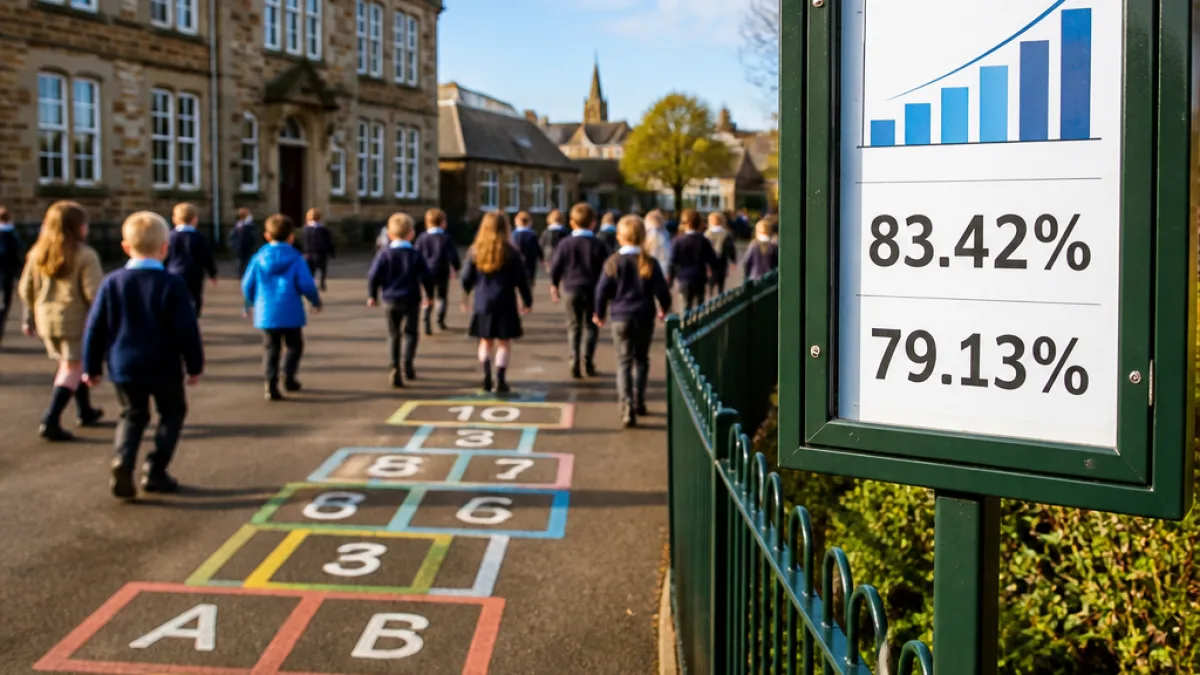
The ACEL data show 83.42% of Falkirk primary pupils achieved the expected level in numeracy and 79.13% reached the expected level in literacy. On both measures Falkirk sits above the national average, by 3.12 percentage points in numeracy and 4.6 percentage points in literacy.
"Primary school pupils in Falkirk are continuing to perform above national and local comparators in both literacy and numeracy"
These outcomes form part of a multi-year improvement. Since 2020/21, numeracy attainment in Falkirk has risen by 5.74 percentage points and literacy by 8.92 percentage points.
Poverty-related attainment gap
Alongside rising attainment, the data indicate a narrowing of the poverty-related attainment gap. Over the same four-year period the gap has reduced by 6.28 percentage points in numeracy and 9.38 percentage points in literacy — a development the council attributes to earlier identification of support needs and tailored interventions in primary schools.
- Numeracy attainment (2024/25): 83.42% — 3.12pp above national average
- Literacy attainment (2024/25): 79.13% — 4.6pp above national average
- Improvement since 2020/21: numeracy +5.74pp, literacy +8.92pp
Local practice and school-level progress
The council highlights practical steps being taken across Falkirk primaries: closer tracking of pupil progress, the use of assessment data to target support, and programmes such as Interdisciplinary Learning (IDL) Literacy. Head of Muir Primary School is cited as an example where strengthened tracking identified pupils needing help earlier, with notable returns to expected levels among those supported.
| Measure | 2024/25 (%) | Change since 2020/21 (pp) |
|---|---|---|
| Numeracy | 83.42 | +5.74 |
| Literacy | 79.13 | +8.92 |
For Falkirk parents and school communities, the figures offer measurable confirmation that local strategies to spot and support pupils early are having effect. The council points to these approaches as central to helping more children reach expected Curriculum for Excellence levels and to shrinking the attainment gap linked to poverty.