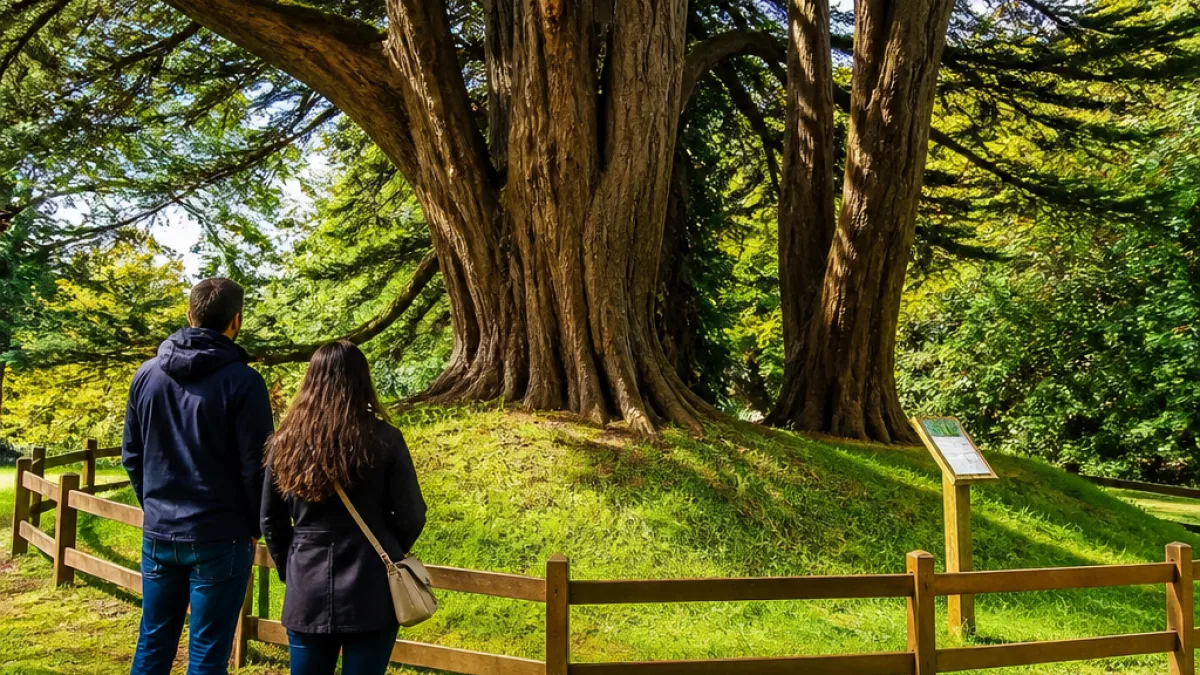
New rail fencing installed to safeguard venerable Stanmer cedars
Brighton & Hove City Council has installed chestnut post‑and‑rail fencing around a group of cedar trees in Stanmer Park thought to be about 300 years old. The measure follows the recent detachment of large branches from some of the trees and is intended to protect both the trees and park users.
Work was carried out by the council’s parks and estates teams, who say the new barrier will allow people to continue enjoying the trees at a safe distance while avoiding more intrusive interventions that could harm the specimens.
"Following the recent loss of branches, we have decided to put up fencing to protect both the trees and our park visitors. The alternative would have been to severely prune the trees, or possibly even cut them down. The new rail fencing means we can all continue to enjoy and admire these precious trees from a safe distance, and, hopefully, for many more years to come," said Councillor Alan Robins, cabinet member for sport, recreation and libraries.
The cedars are associated with the period when Stanmer House was constructed, and form a notable feature in the park’s landscape. The council described the trees as a place where residents and visitors commonly gather and shelter.
Why fencing was chosen and what it means for visitors
Council officers considered different ways of managing the risk posed by ageing limbs. Rather than undertake severe pruning or felling, the post‑and‑rail fencing provides a physical buffer to reduce the chance of injury from falling branches while minimising intrusive work to the trees themselves.
- Material: chestnut post and rail
- Purpose: protect both public and trees
- Location: around the group of ancient cedar trees in Stanmer Park
The council’s choice reflects a balance between conserving a heritage landscape and managing public safety. Fencing allows the trees to remain in place with reduced immediate intervention, leaving options open for future arboricultural care based on ongoing assessment.
Practical information for park users
Visitors can still view and enjoy the trees, but should respect the new boundary and any signage. The fencing is intended to be a long‑term safety measure rather than a temporary barrier.
| Management option | Likely impact on trees | Effect on public access |
|---|---|---|
| Chestnut post‑and‑rail fencing | Low intrusion, preserves trees | Restricted access; viewing retained |
| Severe pruning | High intrusion; alters form | Access possibly maintained but tree altered |
| Felling | Trees removed | Full access but loss of feature |
Those concerned about the park or seeking more details on the works should consult Brighton & Hove City Council’s parks service information channels. The authority said the fencing will help ensure these historic trees can be admired safely for years to come.