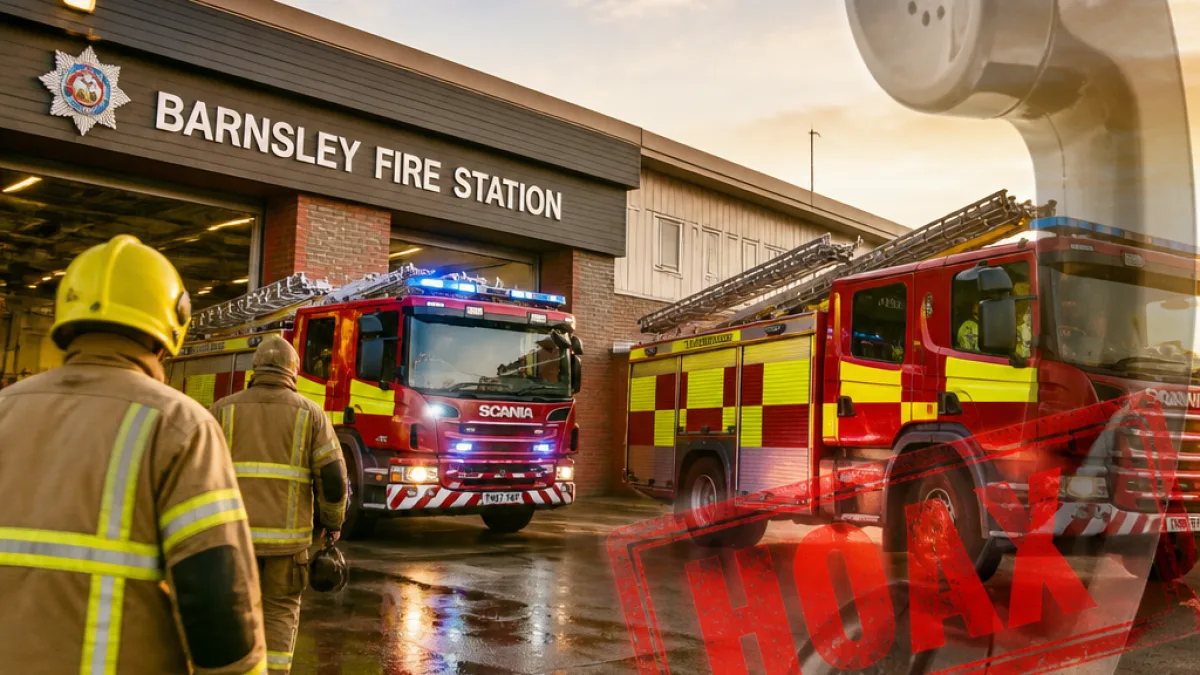
The local fire service has issued a stern warning after being the target of a sustained campaign of deliberately false reports, saying the behaviour diverts crews from genuine emergencies and puts lives at risk.
Scale of the problem in Barnsley
Data seen by the Chronicle shows that between 2021 and early 2026 there have been 132 malicious phone calls made to five Barnsley-area fire stations reporting incidents that did not exist. The distribution of those calls is as follows:
| Station | Malicious calls (since 2021) |
|---|---|
| Barnsley | 70 |
| Dearne and Tankersley | 23 |
| Cudworth | 16 |
| Penistone (on-call) | 0 |
In the same timeframe the total number of false alarm calls made to stations across the borough has exceeded 4,000. Not all of those are judged to be malicious; the service stresses that genuine mistakes and technical faults can also trigger false alerts.
Consequences and enforcement
Making a hoax or malicious emergency call is a criminal offence. Perpetrators can face a substantial fine and/or a custodial sentence of up to six months if convicted. The fire service also has arrangements with major telecommunications providers that can result in mobile phones and landlines being disconnected if they have been used to make malicious calls. Owners of such numbers can be blacklisted across major networks.
“Malicious false alarm calls are far more than a nuisance. They can draw firefighters away from real emergencies where every second counts.”
The service highlighted that while crews are responding to a false report they may be unavailable for genuine incidents, including fires and road collisions, increasing the risk to people who need urgent help.
What residents should know
- Deliberately reporting a non-existent emergency is an offence that can lead to prosecution.
- Malicious calls divert resources and can delay responses to real life-threatening situations.
- Telecom firms can disconnect numbers used to make hoax calls; blacklisting can follow.
- If you accidentally make a call, explain immediately — authorities will assess intent.
The fire service has urged anyone with information about those responsible for malicious calls to come forward, emphasising that stopping this behaviour protects the whole community by ensuring crews are available for genuine emergencies.
Local residents should continue to call 999 only for real emergencies. For non-urgent enquiries about fires or safety advice, alternative contact routes exist via the fire service’s community safety teams and their official website.