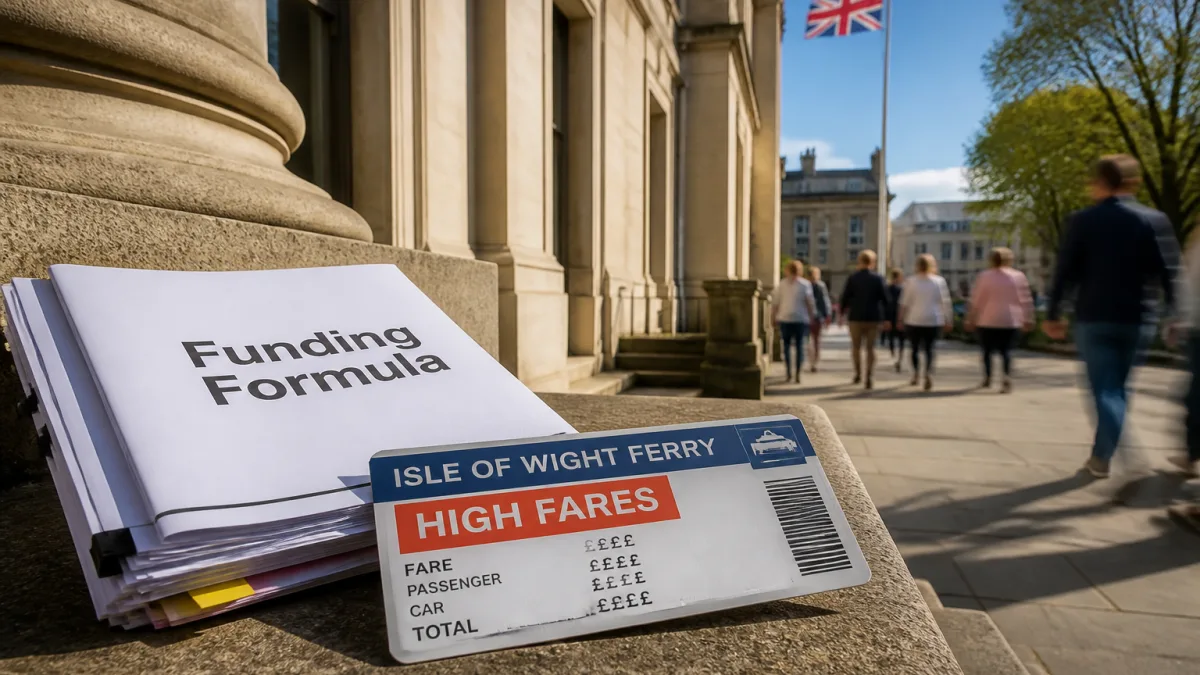
MP says national formulas miss the Island’s reality
Calls for fairer funding for the Isle of Wight have been taken to Westminster, with Isle of Wight West MP Richard Quigley urging ministers to overhaul how support for coastal communities is allocated. Speaking during a Westminster Hall debate today, Mr Quigley argued that long-standing funding models overlook the Island’s structural disadvantages and the way hardship is distributed across communities.
He told MPs that the Isle of Wight is frequently seen through a postcard lens, while the pressures of isolation, connectivity and service delivery are not adequately reflected. Drawing on research by the University of Portsmouth, he highlighted the premium of doing business as an island authority, citing an additional £23 million required simply to keep pace with a comparable mainland council.
"Communities like mine often feel isolated not just from funding and opportunity, but from the national conversation."
Mr Quigley set out a picture of interlinked challenges—poorer transport links, an ageing population, mounting health and social care demand, lower average wages and limited economic opportunities—which, he argued, combine to depress life chances while straining local services.
Minister recognises isolation and cost pressures
Responding for the Government, the Minister for Devolution, Local Growth and Communities, Nesil Caliskan MP, acknowledged the Island’s distinctive circumstances. She said places like the Isle of Wight are rightly symbols of national pride, but beyond the tourism image lie barriers to opportunity rooted in geography and infrastructure.
"Places like the Isle of Wight are often thought of as postcards of national pride... But behind these postcards, they face distinctive challenges – geographical isolation, poorer connectivity, deprivation and barriers to opportunity."
The minister said she was “particularly shocked” by the cost of ferry travel, describing it as “extraordinary” given the importance of links to the mainland for the local economy. She indicated the Government intends to develop new tools to better identify transport connectivity and affordability, signalling a willingness to refine how need is understood in communities where access and cost are recurring issues.
Hidden deprivation and how funding is decided
Mr Quigley argued that existing measures often miss areas where deprivation is dispersed rather than concentrated. On islands and along coastal stretches, small pockets of hardship can be embedded across multiple neighbourhoods, which means headline indicators may understate the cumulative impact on residents and public services. In short, he said, the formula does not capture the price of distance, nor the day-to-day realities of living off the mainland.
That case was underpinned by the University of Portsmouth estimate that the Isle of Wight faces a structural cost uplift of £23 million compared with a similarly sized mainland authority. While not a spending bid in itself, the figure was used to illustrate the gap between national metrics and the on-the-ground costs of running services across water, where routine tasks—from patient transport to contractor logistics—can become more expensive.
Local implications: transport, care and opportunity
For residents, the points aired in Westminster speak to immediate concerns:
- Transport affordability and reliability affect access to jobs, education, health care and family support on the mainland.
- Service pressures—especially in health and social care—intensify with an ageing population, stretching council and NHS capacity.
- Lower average wages and limited local sectors constrain career progression, making the cost of travel a higher barrier to opportunity.
While the debate did not carry new funding commitments, it placed the Island’s specific needs squarely on the parliamentary record, with ministerial recognition of the costs associated with isolation and connectivity. Any future changes to funding formulas or assessment tools would have implications for how resources are allocated to councils like the Isle of Wight, and how transport affordability is weighed when judging local disadvantage.
At a glance: challenges flagged in Westminster
| Challenge | Detail from debate |
|---|---|
| Cost of isolation | University of Portsmouth estimates extra £23 million to match mainland costs |
| Connectivity | Minister flagged extraordinary ferry costs; importance to the local economy |
| Demographics | Ageing population driving demand for health and social care |
| Economy | Lower average wages and limited opportunities highlighted |
| Measurement | Existing indices can miss hidden deprivation spread across communities |
What happens next
The minister’s acknowledgement of the Island’s distinctive pressures—and the commitment to improve tools for assessing connectivity and affordability—will be watched closely by local stakeholders. For the Island, the test will be whether those refinements translate into more accurate recognition of service costs and barriers to opportunity, and ultimately, into fairer funding. In the meantime, the debate has sharpened the focus on transport affordability and the structural realities of providing services across the Solent.