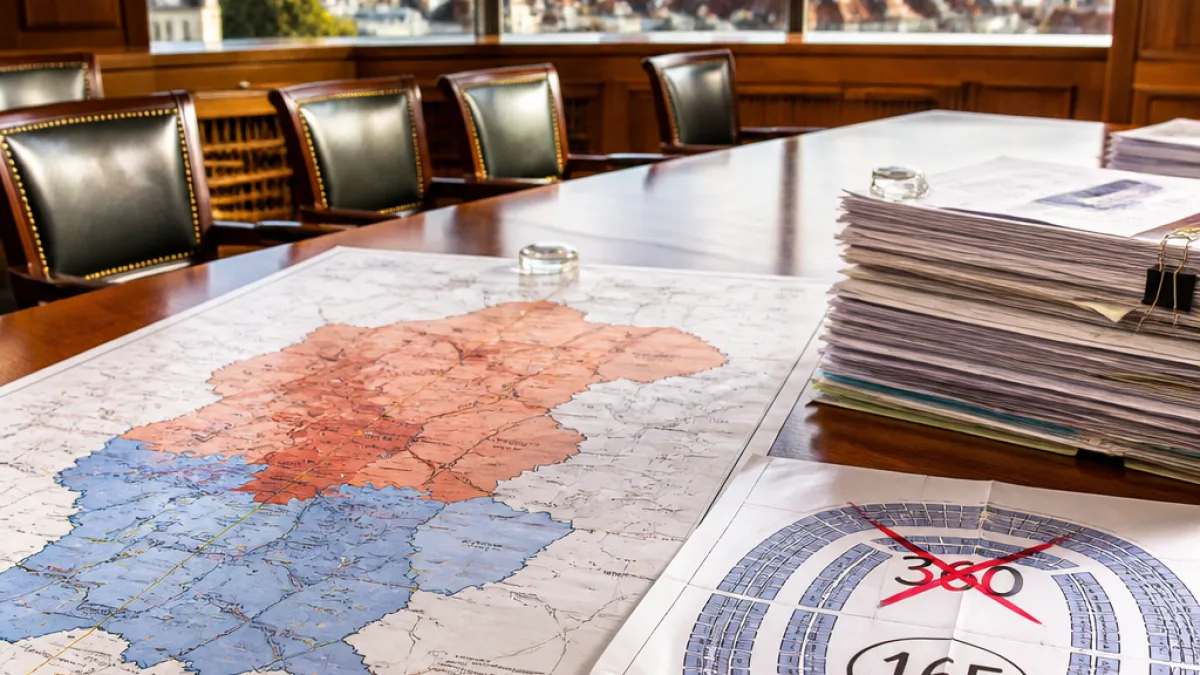
The number of elected councillors across Lincolnshire could be slashed from 360 to just 165 under a government-driven reorganisation that would replace the county’s existing authorities with two new unitary councils.
What is changing
Under the plans, the county’s current two-tier system — the county council plus seven district and borough councils — would be abolished. In their place would be two larger councils: one covering the city of Lincoln and nearby communities, and a second covering the rest of Lincolnshire.
| Council arrangement | Current councillors | Proposed councillors |
|---|---|---|
| All Lincolnshire (total) | 360 | 165 |
| Rural Lincolnshire authority | Equivalent now to 272 (across county and districts) | 100 (approx. one per 6,200 people) |
| Lincoln authority (city and nearby villages) | 88 | 65 (approx. one per 3,500 people) |
Local impact and concerns
Officials say the changes are intended to simplify local government and reduce costs. The government’s case is that fewer councils will make it easier for residents to understand which body is responsible for services such as roads, social care and planning.
But academic and local voices warn that cutting seats so sharply could weaken democratic representation. With fewer councillors, each representative would take on far larger caseloads and represent substantially more residents than at present.
“Structurally, local government is a mess,” said Andrew Defty, an associate professor of politics at the University of Lincoln. “But less councillors mean less representation. Each one will be responsible for more people. There are questions about their capacity to be effective – will it lead to poorer democracy?”
The proposed ratios cited in the government letter seen by local reporters suggest stark differences: in the new rural authority, a single councillor would represent around 6,200 people, while in the Lincoln council that figure would be about 3,500. By contrast, the current average works out at roughly one councillor per 2,300 residents across the county.
- Scale of change: From 360 to 165 councillors across Lincolnshire.
- Geographical split: Two new unitary councils — one for Lincoln and nearby villages, another for the remainder of the county.
- Concerns: Potentially reduced access to elected representatives and heavier workloads for councillors.
What this means for residents
For people in towns and villages across Lincolnshire, the reorganisation would change who they contact for everyday issues such as housing, bin collections and local planning. While the government argues for clearer lines of accountability, residents may face a period of adjustment as services are consolidated and staff and councillors are reorganised.
Where practical details are decided — ward boundaries, exact numbers for each area, and the timetable for transition — will be crucial in determining how representation and services are delivered. Those details are not included in the summary figures published so far and will be subject to further consultation and statutory processes.
Local groups, parish councils and residents should watch for consultation documents and announcements from both the county and the Government on how the transition will be managed, when elections for the new authorities will be held, and what safeguards will be put in place to maintain local voice and scrutiny.
The proposal marks one of the most significant changes to Lincolnshire’s political map in recent memory and will shape local democracy and service delivery for years to come.