Merton Council has approved a major house‑buying programme to tackle a steep rise in homelessness and reduce reliance on costly nightly-paid temporary accommodation.
Council to buy properties after surge in temporary placements
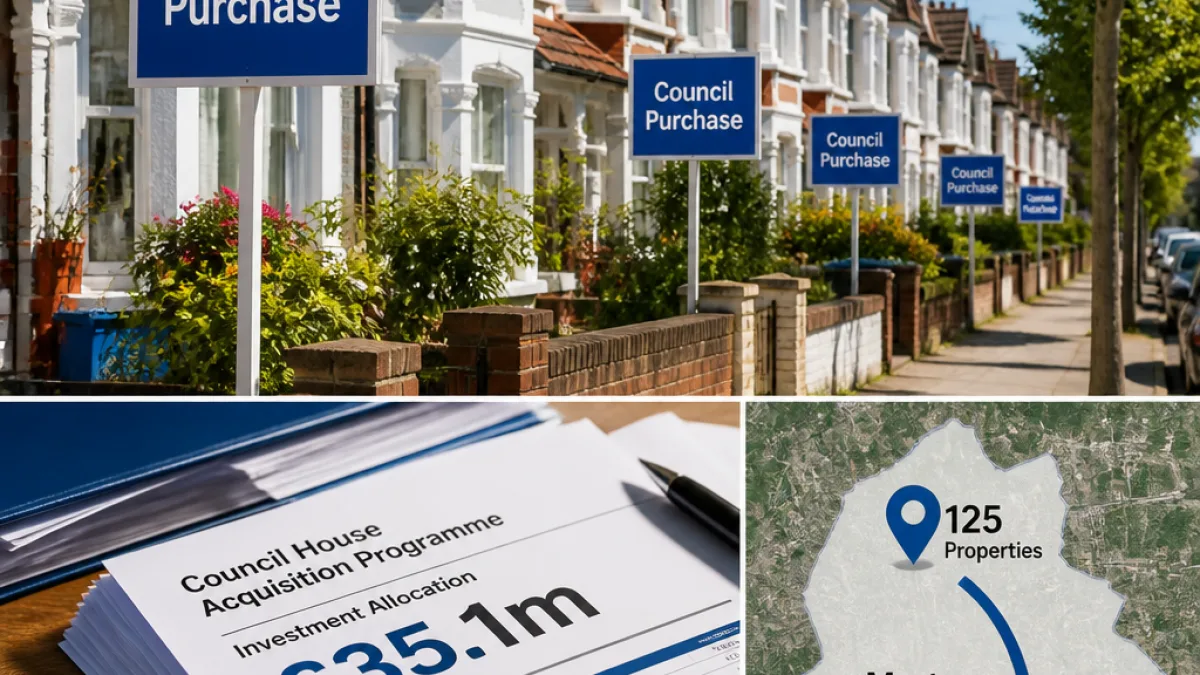
Cabinet members agreed a plan to purchase 125 freehold and long-term leasehold homes this year, with the scheme due to expand to a total of 225 properties over the coming four years. The funding package agreed at the meeting includes a capital allocation of about £35.1m, made up of the council’s own capital and a government grant.
Council figures show the number of households placed in temporary accommodation in the borough has risen sharply since early 2020. By March 2026, 732 households were living in temporary housing, compared with 199 in early 2020. The authority’s housing register has also grown significantly and now contains more than 10,000 applicants.
Why the council is intervening
Local leaders say the decisions reflect pressures from rising rents and a constrained local housing market. The council report accompanying the cabinet paper warned of deepening social and economic hardship for many residents as availability and affordability have worsened.
“Many residents of the borough are experiencing social and economic hardship because of a malfunctioning housing market,”
the report quoted Kathryn Eames, director of regeneration and planning.
At the cabinet meeting, the council’s housing cabinet member set out the scale of the challenge, saying the borough faces “immense housing pressures” in the longer term.
Immediate actions and next steps
Some purchases are already under way. The council has bought 13 street properties, is completing conveyancing on a further 10, and is close to completing the purchase of seven newly built four‑bed homes. It also plans to convert five existing council-owned properties into residential use as part of the initial phase.
- Initial target this year: 125 properties
- Programme scale-up over four years: 225 properties
- Temporary accommodation households (Mar 2026): 732
- Council capital and government grant combined: £35.1m
| Item | Number / Value |
|---|---|
| Households in temporary accommodation (Mar 2026) | 732 |
| Households in temporary accommodation (early 2020) | 199 |
| Housing register applicants | 10,000+ |
| Capital package agreed | £35.1m (council + grant) |
The funding is split between roughly £20.08m from the council’s capital budget and about £15.08m provided as a grant from the Ministry of Housing, Communities and Local Government.
Local impact and questions ahead
The purchase programme aims to bring down the borough’s dependence on expensive nightly-paid rooms and to provide more stable, long-term housing for households currently in temporary accommodation. However, the council faces questions about the long-term strategy for affordable housing: reports accompanying the decision note acute market problems driving numbers up, but the borough has also recorded little or no new affordable housing completions this year.
Residents affected by homelessness and those on the housing register will be watching progress closely as homes move from acquisition to occupation. The council will also need to set out how properties will be allocated, managed and maintained, and whether purchases will broadly meet the needs of families, single adults and those requiring larger homes.
Further reports to councillors are expected as the programme rolls out and as the council negotiates individual purchases and conversions.
This article is based on council reports and the cabinet decision taken in July 2026.