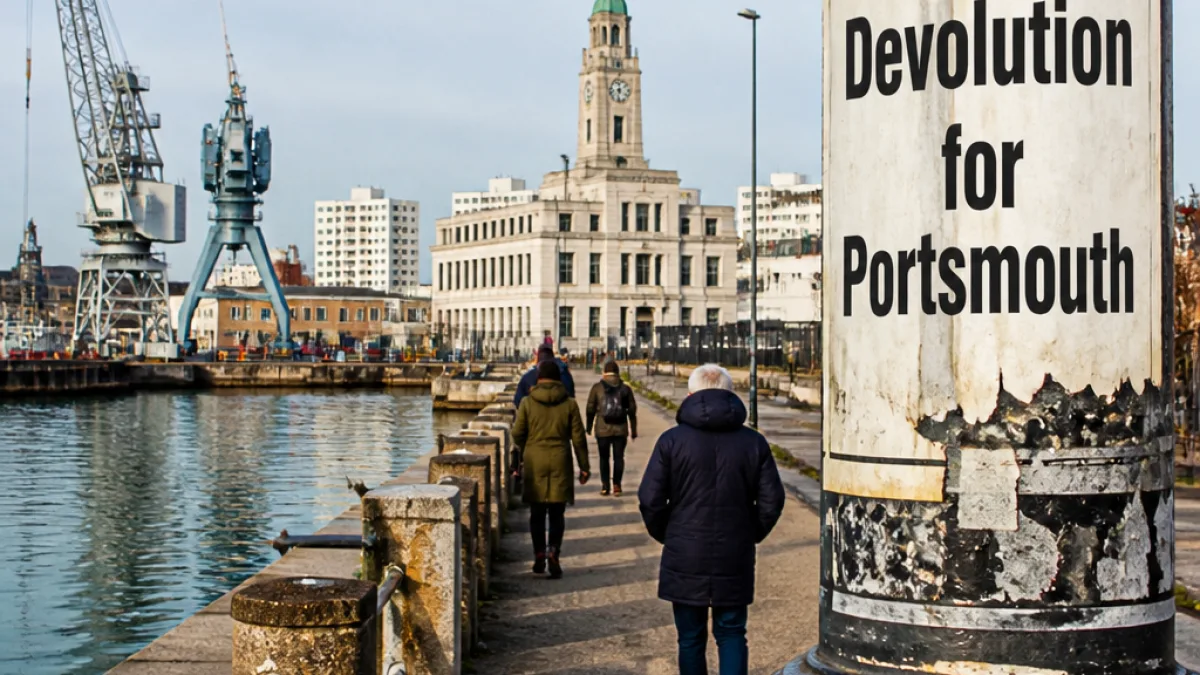
Portsmouth faces a long‑running squeeze from reduced dockyard employment to uneven local investment, the MP for Portsmouth North has warned, arguing that devolved powers could be the mechanism to rebalance opportunity across the city.
Local concerns and the case for devolution
In a column published this week, the Portsmouth North MP said that the city’s experience of post‑dockyard decline left many communities feeling neglected and that decentralising decision‑making is a route to reversing that.
“He’s for us.”
The phrase, taken from a voter’s description of Labour figures campaigning elsewhere, is used to underline a wider point: that politics is at its best when people feel a politician is genuinely on their side. The MP said the real divide is not simply North versus South but between places that have seen long‑term investment and those that have not — and named parts of Portsmouth among the latter.
What devolution could mean for the city
The argument for devolution centres on giving local leaders control over a package of powers often cited in English combined‑authority deals: transport, housing, business support and elements of education and skills policy. The MP suggested these tools might help:
- Improve local transport links and connectivity;
- Support affordable housing programmes;
- Target local business support and job creation.
She pointed to Manchester as an example of a city transformed by mayoral powers and devolved budgets, suggesting Portsmouth could benefit from similar arrangements.
National context cited by the MP
The column also set the local case within the Labour government’s wider record, listing several national improvements attributed to recent Westminster policy. These items were cited as evidence that a different phase of reform, including devolution, could be pursued from a stronger national position.
| Claim | Detail |
|---|---|
| Child poverty | Half a million children said to have been lifted out of poverty |
| NHS waiting lists | Described as the fastest fall in waiting lists for 17 years |
| Workers’ and renters’ rights | Called the biggest improvement in a generation |
| Defence spending | Labelled the biggest uplift since the Cold War |
Those national achievements were advanced as a platform from which further constitutional and fiscal reforms — including devolution of powers — could be pursued.
Implications for Portsmouth residents
For Portsmouth people the argument has practical implications: if local authorities were given greater control, decisions about bus routes, housing developments and business support could be shaped closer to the communities they affect rather than by central departments in London. The MP said that parts of the city, particularly in the north, have untapped potential and feel overlooked.
Any move towards devolution would require negotiation with central government and a clear benefits package for the city. Residents and civic leaders will need to weigh expectations about what new powers could deliver — and over what timescale — against the current pace of local regeneration and funding available.
The column is likely to sharpen local debate about the best route to secure investment and control over services for Portsmouth in the years ahead.