
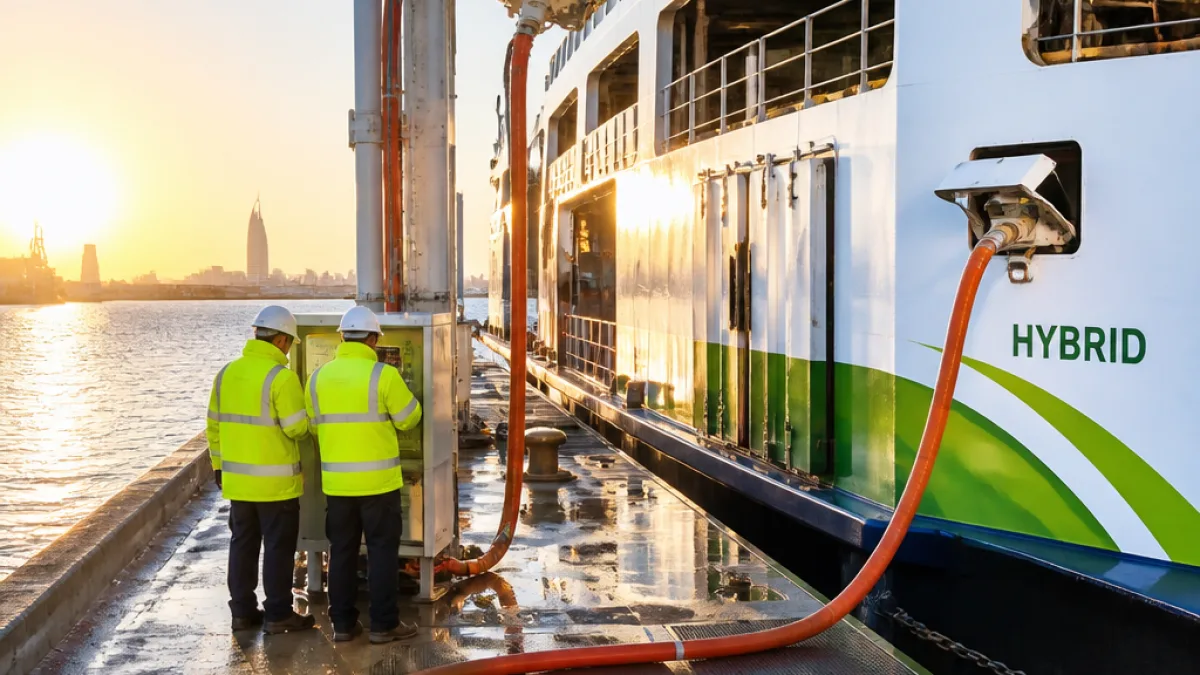
Brittany Ferries will from Monday begin using the shore power installation at Portsmouth International Port, bringing into service infrastructure completed late last year but not previously utilised.
What is happening at the port
The shore power system allows ships to switch off their engines while berthed and draw electricity from the quayside, a measure intended to reduce carbon emissions and improve local air quality. Two of Brittany Ferries’ hybrid vessels will use the connection, starting with Guillaume de Normandie for an 8am departure.
Why it has taken time
Work on the project finished at the end of 2025, but the plug-in system had not been used because of delays in completing the grid connection and because electricity costs are currently several times higher than marine fuel. Brittany Ferries says the operator only reached an agreement with the port after "months of negotiation" over financial terms.
"This is a huge milestone for our business, and one that we’ve reached thanks to a team effort by all partners involved,"
Christophe Mathieu, the ferry group’s chief executive, said the move allows the company to "realise the full potential of the greenest vessels on the Channel" but warned that higher running costs make wider adoption unlikely without financial support.
Funding and calls for government action
The project — known locally as Sea Change — received £19.8 million from the Department for Transport in September 2023 and a further £4.6 million from Portsmouth City Council, which owns the port. Despite that capital investment, operators face increased operating expenses while ships draw electricity alongside the berth.
- Shore power completed late 2025; usage begins in August 2026.
- Operators report electricity is several times more costly than marine fuel.
- Brittany Ferries has secured a usage deal for at least 12 months.
Mr Mathieu urged the new UK Government to consider tax incentives or similar measures to offset the additional expense and encourage other operators to follow suit. Without such support, he said, Portsmouth’s early lead may not be replicated elsewhere.
| Item | Amount / detail |
|---|---|
| DfT funding | £19.8 million |
| Port council contribution | £4.6 million |
| Operator | Brittany Ferries (two hybrid ships) |
For residents, the immediate benefit is expected to be improved air quality when vessels are alongside, reducing emissions from idling engines. For the port and council, the question now shifts to how to make the running costs sustainable so that shore power becomes a standard operating practice rather than a one-operator exception.
The next steps to watch locally will be whether central government responds to calls for fiscal support and whether other ferry or cruise operators agree commercial terms to use the port’s electrification.