The combined Sir Fynwy Torfaen constituency produced a seismic local result in the Senedd election, with Reform topping the list vote and claiming two of the six regional seats. The outcome marks a dramatic shift for Torfaen, where Labour had traditionally been dominant at Senedd and Westminster level.
What the numbers show
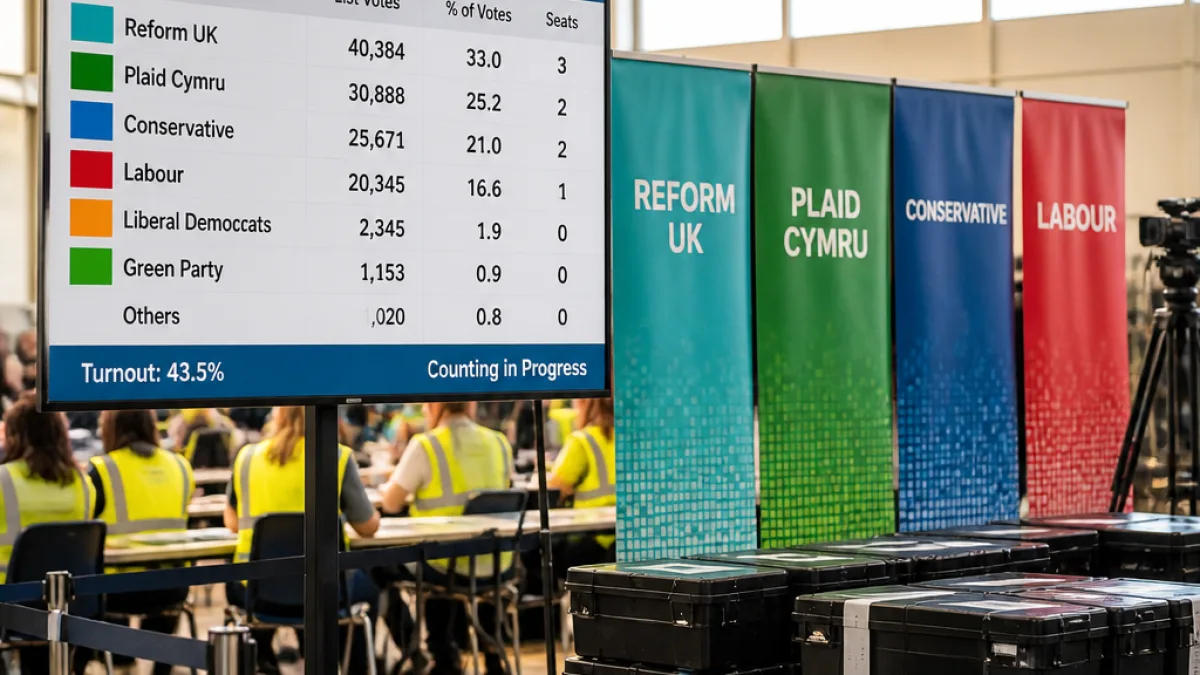
Reform led the poll on the regional list with 24,155 votes, securing two of the six seats. Plaid Cymru finished second on the list with 18,275 votes and also gained two seats. The Conservatives took third place with 13,394 votes, winning one seat. Labour, historically the largest force in the area, managed 11,672 votes, resulting in a single list seat for Lynne Neagle but leaving other Labour hopefuls, including Torfaen council leader Anthony Hunt, unelected.
| Party | List votes | List seats won |
|---|---|---|
| Reform | 24,155 | 2 |
| Plaid Cymru | 18,275 | 2 |
| Conservatives | 13,394 | 1 |
| Labour | 11,672 | 1 |
Victors and local impact
Among those elected for Reform were party leader Laura Anne Jones and Pontypool Community Councillor Stephen Senior, who claimed a fourth-place list seat. Plaid’s successful candidates included long-standing Cwmbran campaigner Matthew Jones in second position and Donna Cushing in sixth. The Conservatives returned Peter Fox in third place.
The result has immediate consequences for Torfaen’s political landscape. Labour’s long run of topping polls in Wales — which extended through numerous Senedd and Westminster contests — was broken on the regional list. Although Lynne Neagle will return to the Senedd, other local Labour figures sought to secure list seats but fell short.
Reaction from parties
“Myself and Stephen Senior are absolutely delighted with the response we got and the votes we received across Monmouthshire and Torfaen. We got the highest share by some margin and we take that as a real sign that people want real change and they’ve put their trust in us,”
Laura Anne Jones described the result as a clear signal from voters demanding change and pledged to focus on communities in Torfaen and rural Monmouthshire. Labour’s returning member, Lynne Neagle, acknowledged the difficult night for her party and said it was disappointing that Labour would not form the next government despite what she described as a “positive and realistic manifesto”.
- Reform topped the regional list with a substantial lead over Plaid Cymru.
- Labour’s list vote fell sharply, reducing its regional representation in Torfaen.
- The split of seats reflects a more fragmented political picture for the area.
What this means locally
The shift raises questions for local governance and representation. Torfaen council leader Anthony Hunt failed to win a list seat despite his local profile, and the success of Reform suggests new priorities may be advanced in the Senedd by its newly elected members. The balance of party voices for the combined constituency — a mix of Reform, Plaid Cymru, Conservatives and Labour — will shape scrutiny and advocacy for local services, investment and rural concerns.
As the new Senedd term begins, attention will turn to how the newly elected members engage with Torfaen’s communities, address local issues and respond to the reasons behind Labour’s weakened regional performance. For residents, the changes underline the importance of following how promised policies are translated into action at regional and local level.