Schools are being compelled to reassess how they protect people and keep lessons running as climate-related hazards intensify. Fresh analysis focused on Australia indicates that hotter conditions, heavier short bursts of rainfall and coastal risks are converging to heighten exposure for education communities — a challenge that echoes wider global trends.
Escalating hazard profile for campuses
Over the past 15 years, Australia has faced a succession of significant events, from major flooding in Victoria and Queensland to the Black Summer bushfires, extensive east coast floods in 2022 and 2023, several severe storm seasons and Ex‑Tropical Cyclone Alfred in 2025. Insured losses from natural catastrophes worldwide have reached US$137 billion in recent years, marking the fifth consecutive year above US$100 billion. Against this backdrop, projections point to hotter summers, more frequent and severe heatwaves, increased short‑duration extreme rainfall capable of triggering flash floods, and rising sea levels that intensify coastal flooding and erosion.
Fewer cyclones, but stronger extremes
Climate variability, including El Niño–Southern Oscillation (ENSO) and the Indian Ocean Dipole, introduces year‑to‑year and decadal uncertainty, complicating planning horizons for education leaders. While the total number of tropical cyclones in the region is expected to drop, a larger share of storms is projected to reach Category 4 and 5 intensity. Drier phases can raise the likelihood of bushfires, heat stress and inland water scarcity, increasing the pressure on school infrastructure and operations.
What this means for education settings
For school systems, this is not an abstract environmental debate but an operational and safeguarding imperative. The core questions now facing education leaders include how to assess exposure across diverse estates and whether learning environments are prepared for more frequent heat and storm conditions. The analysis highlights three practical areas of scrutiny:
- Understanding how many classrooms, administration blocks and boarding facilities sit in zones exposed to flooding, bushfire, extreme wind or heat.
- Evaluating whether indoor climates, shaded outdoor areas and cooling systems can support safe teaching and learning during more frequent extreme-heat days.
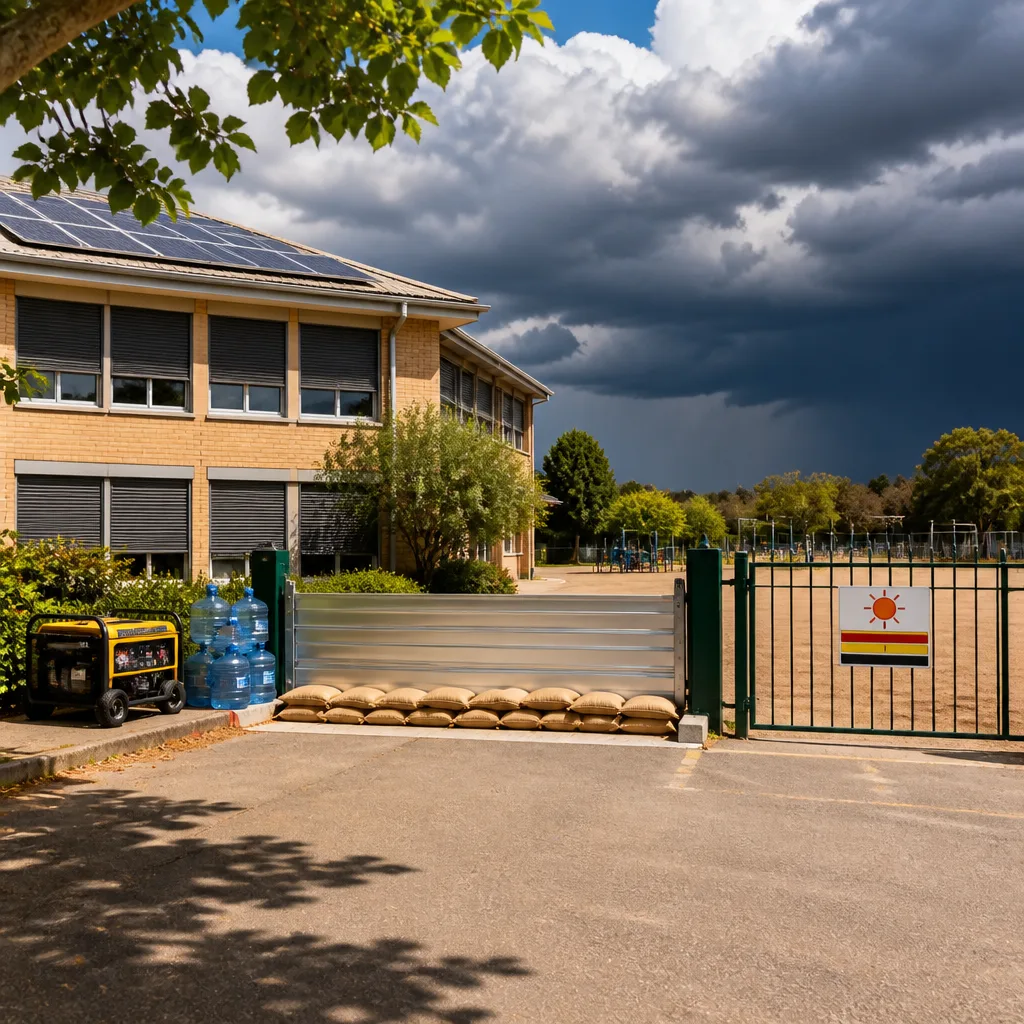
- Testing the ability to sustain essential functions during extended power outages, and whether ageing infrastructure can withstand more frequent severe storms and intense rainfall.
Rethinking resilience for continuity of learning
Education leaders are being pushed to map their risk more precisely and to stress‑test continuity arrangements. The emerging pattern is one of greater scale, complexity and uncertainty. It calls for clearer visibility of site‑level vulnerabilities and the dependencies that could disrupt daily operations — from transport links and utilities to the resilience of buildings that house critical student services.
From hazard awareness to verifiable preparedness
The intensification of heat and storm risks raises questions about the suitability of current building systems and the adequacy of passive measures such as shading. It also underscores the need to plan for the compound effects of events — for example, flash flooding following short, intense rainfall bursts that can quickly overwhelm local drainage around school grounds. Leaders are therefore examining not just risk awareness, but how preparedness can be evidenced and maintained across portfolios with diverse ages of construction and varying exposure profiles.
Focus on sites, people and critical functions
The implications run across safeguarding, estates management and academic continuity. Ensuring the safety of pupils and staff during heatwaves, identifying buildings at risk from coastal erosion or floodplains, and maintaining services amid disrupted power supply all require coordinated planning. With projections signalling tougher summers and more volatile conditions, the sector’s challenge is to ensure that risk assessments translate into practical measures that keep education accessible and safe in more extreme weather.
Recent events shaping the risk landscape
| Event | Period/Year |
|---|---|
| Victorian and Queensland floods | Past 15 years |
| Black Summer bushfires | Past 15 years |
| East coast flooding | 2022–2023 |
| Successive severe storm seasons | Past 15 years |
| Ex‑Tropical Cyclone Alfred | 2025 |
As climate signals strengthen, the education sector’s priority is clear: align duty of care and continuity planning with the emerging hazard profile, so that schools can protect people, preserve learning time and maintain critical functions through more frequent and intense natural hazard shocks.