
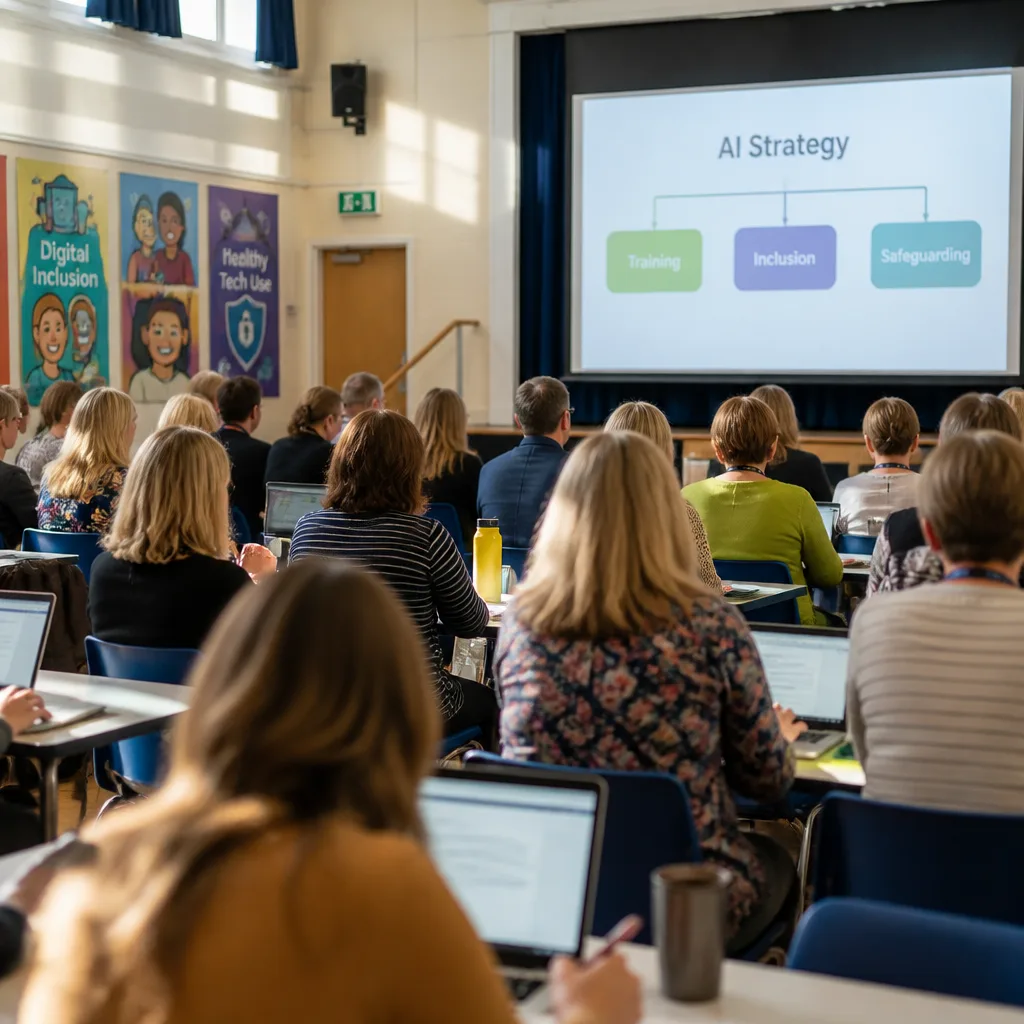
Education experts have urged schools to move beyond ad‑hoc experimentation with artificial intelligence and adopt informed, inclusive strategies, after a North East conference heard that many settings lack a clear plan for classroom use.
Call for a considered approach
The event, a collaboration between the ALP Institute – the training arm of the County Durham‑based Advance Learning Partnership education trust – and Durham University, brought together representatives from primary and secondary education at Whitworth Park Academy. Organisers said the focus was on practical, safe and strategic adoption of digital technology and AI to benefit both teachers and pupils.
“This was our first conference focused on digital technology and AI, and it provided colleagues and external delegates with an invaluable insight into the benefits that can come from adopting a healthy, safe and informed strategy.”
— Catherine Hydon, Director, ALP Institute
Experts highlight gaps in school planning
Keynote speakers from Durham University – Jake Burdis and Professor Cristina Costa – set out the opportunities and risks. Burdis told delegates that in the majority of schools he visits there is no cohesive plan for AI; instead, teachers are often trialling tools without formal training or guidance. He argued that a structured approach could help save time, reduce workloads and keep attention on core teaching.
“ALP, in partnership with Durham University, is on the right path because it is committed to a more considered approach that will save time, reduce workloads and have a positive impact on the education of young people. Ultimately, it’s about enabling teachers to focus on the things that really matter, and why they got into the profession in the first place.”
— Jake Burdis, Durham University
Professor Costa centred her remarks on digital inclusion, urging schools to develop “healthy” patterns of use and to view AI as part of everyday life rather than a switch‑on, switch‑off tool. She cautioned that benefits will only be realised if schools think carefully about how technology is used, and for whom.
“We need to move beyond the functional use of AI and use it in a healthy way, creating positive habits that drive real benefits. It’s not just about technology but how we use it, and the benefits are not just educational but for our day-to-day lives and wellbeing.”
— Professor Cristina Costa, Durham University
What this means for schools and families
Although staged in County Durham, the messages speak to challenges facing schools across the UK: early adoption has often been teacher‑led and piecemeal, while pupils’ access to devices and support varies widely. Delegates were encouraged to move towards clear, whole‑school frameworks that align AI use with safeguarding, curriculum aims and staff development.
- Strategy first: establish a written, school‑wide AI plan to guide classroom use and staff expectations.
- Training and support: provide structured professional development so teachers use tools confidently and safely.
- Inclusion by design: audit access and ensure approaches work for pupils with differing needs and circumstances.
- Workload focus: prioritise uses that genuinely reduce administrative burden while protecting teaching time.
- Safeguarding and wellbeing: embed safe use protocols and promote healthy digital habits.
Speakers emphasised that a more deliberate approach can help schools avoid uncoordinated trials that risk inconsistency between classrooms. Parents, too, benefit from clarity: coherent policies make it easier to understand how children are using AI in homework, assessment support and revision, and how data and safety are managed.
Conference themes and contributors
| Contributor | Affiliation | Focus |
|---|---|---|
| Jake Burdis | Durham University | “What’s next? The future of AI in education” and the need for cohesive planning |
| Professor Cristina Costa | Durham University | Digital inclusion and developing healthy, purposeful AI use |
| ALP Institute | Advance Learning Partnership | Hosting and promoting a safe, informed strategy for digital technology |
Why “informed” matters now
The organisers’ core message was not to rush to adopt every new tool, but to make AI serve clear educational goals. As Burdis noted, without a plan, staff may test systems in isolation, leading to uneven practice and missed opportunities to relieve workload. Costa’s emphasis on inclusion highlights a second risk: when strategies are not thought through, pupils who are already disadvantaged can be left further behind.
For school leaders, the practical takeaway is to treat AI like any other significant change: set objectives, assess risks, train staff and monitor impact. For teachers, the evidence shared suggests careful use can streamline tasks and free time for high‑value interactions with pupils. And for families, transparent school policies help build trust and ensure technology is used to support learning and wellbeing, not simply to introduce more screen time.
The conference underlined that AI is already part of daily life for many young people. The question for schools is not whether to use it, but how to do so safely, fairly and effectively. As the sector looks ahead, collaboration between trusts, universities and frontline teachers – of the sort showcased in County Durham – will be key to turning promise into practice.