Migration offsets natural fall in South Ayrshire
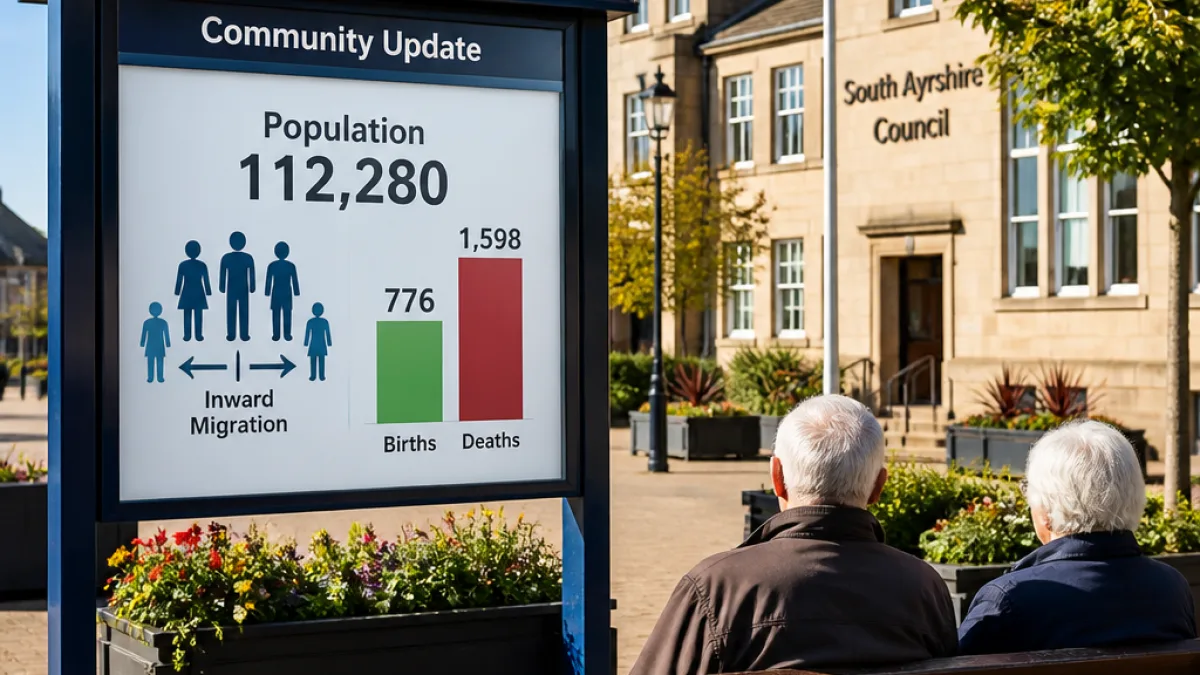
New mid-year estimates from the National Records of Scotland show the population of South Ayrshire stood at 112,280 in June 2025, a rise of only 10 people compared with the previous year. The small increase masks a marked demographic shift: there were substantially fewer births than deaths over the 12 months to June 2025, with migration making up the shortfall.
The detailed breakdown for the council area records 776 births and 1,598 deaths, producing a natural decrease of 822 people. This was counterbalanced by a net migration gain of 830, leaving the overall population effectively unchanged.
"deaths outnumbered births by more than 800"
International movement did not contribute to the gain: arrivals from overseas numbered 450, while 510 people left the area for abroad, a net international loss of 60. The recorded migration gain therefore came from movement within Scotland and elsewhere in the UK.
- Population (June 2025): 112,280 (+10)
- Births: 776; Deaths: 1,598
- Natural change: -822; Net migration: +830
Context and implications for services
The figures point to an ageing profile and higher mortality in the local population. For council planners and health services, a sustained pattern where deaths exceed births can increase pressure on older-person services while reducing demand for schooling and early years provision. A net inward flow from other parts of Scotland and the rest of the UK has so far balanced those trends in headline population figures.
| Measure | South Ayrshire | Scotland (estimate) |
|---|---|---|
| Population (June 2025) | 112,280 | 5.545 million |
| Population change (year) | +10 | +~2,200 |
| Natural change | -822 | ->16,000 |
Across Scotland as a whole the population rose by roughly 2,200 to an estimated 5.545 million, despite a national natural decrease of more than 16,000. That mirrors the local pattern: migration is driving short-term growth, while births lag behind deaths.
Local elected members and public service chiefs will need to consider what the trend means for long-term planning. If the pattern persists — with a shrinking younger population and a larger share of older residents — demands on adult social care and health services will rise. Conversely, schools and child-centred services could see lower demand unless family migration offsets falling birth rates in future years.
These official mid-year estimates provide a snapshot rather than a forecast, but they will feed into council discussions on housing, social care, education and economic development as South Ayrshire plans for demographic change.