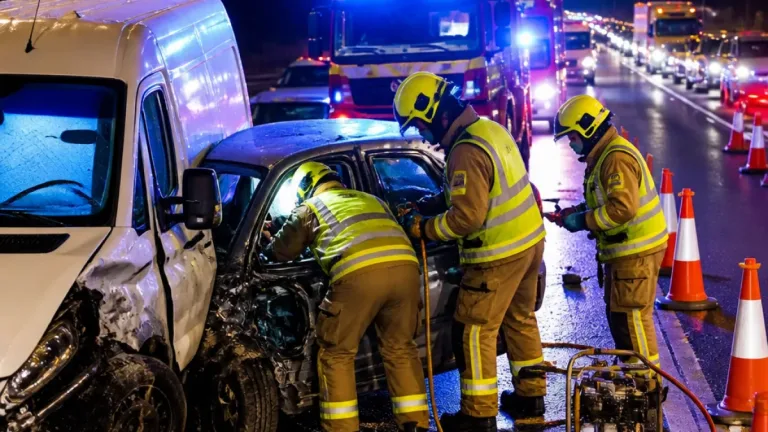

The M4 through Wiltshire was closed to all traffic on Saturday night following what has been described as a serious crash, according to a live report published by the Swindon Advertiser. The closure immediately affected motorists travelling across the county between London and South Wales, with knock-on delays on surrounding A-roads.
While full details of the collision have not yet been released, the incident underscores the fragility of a strategic corridor that carries commuter, freight and holiday traffic through north Wiltshire. Evening closures on the M4 can quickly snarl local roads as drivers seek alternatives through communities around Swindon, Royal Wootton Bassett, and the wider rural network.
Major artery, major impact
The M4 is the principal east–west motorway serving Wiltshire, linking the county to employment centres in the Thames Valley and Bristol, and providing vital access for logistics heading to and from the South West. When the motorway is halted, pressure rises on parallel routes as drivers divert at short notice. Even without exact junction information, experience shows congestion typically builds on feeder roads as motorists attempt to re-route.
Residents living near key cut-throughs can expect increased traffic volumes and noise while the closure remains in place. Evening closures also pose challenges for shift workers heading to or from industrial estates, distribution centres and healthcare facilities, as well as for hospitality venues reliant on late-night travel by staff and customers.
What motorists should do now
- Delay non-essential journeys until the motorway reopens.
- Check live updates from National Highways, local media and traffic apps before setting off.
- Allow extra time and be prepared for diversions on A-roads across north Wiltshire.
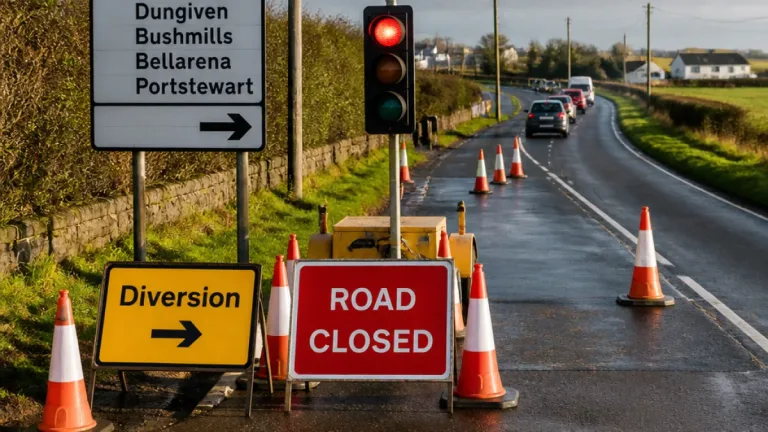
Drivers are advised to follow any official diversion signs if they are already on the network and to avoid making ad hoc detours through villages where roads may be narrow and unsuitable for heavy traffic. With emergency services managing a serious collision, patience and caution are essential, particularly at night when visibility is reduced.
Safety and the overnight picture
Night-time incidents on motorways frequently require extended closures for collision investigation, vehicle recovery and carriageway safety checks. That can mean prolonged disruption even after the initial emergency response has concluded. If the closure continues into the early hours, early-morning commuters, airport travellers and delivery drivers could face residual delays, alongside potential temporary speed restrictions once lanes reopen.
Local public transport options are limited late in the evening, and rail alternatives may not be practical at this hour. Anyone with time-sensitive travel should plan conservatively and consider staying put until clear guidance confirms that the motorway has reopened. Businesses dependent on overnight haulage may need to re-sequence deliveries or adjust shift patterns in response to the closure.
Context for Wiltshire
Wiltshire’s diverse road network—spanning busy trunk roads and rural lanes—relies on the M4 to carry through-traffic efficiently. When the motorway stops, the ripple effects are felt quickly in market towns and suburban fringes as diversion routes intersect with local life. Reducing unnecessary journeys, staying on designated diversion routes and giving emergency crews room to work all help to manage the wider impact.
InfoRadar will continue to monitor official channels for confirmation of reopening times and any authoritative update on the nature and location of the crash. Readers should keep an eye on verified sources, including National Highways and police travel bulletins, for the latest status before travelling.