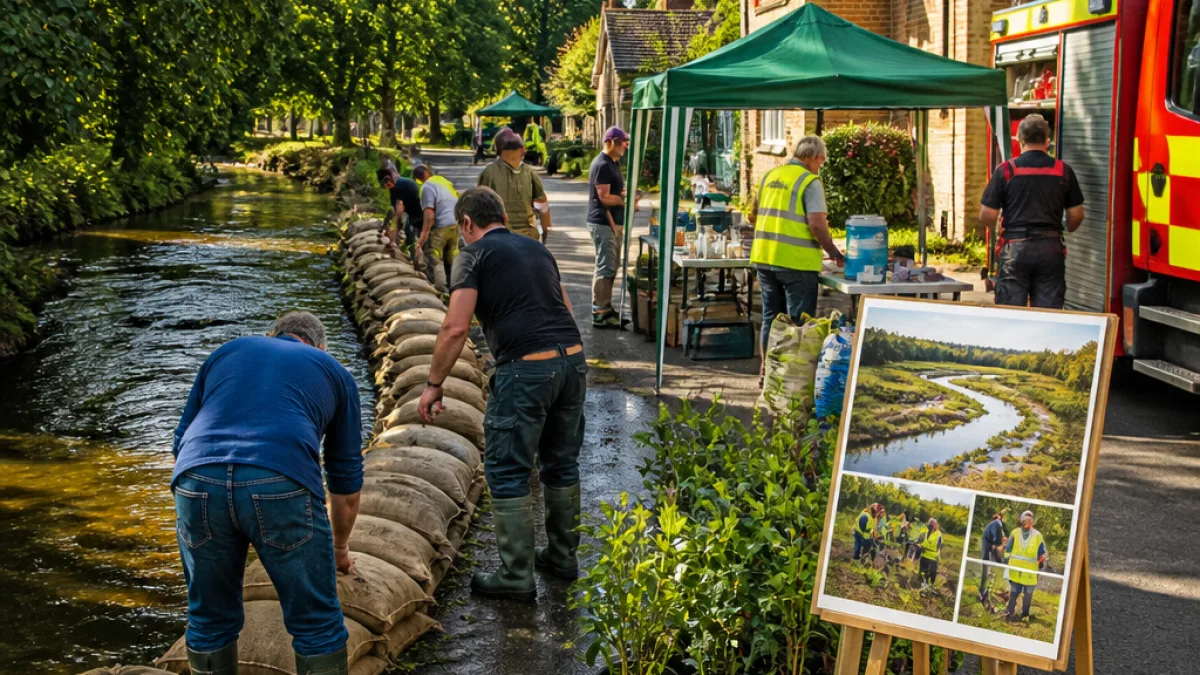
Surrey County Council has invited local groups to apply for a share of £125,000 to fund projects that reduce the local impact of climate hazards such as extreme heat, flooding and wildfires. The scheme, called the Community Resilience Grant, is open to town and parish councils and community, voluntary and faith groups across the county.
What the grant will cover and who can apply
Individual awards are capped at £16,000. The council says the money is intended to help communities adapt assets and practices that were not designed for the increasingly frequent and severe conditions now being experienced.
- Eligible applicants: town and parish councils; community, voluntary and faith groups
- Maximum award per project: £16,000
- Total fund: £125,000
- Application process: two-stage, with deadlines in September
The county council has signalled it will work alongside Surrey Fire and Rescue Service to support applicants and help deliver successful projects. The fire service partnership reflects the practical overlap between community resilience initiatives and emergency planning.
"We're acutely aware that many of the UK's community spaces were not built to withstand some of the conditions we are now experiencing."
The quote above comes from Marisa Heath, the council's cabinet member for environment and planning, emphasising the motive for the fund: to bolster local preparedness as the county faces a shifting climate.
Deadlines and application stages
There are two application stages. Applicants should note the following deadlines and plan accordingly to assemble proposals and supporting material.
| Stage | Deadline |
|---|---|
| First round | 16 September |
| Second round | 30 September |
Surrey Fire and Rescue area commander David Nolan welcomed the partnership, saying the service was proud to support local groups working to make a difference in their communities.
Local impact and practical considerations
For councils and volunteer-led organisations the funding may be used for a range of measures: creating or improving community cooling spaces, flood-resilient landscaping, fuel-breaks or other preventative steps that reduce wildfire risk, and equipment to support local response. Groups should ensure proposals include clear outcomes, project management arrangements and any partnership commitments, including how Surrey Fire and Rescue Service will be involved where relevant.
Applicants unsure about options or requirements are advised to contact the council early for guidance. Given the two-stage timetable and capped awards, demand is likely to be strong and decisions should favour projects that demonstrate community benefit, sustainability and deliverability within set timescales.
Surrey residents and groups can expect formal application guidance and forms from the council website; those planning to apply should also consider local risk assessments and, where appropriate, engagement with neighbouring parishes to maximise effectiveness.
For communities across Surrey, the grant represents an opportunity to strengthen local defences against climate-driven events and to align small-scale adaptation with wider county emergency planning.