
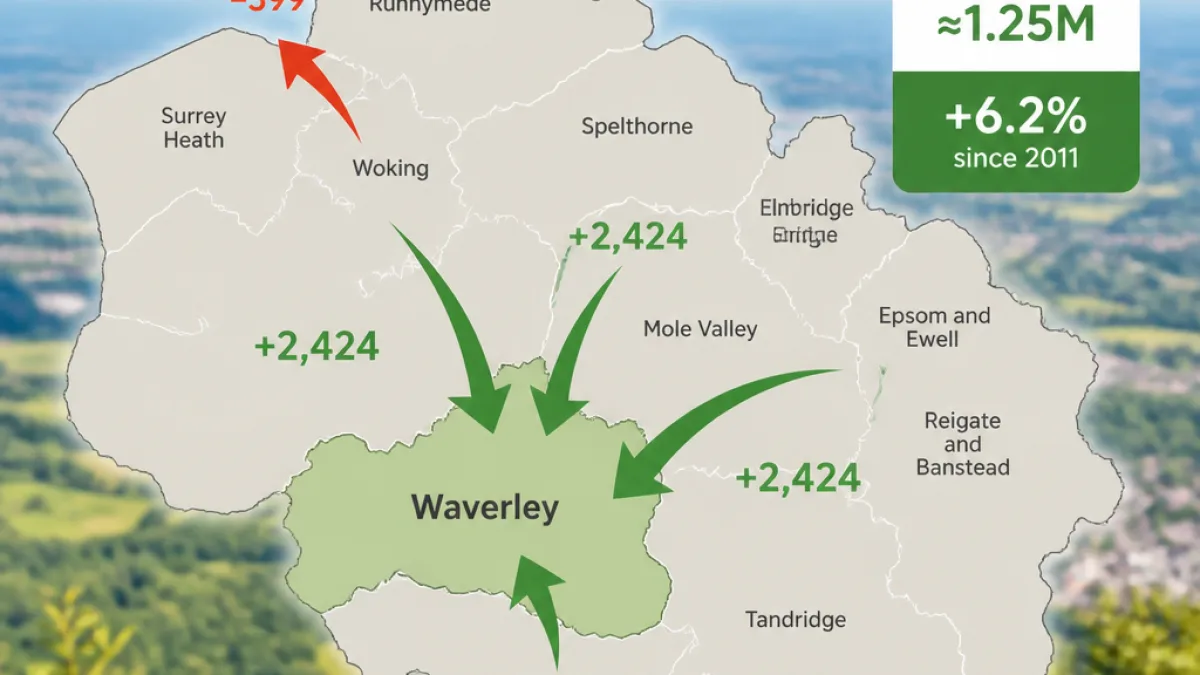
The latest Office for National Statistics (ONS) data for mid-2024 to mid-2025 reveals how population shifts around Surrey are reshaping demand for local services and housing.
Countywide growth and longer-term trend
Surrey’s population is now approximately 1.25 million, continuing a steady rise from roughly one million in the 1970s. Since 2011 the county has expanded by about 6.2%, an increase of nearly 150,000 people.
Where people are moving to — Waverley stands out
Within the county, the biggest net inflow from other parts of the UK was recorded in the borough of Waverley, which includes towns such as Godalming, Farnham and Haslemere. The borough had a net internal migration gain of 2,424 people in the year to mid‑2025 — almost half of Surrey’s overall net internal migration total of 4,755.
- Waverley: net internal migration +2,424
- Surrey total: net internal migration +4,755
- Woking: net internal migration −399 (the only Surrey borough to record a net loss)
Woking’s position and implications for services
Woking was the sole borough in Surrey to show a negative net internal migration figure, with 399 more people leaving for other parts of the UK than moving in during the year covered by the ONS metric. The borough’s finances and service provision remain under scrutiny after its council declared itself insolvent in 2023; demographic changes will be an important factor in medium‑term planning for housing, transport and social care.
What the figures mean locally
The ONS internal migration measure compares movements between areas within the UK and does not capture international migration or natural change (births minus deaths). Nonetheless, the pattern of gains in parts of Surrey and a single borough showing a net departure of residents will be used by local authorities, health commissioners and developers when assessing demand for schools, GP services and housing allocations.
| Area | Net internal migration (mid‑2024 to mid‑2025) |
|---|---|
| Waverley | +2,424 |
| Woking | −399 |
| Surrey (total) | +4,755 |
Councils will now need to consider where growth is concentrated when setting budgets and planning infrastructure. Areas with rising populations typically require increased school places, expanded primary care capacity and pressure on transport links, while places losing residents face different challenges, including maintaining a viable local economy and services.
Further detailed ONS breakdowns for each borough and district will help local authorities and community groups plan. For residents, the figures provide a snapshot of which parts of Surrey are attracting more movers from elsewhere in the UK and which areas are seeing people leave — a useful indicator for those watching local housing markets and service provision.