First Rath Yatra brings procession and prayer to Swindon streets
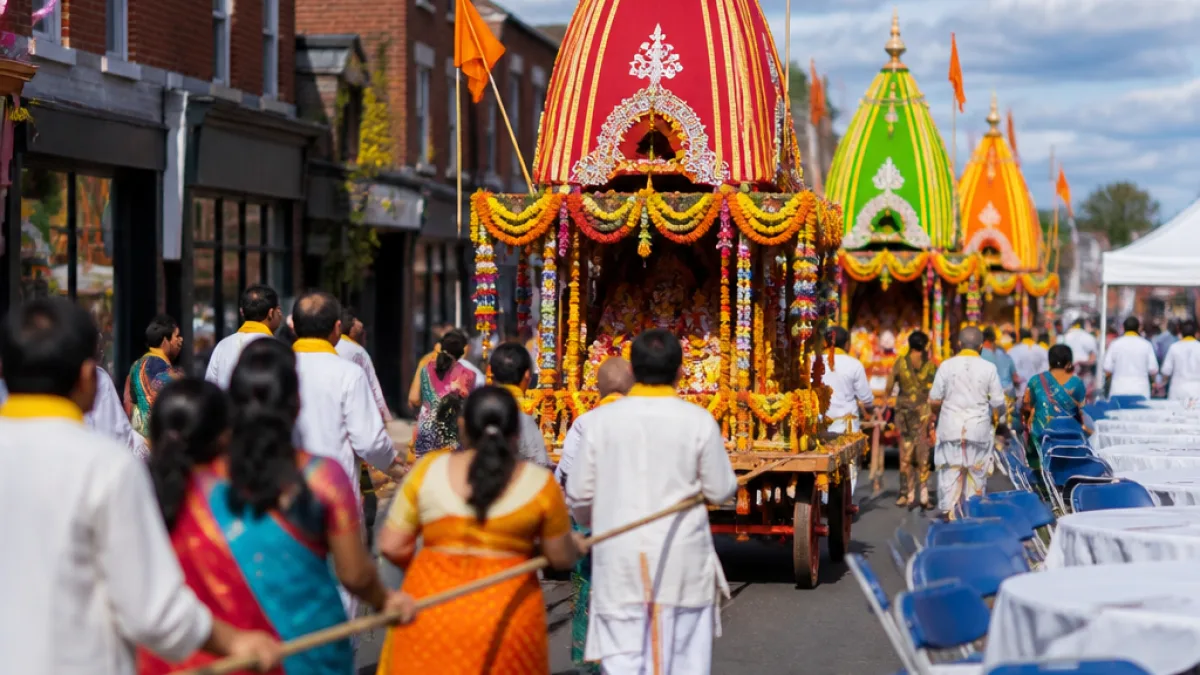
Swindon Hindu Temple has held its first Rath Yatra, a traditional chariot procession venerating the deities Jagannath, Balabhadra and Subhadra. The commemoration reflects the ritual journey associated with the sacred route from the Jagannath Temple to the Gundicha Temple, customarily a distance of about 3km (1.8 miles). Organisers said the event brought devotees together in large numbers, with a communal meal provided afterwards.
The celebration centred on three elaborately prepared chariots drawn by worshippers. Temple leaders emphasised the significance of the occasion for local devotees and the wider region, noting the rarity of consecrated images of the three deities in Europe. The temple reported that a substantial number of people from different backgrounds took part, echoing the festival’s message of inclusion and service.
"This is a very significant moment, as Swindon Hindu Temple is one of only a handful of temples in Europe to have the deities of the highly revered Lord Jagannath, Balabhadra and Subhadra."
Following the procession, the temple hosted a community feast, with more than 56 items prepared by volunteers and offered to attendees. Organisers described the gathering as an opportunity for both devotees and neighbours to share in cultural traditions, reflecting the values the festival is known for worldwide.
"It's offering devotees in Swindon and the region an opportunity on their doorstep to offer their prayers to the Lord of the Universe, making Swindon a truly special place."
Rath Yatra, often translated as the “chariot festival”, is associated with the annual ceremonial journey of the deities. In Swindon, the temple replicated its key elements: sacred images carried on three distinct chariots, devotional music, and participation by the community in moving the chariots forward. While rooted in religious observance, the event also functioned as a civic moment, bringing together residents and volunteers in a shared public celebration.
Community, culture and volunteer effort
Temple representatives said the day’s activities demonstrated both the devotional and social dimension of the occasion. The chariot pull was supported by volunteers who assisted with organisation, stewarding and the preparation of food. The communal meal—cooked and served by devotees—was explicitly framed as a gesture of hospitality towards all who attended, including non-Hindu neighbours, underscoring the festival’s emphasis on togetherness.
"The event was much more than a festival, it was a celebration of community, culture, and the timeless message of Lord Jagannath: compassion, equality, and universal love."
For Swindon, hosting the festival for the first time is a visible marker of the town’s growing religious and cultural calendar. The temple’s leadership has linked the occasion to Swindon’s broader civic life, presenting it as an addition to the borough’s community events that draw support from volunteers and residents across the area. Attendees were encouraged to participate respectfully, with organisers facilitating a welcoming environment that highlighted the educational aspect of the ceremony alongside worship.
Key details at a glance
- Procession featured three chariots bearing Jagannath, Balabhadra and Subhadra.
- Festival observance reflects a traditional journey of around 3km (1.8 miles).
- Community feast offered more than 56 dishes, prepared by volunteers and served to hundreds.
| Aspect | Detail |
|---|---|
| Deities honoured | Jagannath, Balabhadra, Subhadra (3) |
| Symbolic journey length | About 3km (1.8 miles) |
| Feast scale | More than 56 dishes; served to hundreds |
While the temple has hosted religious observances for many years, this marks the first time the full Rath Yatra has been staged in Swindon. Organisers say the event will strengthen ties among worshippers and with the wider public through volunteerism, shared food and open access to cultural traditions. As with other major community gatherings, the focus rested on safe stewardship of the procession, clear guidance for participants and a collaborative spirit.
The Swindon Hindu Temple described the day as a turning point for its congregation, with a view to building on the goodwill shown. For residents, the festival added a prominent date to the local calendar, demonstrating how faith-led initiatives can contribute to community life by welcoming neighbours and showcasing longstanding traditions in a public setting.