Historic Leeds mill charts new future after auction threat recedes
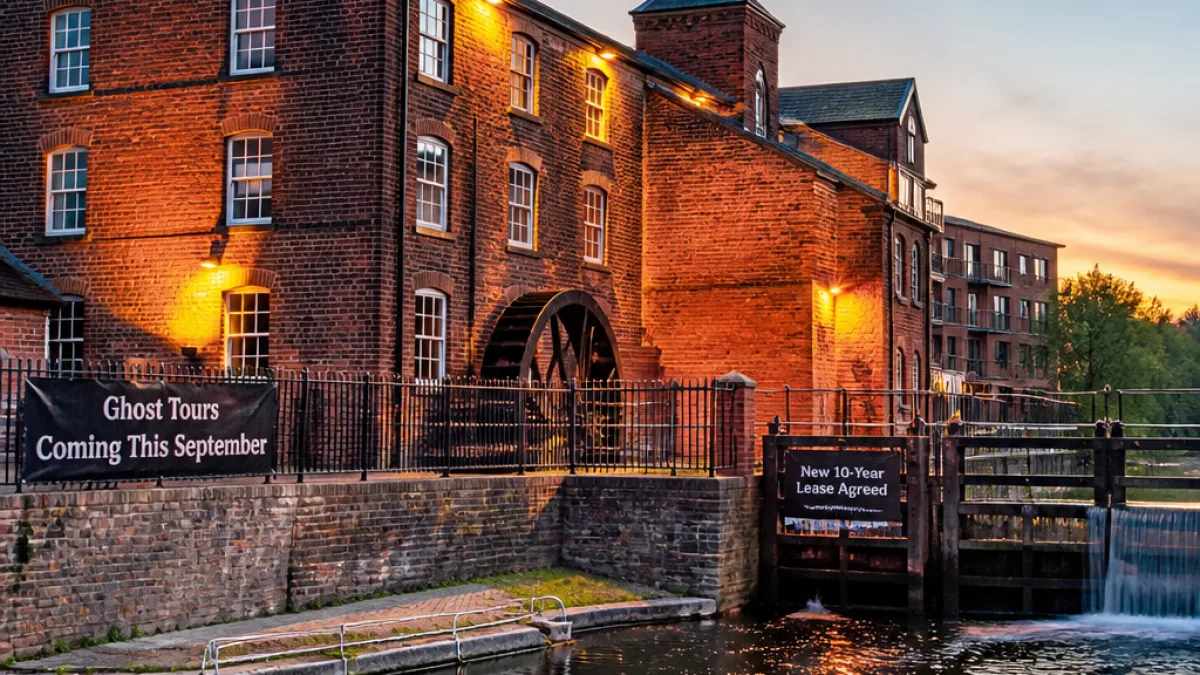
The Grade II-listed Thwaite Mill on the Aire & Calder Navigation has been given a fresh start after new operators agreed a 10-year lease, paving the way for public ghost-hunting tours and a broader revival of the riverside heritage site near Hunslet and Stourton. The mill, which dates in parts to the 17th Century and spans 19 acres on the River Aire, had faced uncertainty following a change of ownership this year.
Tenants Jenny Bryant and Chris Foster have signed terms with developers Odsal Properties, which bought the landmark earlier this year. A planned auction last month was pulled once the lease was agreed, ending immediate fears over the site’s future use and access for the public.
From closed museum to paranormal tours
Leeds City Council previously ran Thwaite Mill as a museum under a lease from the Canal & River Trust, but the attraction shut in 2024. Bryant and Foster intend to bring visitors back, starting with evening ghost tours that could launch as early as September, alongside a phased reopening for heritage interpretation and community events. They have also set their sights on hosting weddings and craft markets on the island site.
"Places like this need to be kept for the public to enjoy," said Bryant. She added: "As soon as it gets dark it does take on a whole new feel. You do feel like you are being watched."
The new operators have begun a fundraising drive to support conservation and programming, with grant bids also being prepared. They say the approach will focus on safeguarding the fabric of the listed buildings while creating a sustainable income stream for the long term.
Industrial heritage with deep Leeds roots
Thwaite Mill was an industrial mainstay until a nearby weir collapsed in 1975, bringing production to a halt. The site – including six Grade II-listed buildings such as two water wheels, a manager’s house, stables, a workshop and warehouses – later underwent restoration led by a charity, and re-opened as a museum in 1990. The complex’s 19th-century buildings were central to the city’s fabric-dyeing trade, adding to the mill’s significance within Leeds’ manufacturing story.
More recently, the atmospheric location has attracted filmmakers and was used as a set for the TV adaptation of the 1979 novel A Woman of Substance. Odsal Properties, as the site’s owner, is also required to maintain the access road, bridge and canal moorings.
What visitors can expect if plans progress
- Evening ghost-hunting events on the historic island, potentially beginning in September.
- Steps towards reopening the museum offer, with heritage displays reflecting the mill’s industrial past.
- New community uses, including wedding hire and craft markets, subject to funding and permissions.
While formal timetables and ticketing have yet to be announced, the operators stress that public access and conservation are at the heart of the venture. The blend of heritage interpretation and experiential events is designed to draw new audiences after a prolonged closure.
Timeline at a glance
| Year | Milestone |
|---|---|
| 1641 | Earliest recorded mill on the site |
| 1820s | Current listed buildings date from this period; dye production for textiles |
| 1975 | Nearby weir bursts; industrial use ceases |
| 1990 | Museum opens after restoration |
| 2024 | Museum closes |
| 2026 | New 10-year lease agreed; auction withdrawn; plans for ghost tours announced |
Why it matters for Leeds
Thwaite Mill’s rescue plan represents more than a new events calendar: it is a test of how Leeds can keep significant heritage assets viable outside direct municipal operation. After years of uncertainty, a lease model with clear maintenance obligations offers a route to reactivating a nationally listed site while retaining community access.
For residents, the proposals promise renewed opportunities to visit a distinctive part of the city’s waterways network, learn about its industrial legacy and support local cultural activity. For the operators, success will hinge on securing funds, delivering sensitive conservation and building a programme that brings people back through the gates in sustainable numbers.