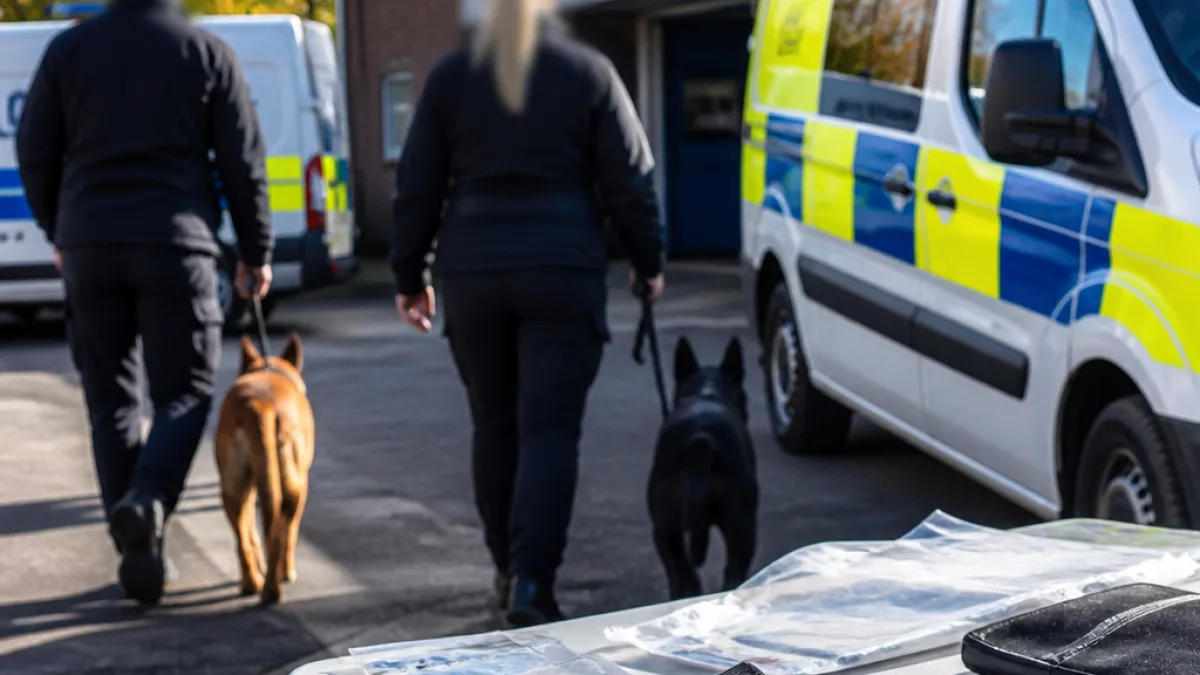
Hampshire and Isle of Wight police have bolstered their operational capability against drug supply with the introduction of two newly trained detection dogs. The animals, named Harry and Whitney, have completed an intensive training programme and will be deployed to support frontline officers across the county.
What the dogs will do
Both dogs have been trained to detect controlled substances and will assist in a range of policing activities. Their duties are expected to include:
- assisting at vehicle stops where officers suspect drugs may be present;
- supporting execution of search warrants involving suspected drug offences;
- taking part in community operations to identify and disrupt local drug supply.
The force says the dogs will contribute to safer communities by helping to locate illegal drugs and thereby support stronger enforcement against those involved in supply. This deployment reflects a continuing emphasis on targeted policing activity aimed at reducing the harm caused by illicit drugs.
Police comment
"Harry and Whitney have shown fantastic potential throughout their training. Their deployment will significantly enhance our ability to detect drugs and support operations across Hampshire and the Isle of Wight. Police dogs are an invaluable asset, and we are delighted to welcome them to the team."
The comment was provided by Inspector Andy Mooge of Hampshire and Isle of Wight Police.
How detection dogs affect policing locally
Cannabis, cocaine, heroin and other controlled substances continue to be a focus for many local policing teams, both because of the direct harm they cause and their links to wider criminal activity. Detection dogs offer officers a sensitive and fast method of locating such substances in vehicles, premises and on people, which can speed up investigations and reduce the need for more invasive searches.
For residents, the presence of specialist dogs on patrol provides a visible sign of enforcement activity against drug supply. For investigators, canine teams are often a key part of operations that lead to arrests, seizures and prosecutions.
| Dog | Role | Primary Uses |
|---|---|---|
| Harry | Drug detection | Vehicle stops, searches, warrants, community ops |
| Whitney | Drug detection | Vehicle stops, searches, warrants, community ops |
Practical information for the public
Members of the public who encounter police dog teams should follow normal officer directions. If a dog is present during a search or stop, officers will manage the situation and explain any necessary actions. Anyone with concerns about policing activity can contact Hampshire and Isle of Wight Police through their normal non-emergency channels or via 101, reserving 999 for emergencies.
As the dogs begin operational duties, local teams will integrate them into existing patrols and targeted operations. Residents can expect to see canine teams deployed in areas where intelligence suggests drug-related activity is taking place.
The addition of Harry and Whitney is part of continuing efforts by the force to use trained resources to tackle drug supply and the harm it causes to communities across Hampshire and the Isle of Wight.