University–industry tie-up aims to embed safe, practical AI across long-standing Luton group
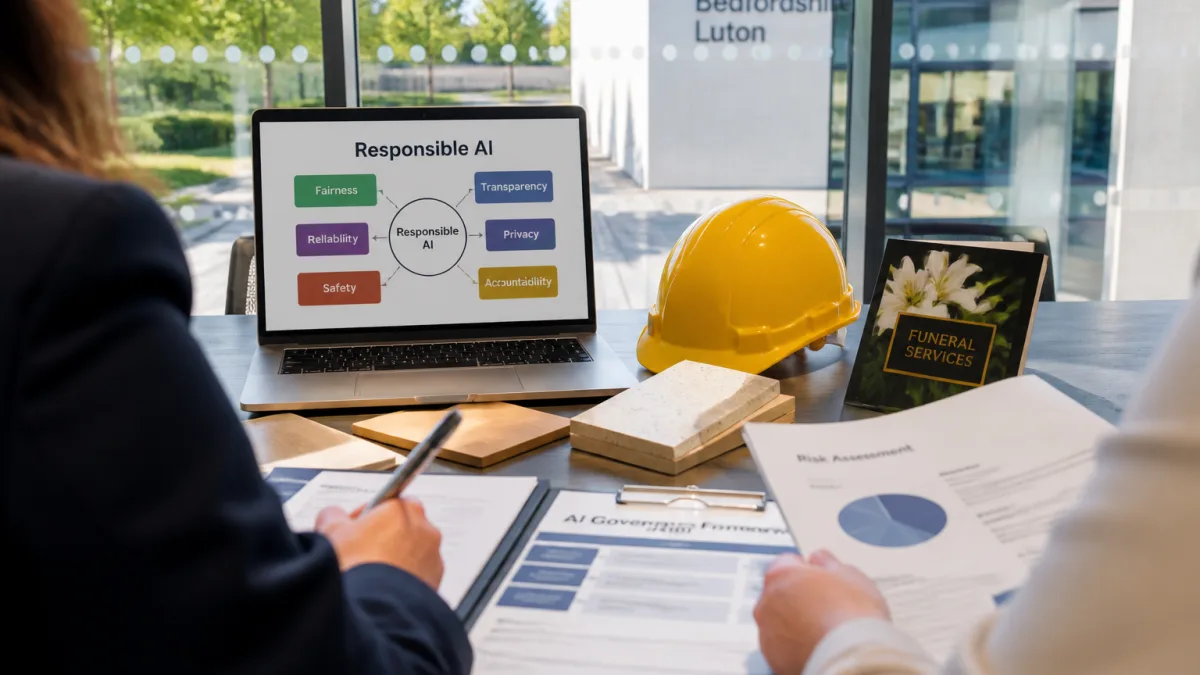
The University of Bedfordshire has launched a new collaboration between its Luton AI initiative and the Neville Trust group, in a programme designed to help one of the area’s oldest business families adopt artificial intelligence in a careful and accountable way. Over the next 9–12 months, the University team will work with the Trust and its subsidiaries to map current usage, develop governance and staff training, and trial secure tools aligned to day-to-day operations.
Neville Trust Ltd – the parent of Neville Special Projects, Neville Joinery and Neville Funeral Service – has a presence across construction, joinery, funeral services and property and has served the region for more than 150 years. The new tie-up positions the group to evaluate where AI can support its activities while safeguarding people, information and service quality.
What the programme will cover
Luton AI describes itself as an applied initiative that supports organisations to adopt AI in practical, responsible and impactful ways. According to the University, the programme with Neville Trust will include:
- A comprehensive review of existing AI use and opportunities, alongside identified risks.
- Creation of an organisation-wide AI strategy, with governance and policy documentation tailored to the group’s needs.
- Staff training to build capability and confidence in responsible use.
- Proof-of-concept work to evaluate secure AI tools in real operational settings.
- Laying the groundwork for later phases, including integration with systems and the development of bespoke AI agents for individual business units.
These steps are intended to ensure any deployment is proportionate and transparent, supporting decision-making, reporting and access to information without compromising security or trust.
Voices from the programme
“Neville Trust group has been part of the region's business landscape for more than 150 years, and this programme is about helping the organisation look confidently to the next chapter.”
“AI is already changing how organisations operate, but the real value comes from applying it carefully, responsibly and in ways that support people. By working closely with Neville Trust group staff, we can identify where AI can safely add value, improve access to information, strengthen reporting…”
The comments are attributed to Dr Ed Braund, Director of Luton AI and Head of the School of Computing, Engineering, & Creative Industries at the University of Bedfordshire.
Who is involved and how it will run
The programme will involve the Neville Trust group businesses, with Neville Special Projects acting as the lead organisation during the first phase. Alongside policy development and training, the initiative will test small-scale applications to understand where AI can be safely embedded and where it should be limited or excluded, with lessons then shared across the group’s operations.
| Element | Details |
|---|---|
| Duration | Approximately 9–12 months |
| Lead business (phase one) | Neville Special Projects |
| Group subsidiaries | Neville Special Projects; Neville Joinery; Neville Funeral Service |
| Focus areas | Assessment; strategy & governance; staff training; secure tool pilots; future integration |
Why this matters for Luton’s economy
For a multi-disciplinary local employer with deep roots in the region, getting AI adoption right is not simply a technology choice; it is about setting clear boundaries for data use, accountability and the human oversight that underpins public trust. In sectors such as construction, joinery and funeral care, responsible implementation is key to ensuring any efficiencies or information gains do not come at the expense of safety, privacy or service standards.
The University’s involvement provides a structured route for a locally significant group to build capacity in a way that reflects sector realities. If successful, the approach could offer a template for other employers in and around Luton considering similar steps, particularly small and medium-sized firms seeking guidance on governance, training and secure tooling rather than wholesale automation.
Next steps
As the initial phase begins with Neville Special Projects, the focus will be on building a robust baseline: understanding current practices, co-designing policies with staff, and testing contained use cases. Subsequent phases are expected to explore integration with operational systems and the development of tailored AI agents at business unit level, guided by evidence from early pilots.
By anchoring the work in strong governance and staff development, the University and Neville Trust aim to ensure that any adoption of AI is measured, secure and genuinely useful to people and processes across the group.