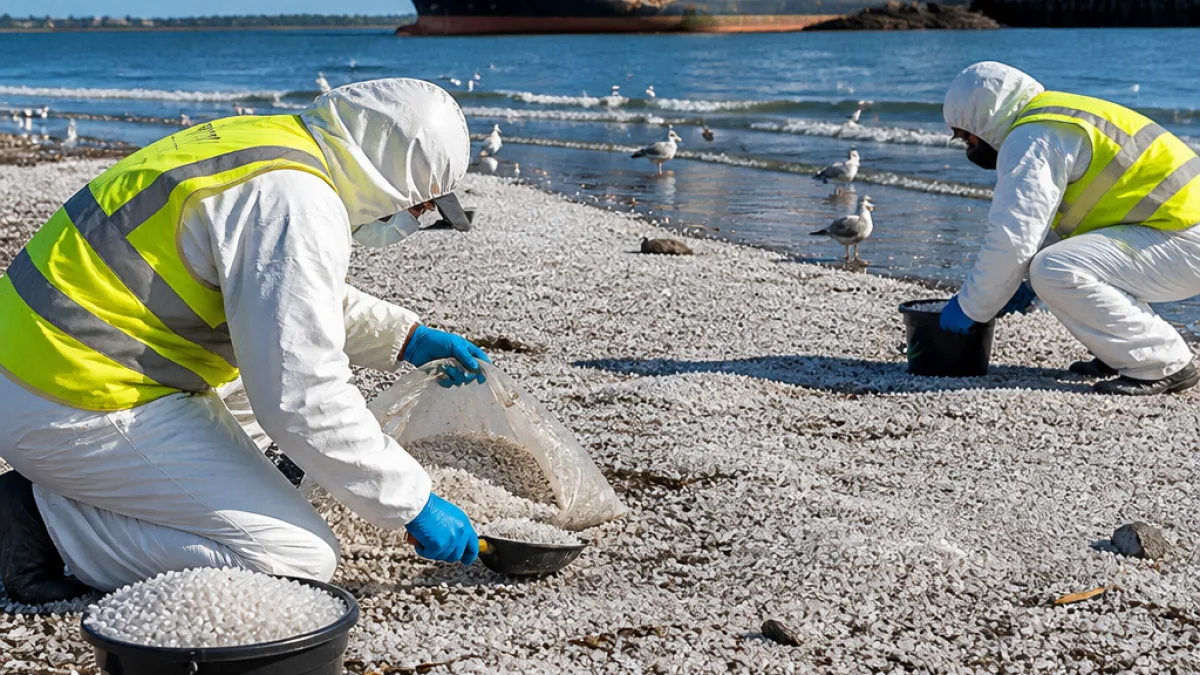
Community volunteers who have spent days clearing tiny plastic pellets from north‑east beaches have held talks with senior figures from the Port of Tyne after a collision between two vessels released large quantities of nurdles into the river and sea.
What happened and why it matters
The incident, which damaged two shipping containers, led to tonnes of plastic pellets — commonly known as nurdles — entering the water and later washing up on shores along the coast. Campaigners say the pellets are being mistaken for fish eggs by seabirds and other marine life, creating an immediate hazard to wildlife and a longer‑term pollution problem for beaches.
The port has told volunteers it prioritised a salvage operation after the crash, including removing a collapsed crane and moving one of the ships involved. That work, the port said, permitted it to access and remove damaged containers in the river that still contained "several tonnes of nurdles" which were at risk of leaking.
Volunteer concerns and the community response
Local clean‑up groups have criticised what they describe as a slow initial reaction. South Tyneside campaigners say measures to contain the spill were not deployed for several days, allowing pellets to disperse more widely with tides and currents.
"We don't think there's been enough done in the river to stop these nurdles going out to sea - the clean up so far has been inadequate."
Campaigners and local residents described the community effort as commendable but said they should not have had to act alone. One volunteer reported people working with household sieves to pick pellets from sand and seaweed, highlighting the difficulty of removing such small particles from the environment.
- Immediate impact: pellets found on beaches; wildlife ingesting them.
- Port response: salvage operations prioritised; engagement with volunteers promised.
- Community action: local clean‑ups ongoing, volunteers meeting port representatives to discuss next steps.
Practical implications for residents and visitors
People walking affected beaches should be aware that nurdles are small and can be hard to spot; avoid touching wildlife and report sightings of substantial pellet accumulations to local councils or organised clean‑up groups so resources can be directed effectively. The environmental risk is twofold: direct ingestion by animals and the long‑term persistence of microplastics in the shoreline ecosystem.
| Known facts | Details |
|---|---|
| Cause | Collision between two vessels at the Port of Tyne, damaging containers |
| Contents released | Millions of plastic pellets (nurdles); port refers to "several tonnes" still at risk |
| Immediate port action | Salvage operation to remove collapsed crane and move a ship; subsequent container removal |
Representatives from the port have met volunteers to discuss how the company can "best help" get rid of the pellets. For many local campaigners, the meeting is a start, but not a solution — they want clearer plans and faster deployment of containment and recovery measures in the river and along the coastline.
As the clean‑up continues, monitoring the scale of the spill and the effectiveness of recovery work will be essential. For residents, the event is a reminder of how maritime incidents can translate into local environmental harm and of the vital role of community groups in responding to pollution emergencies.