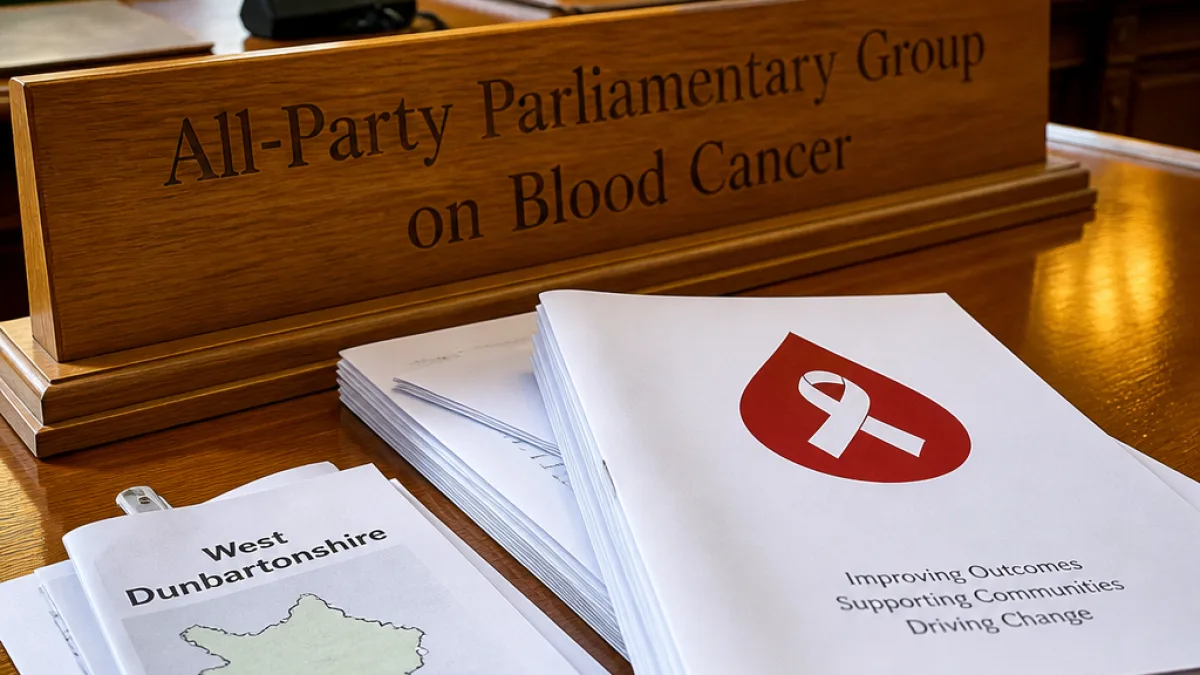
West Dunbartonshire's MP has taken a prominent role in a new cross‑party parliamentary group aimed at improving outcomes for people living with blood cancers. Douglas McAllister was elected as an Officer and Vice Chair at the inaugural meeting of the All‑Party Parliamentary Group (APPG) on Blood Cancer, which convened MPs from across Parliament to set its initial priorities.
Purpose and immediate priorities
The APPG has been established to act as a forum for parliamentarians to work with clinicians, service leaders and patient organisations to push for better diagnosis, treatment and care for those affected by leukaemias, lymphomas and related conditions. Meetings will be held on a quarterly basis and the group’s early focus includes:
- improving care for patients on active monitoring pathways
- assessing progress against the Government’s National Cancer Plan
- planning a future inquiry into the impact of inequalities on blood cancer care and outcomes
Secretariat and governance
The APPG’s secretariat will be provided by the Blood Cancer Alliance, with support from agency partners M+F Health. Their responsibilities include management of meetings and events, handling enquiries and supporting the chair’s office in delivering the APPG work programme.
Statements from officers
"I am pleased to have been elected as an officer to the new All‑Party Parliamentary Group on Blood Cancer at its inaugural meeting last week."
The newly appointed Chair, Paul Davies MP, described the group as offering a "vital platform" for collaborative work with government departments, health system leaders and experts from across the blood cancer community.
Local implications for West Dunbartonshire
For residents of West Dunbartonshire, the MP’s role on the APPG could provide a direct channel to national discussions about implementation of the National Cancer Plan and about addressing regional variations in care. While the APPG is not a decision‑making body, it can influence policy through inquiries, evidence sessions and by raising parliamentary questions.
| Feature | Detail |
|---|---|
| Meeting frequency | Quarterly |
| Initial priorities | Active monitoring, National Cancer Plan, inequalities inquiry |
| Secretariat | Blood Cancer Alliance (supported by M+F Health) |
The announcement will be welcomed by local patient groups and families affected by blood cancer, who often stress the importance of national policy translating into improved services at regional hospital trusts and community care settings. The APPG’s stated intention to scrutinise progress against the National Cancer Plan could create opportunities for constituents to have concerns raised at parliamentary level.
As the APPG develops its workplan and schedules its first evidence sessions, constituents in West Dunbartonshire and local health stakeholders will be able to monitor how the group’s activity lines up with service delivery and funding decisions affecting the area. The group’s inquiry on inequalities, in particular, may highlight geographic disparities that bear directly on local services and outcomes.