
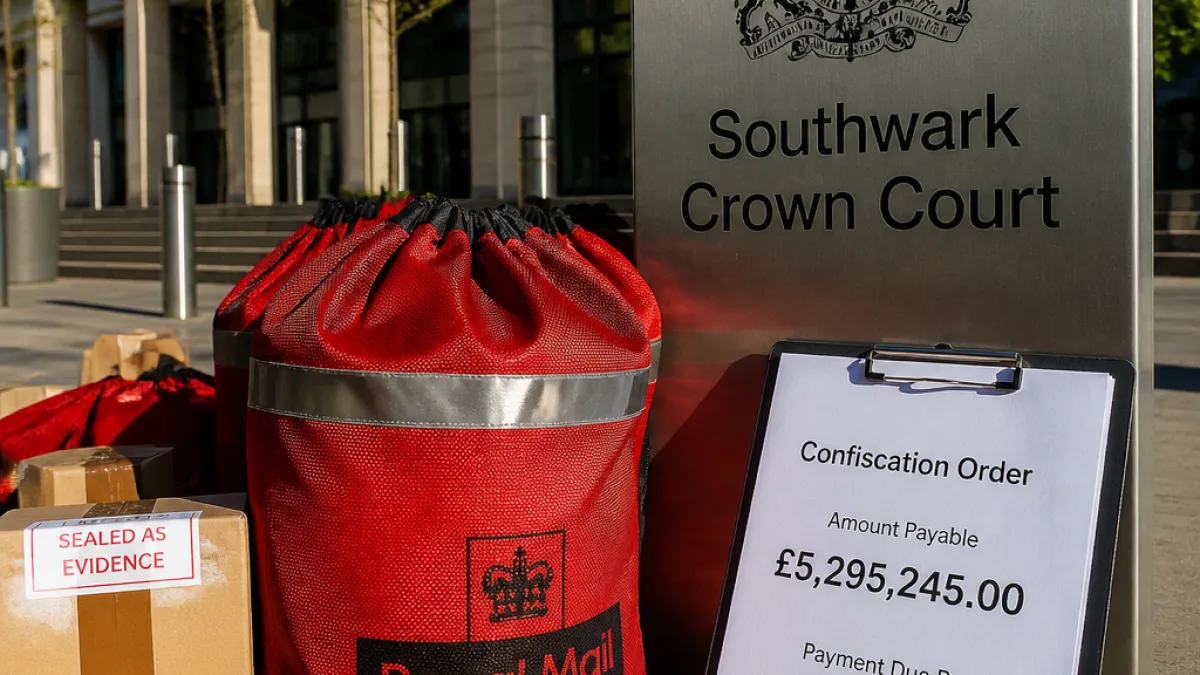
Confiscation order targets proceeds of decade-long postal fraud
An Aylesbury businessman at the centre of a large-scale postal fraud has been ordered to repay more than £5 million to Royal Mail by 15 August or serve a further eight-and-a-half years in prison. The order follows a complex, years-long investigation into how mail was misdeclared and routed through firms in Berkshire and Buckinghamshire, depriving the postal operator of substantial revenue.
Narinder Sandhu, 64, ran Aylesbury-based Packpost International Ltd (PPIL). He admitted conspiracy to commit fraud and was sentenced in 2024 to four years in custody. Proceedings at Southwark Crown Court have now focused on the recovery of criminal benefit, with the judge determining that Sandhu and his business played leading roles in a scheme that, according to Royal Mail, formed part of a wider network costing the company around £70 million.
How the fraud operated and what the court found
The offending, which ran between 2008 and 2017, involved falsely declaring both the destination and the volume of mail, thereby securing lower postage charges than would properly have been due. In court, it was heard that nearly £10 million was transferred from the business to Sandhu’s personal accounts. The judge concluded that the proceeds funded a high-end lifestyle, including Rolls-Royce and Bentley vehicles and a large property in Jordans, Buckinghamshire, known as Hadley Grange.
As part of enforcement activity, that property was seized and sold by police for £2.6 million. The court also heard about attempts to move money overseas after Sandhu’s arrest in 2017, including transfers to Dubai. The judge found that he had not been truthful about funds held abroad, including approximately £770,000, and noted the sale of two London flats in 2018 at values said to be significantly below their true worth.
Company liability and the repayment timetable
While the latest order addresses Sandhu’s personal liability to repay Royal Mail, the company he headed, PPIL, has separately been ordered to return just over £865,000. Confiscation proceedings of this nature are designed to strip criminal benefit; failure to comply with the timetable can result in substantial default terms, as set by the court.
| Key element | Figure / detail |
|---|---|
| Repayment due to Royal Mail | £5m+ by 15 August |
| Default prison term if unpaid | 8.5 years |
| Personal transfers identified | Nearly £10m |
| Property seized and sold | Hadley Grange, £2.6m |
| Wider network loss (Royal Mail) | About £70m |
| PPIL repayment order | £865,000+ |
Local impact and public interest
For Buckinghamshire residents and businesses, this case underscores the scale of fraud risk within service supply chains that many rely on daily. Misdeclaring post can distort costs across the network, shifting the burden onto other mail users and ultimately affecting the price and reliability of services. The Aylesbury connection is also notable: the offending was orchestrated from a firm rooted in the town, with links to companies operating across the Thames Valley.
The confiscation order provides a measure of redress for Royal Mail and stands as a high-profile example of how courts can recover criminal benefit following conviction. While it does not undo the operational and financial disruption caused over nearly a decade, it sets a clear expectation that unlawful gains will be pursued and, where possible, realised through asset sales and cash recovery. The disposal of a high-value Buckinghamshire property, together with scrutiny of overseas transfers, illustrates how such orders can reach across jurisdictions and asset classes.
Timeline and what happens next
- 2008–2017: Fraudulent misdeclaration of mail destinations and volumes across Buckinghamshire and Berkshire.
- 2017: Arrest; subsequent attempts to move funds overseas identified by investigators.
- 2024: Four-year prison sentence after admission of conspiracy to commit fraud.
- By 15 August (this year): Sandhu must repay £5m+ to Royal Mail or face a default term of 8.5 years.
In court, it was stated that Sandhu is currently undertaking low-paid work; however, the judge’s findings on concealed funds and asset disposals set the parameters for what must be repaid and the consequences for non-compliance. The order against PPIL sits alongside the personal liability, reflecting both individual and corporate responsibility identified by the court.
What residents should know
For local enterprises using postal services, the case is a reminder that compliance with mailing rules—particularly accurate declaration of volume and destination—is scrutinised. Where fraud is suspected, Royal Mail and enforcement agencies have shown they will pursue not only criminal charges but also the recovery of assets. Those with concerns about irregular practices in the mailing chain should seek advice from the appropriate authorities or via established whistleblowing channels.
Royal Mail’s previously stated estimate that the broader Berkshire–Buckinghamshire network of firms and individuals caused losses of around £70 million places this matter among the most serious postal frauds linked to the region in recent years. The coming weeks will determine whether the ordered sums are paid or whether the default prison term is triggered.