Crews from multiple stations halt fast-moving blaze
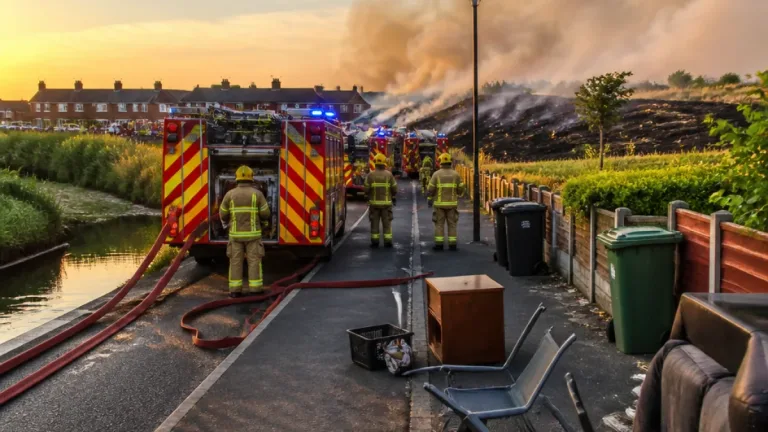
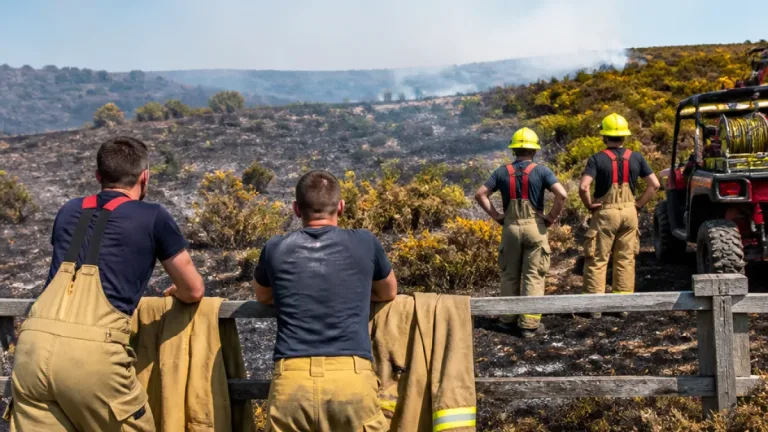
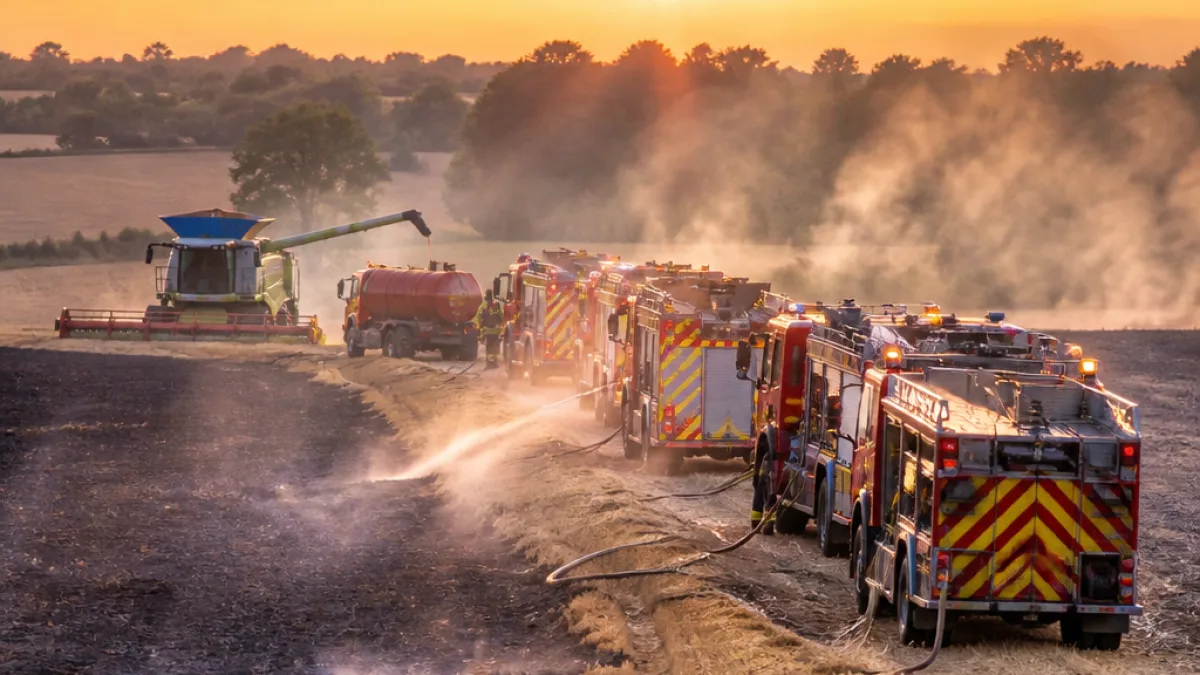
A large agricultural fire near Moulsoe, on the Buckinghamshire–Bedfordshire border, scorched roughly 55 acres of recently cut crop on Sunday evening (19 July) before being brought under control by fire crews drawn from several neighbouring stations. Firefighters were alerted shortly after 6pm and mounted a coordinated response to confine the flames in hot, dry harvest-time conditions.
Teams from Broughton, Newport Pagnell, West Ashland, Woburn and Mereway attended, supported by three officers. With the fire linked to a combine harvester, crews deployed specialist wildfire tactics to stop the burn front from advancing across open farmland and to protect the surrounding environment.
Specialist tactics and partnership with landowner
Firefighters used a combination of breathing apparatus, hose reel jets and a water carrier, supplemented by water supplied from a farmer’s bowser. A dedicated wildfire unit operated in an offensive mode to check the spread, supported by a 360-degree perimeter assessment to track hotspots and wind-driven edges. In collaboration with the landowner, crews established a fire break, a tried-and-tested measure that removes combustible material and can significantly slow lateral spread across stubble or straw.
Once the main flames were contained, firefighters switched to prolonged damping down and turning over to expose and extinguish smouldering pockets. This phase is critical on arable land, where heat can linger beneath the surface and reignite in breezy conditions.
| Incident detail | Summary |
|---|---|
| Location | Moulsoe area, Buckinghamshire |
| Time and date | Shortly after 6pm, Sunday 19 July |
| Area affected | Approximately 55 acres of cut crop |
| Apparatus | Hose reel jets, water carrier, wildfire unit, farmer’s bowser |
| Crewing | Stations from Broughton, Newport Pagnell, West Ashland, Woburn, Mereway; three officers |
Heightened seasonal risk on farms
Harvest season routinely raises the risk of fast-spreading field fires. Cut crops, dry straw and chaff can ignite readily, and any mechanical fault, friction or hot surface on machinery may provide the spark. Open fields also allow flames to run with wind, while limited access points make firefighting logistics more complex. Sunday’s incident follows a pattern seen nationwide during warm, dry spells in late July when agricultural work is at its busiest.
While the investigation and full circumstances were not detailed at the time of writing, the reported use of a combine harvester immediately before the outbreak is consistent with typical ignition pathways in summer arable fires. The prompt multi-crew mobilisation, supported by on-farm water resources, appears to have prevented further spread to uncut crops, boundaries or nearby assets.
What farmers and the public can do
Crews’ close working with the landowner—particularly in creating a break line and supplying water—reflects best practice that can make a decisive difference before a front gains momentum. Farmers often prepare for this risk during the cutting season.
- Keep harvesting equipment well maintained and clear of dust and crop residues.
- Where possible, have a bowser or water source available and consider creating fire breaks.
- If smoke is visible across roads, slow down and use headlights; do not drive onto cropped fields.
- Report fires immediately via 999, giving the nearest road junction or landmark to assist crews.
Aftermath and next steps
Following containment, firefighters remained on scene to tackle residual hotspots. Damping down is standard after large field fires, reducing the likelihood of reignition when wind picks up or temperatures rise again. No further details on injuries or damage beyond the affected acreage were given at this stage.
Incidents of this scale underline the importance of cross-border support between stations and the readiness of rural communities to assist when seconds matter. As temperatures fluctuate through July, residents and landowners are urged to stay alert to smoke, machinery issues and changing wind conditions that can turn a minor spark into a major field fire.