Calm return through north Belfast after the Twelfth
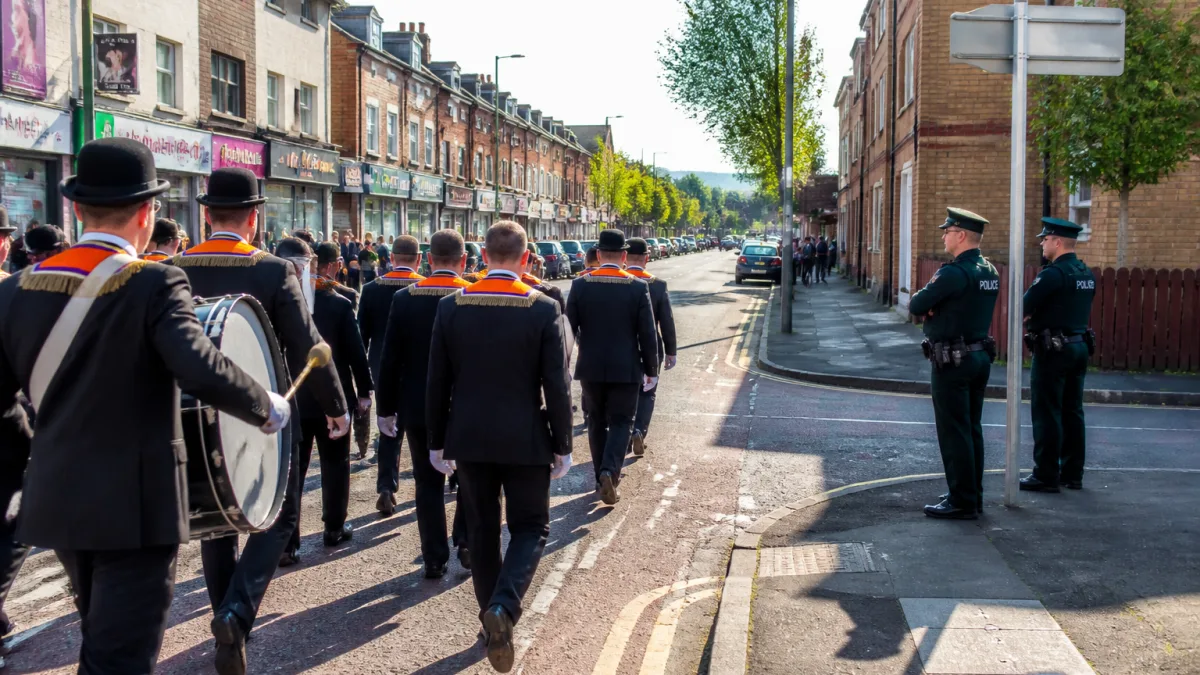
A return parade by Ligoniel Orange lodges moved past Ardoyne in north Belfast on Tuesday morning without disruption, a significant development in an area long associated with tension during the parading season. The procession, which followed the main Twelfth events held on 13 July this year, was allowed to take place a day later for the second consecutive year under a determination by the Parades Commission.
Once a regular focal point for confrontation, particularly on the evening homeward route on the Twelfth, the stretch at Ardoyne has witnessed previous violent scenes between supporters of the march and protesters opposed to it. On Tuesday, however, bands advanced to a restrained single drum rhythm and police maintained a low-key presence. A small group of supporters applauded as the parade progressed from Woodvale Road onto the Crumlin Road, continuing towards Ligoniel Orange Hall.
On Tuesday morning, the parade passed without incident with bands playing a single drum beat amid a low-key police presence.
Parades Commission timing and route
The Commission’s approval for a day-later return mirrors last year’s approach, spacing the Ardoyne movement from the main Twelfth schedule. Organisers and statutory bodies have frequently emphasised that timing, stewarding and policing style are among the crucial factors in managing sensitive interfaces. While this year’s determination is specific to these lodges and this route, the approach will be closely noted elsewhere in Belfast and beyond.
The morning timetable aligned with a subdued atmosphere on the route and allowed the parade to complete its passage with minimal disruption to local traffic and businesses along the Crumlin corridor. Residents and traders in the surrounding streets have in previous years faced road closures and heightened tensions; the absence of incident this time is likely to be welcomed, even as broader debates over parading continue.
City-wide celebrations and regional context
Across Northern Ireland, tens of thousands attended Twelfth demonstrations on Monday after the date shifted from Sunday. This year marked the 336th anniversary of the Battle of the Boyne, commemorating the victory of King William of Orange over King James II. Later on Tuesday, attention was set to move to the village of Scarva in Co Armagh for the Royal Black Preceptory’s traditional events, including a parade and the well-known sham fight representing the rival monarchs.
For Belfast specifically, the uneventful Ardoyne return will be seen as a practical test of how sensitive routes can be managed in a way that reduces friction. Public bodies, community groups and residents have long sought arrangements that protect expression while minimising the risk of disorder. The measured policing posture and the single-beat accompaniment underlined a deliberate attempt to lower temperature on the ground.
Local implications for community relations and services
- Community impact: A peaceful passage helps limit strain on local households and businesses along the interface, avoiding the disruption historically linked to parading flashpoints.
- Policing and resources: A low-key deployment reduces pressure on officers and enables more routine service across the city during the parading season.
- Future determinations: The success of this timetable may inform how the Commission considers timing and conditions on comparable routes.
While no single event resolves longstanding issues around contested space, a calm return in Ardoyne will be read as a constructive moment for north Belfast. Civic leaders and residents alike will be alert to how these arrangements hold across the remainder of the summer, when parades and related gatherings continue on the calendar.
At a glance
| Event | Date | Location/Route |
|---|---|---|
| Return parade (Ligoniel lodges) | Tuesday morning | Woodvale Road → Crumlin Road → Ligoniel Orange Hall |
| Main Twelfth parades | Monday, 13 July | Across Northern Ireland |
| Royal Black at Scarva | Later Tuesday | Scarva, Co Armagh |
The measured tone on Tuesday contrasts with the historical picture at this junction of north Belfast. Even so, the city’s parading season remains a period when careful planning and continued dialogue are essential. The next few weeks will show whether this year’s pattern—separation in timing, restrained accompaniment and light-touch policing—can continue to keep interfaces calm.