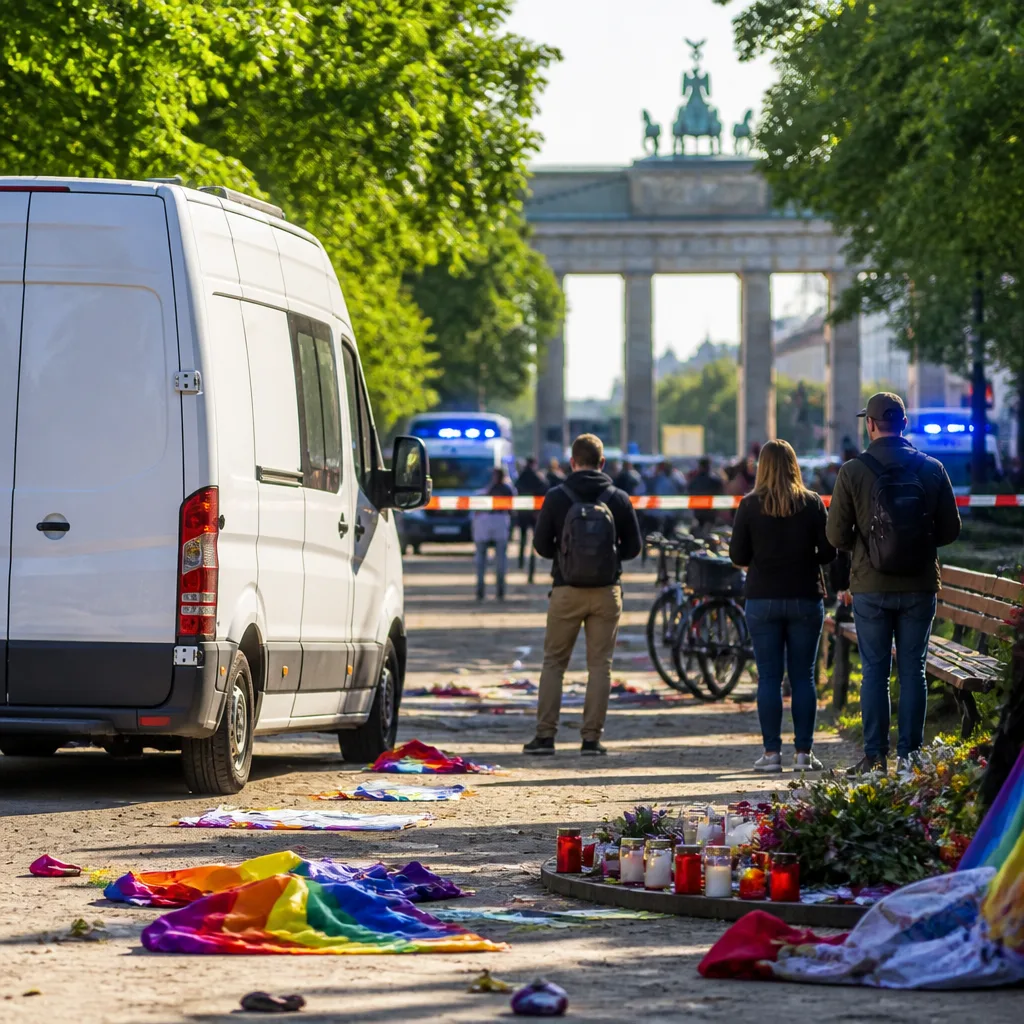
A vehicle struck participants at Berlin's Tiergarten during the city's annual Pride celebrations on Saturday, killing one woman and injuring 29 people, officials say. German authorities have linked the incident to the Islamic State.
Shock in a city famed for openness
For many residents and visitors, Berlin has long represented one of Europe's most visible and vibrant queer centres. The van attack has delivered a stark and violent blow to that sense of safety. Witnesses and local commentators describe a community stunned by an act of targeted violence at an event meant to celebrate identity and freedom.
Personal stories underline wider fears
The human cost is immediate: a life lost, dozens wounded and countless more traumatised. Personal recollections from those who have made the city their home, or who dream of doing so, highlight how Pride functions not only as a festival but as an affirmation of belonging — particularly for people from places where being LGBTQ+ remains dangerous or legally constrained.
"I had been daydreaming about Berlin," a young man told the writer, an imagined escape from a life lived partly in fear.
Accounts from individuals who arrived in Berlin seeking community and safety emphasise how fragile that sense of refuge can feel in the wake of such violence. Many are re-assessing travel plans, event attendance and public visibility amid concerns over security and rising extremist threats.
Context: attacks and setbacks across the region
Incidents targeting LGBTQ+ spaces are not isolated to Germany. Advocacy organisations have documented repeated assaults on community institutions across Europe, and some safe spaces have been forced to close. One such example is a Pride information centre in Belgrade that endured multiple physical attacks and permanently closed in 2024.
| Statistic | Detail |
|---|---|
| Fatalities | 1 woman killed |
| Injured | 29 people wounded |
| Reported attacks at Belgrade Pride Info Centre | More than 20 physical attacks since 2018 (ILGA-Europe) |
| Pride Info Centre status | Closed permanently in 2024 |
- Authorities in Berlin have linked Saturday's van incident to the Islamic State.
- The attack has prompted fresh debate about security at public LGBTQ+ events.
- Advocates note a pattern of violence and intimidation against queer spaces across parts of Europe.
Policy implications are likely to include renewed calls for heightened policing and protective measures around public LGBT+ gatherings, as well as urgent discussion about intelligence and prevention in the face of extremist-inspired acts. Community groups will face the challenge of balancing safety with the openness and visibility that Pride events traditionally embody.
As investigations continue, the immediate priority for many is support — medical, psychological and communal — for survivors and bereaved families. For those who view Berlin as a haven, the attack is a reminder that progress in rights and acceptance can be vulnerable to sudden, brutal reversals.
Readers seeking ways to help should look to established local LGBTQ+ charities and community centres for verified guidance on donations, vigils and support services in the aftermath of the attack.