
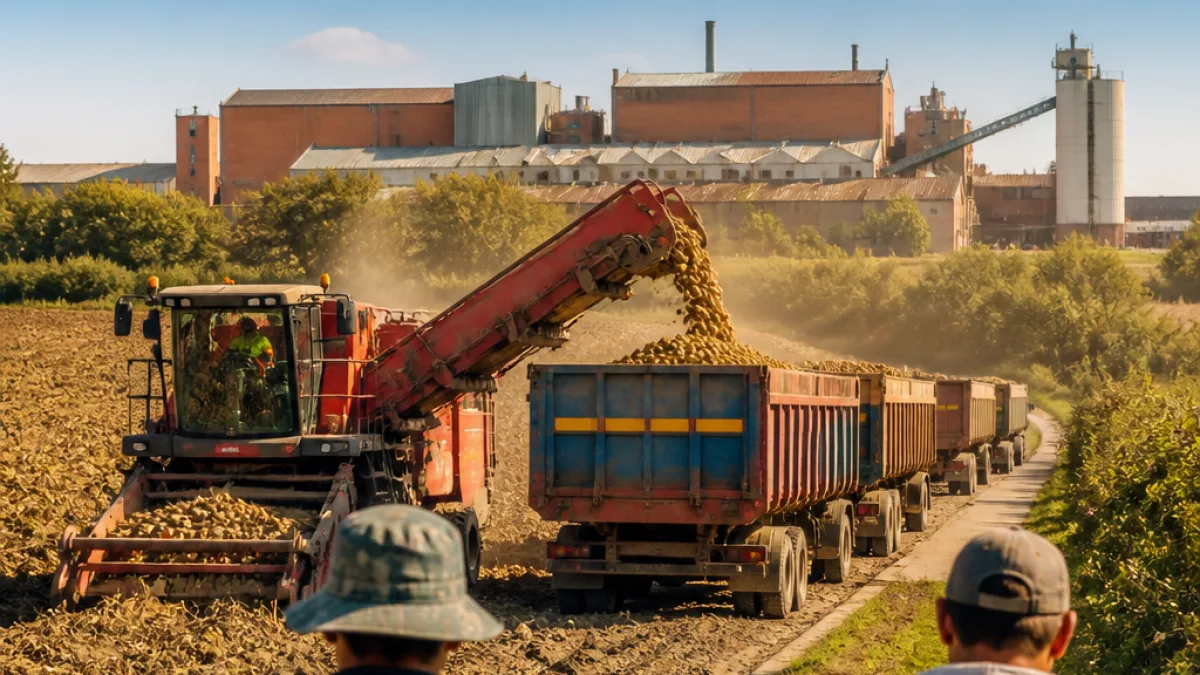
The journey from field to supermarket shelf for a familiar Yorkshire snack passes through Bradford, where one of the region's best‑known crisp manufacturers turns freshly harvested potatoes into packets within 24 hours.
From harvest to factory in a day
Seabrook, the crisp maker noted for its regional profile, sells hundreds of millions of packets each year. The current crop destined for its Bradford plant was planted in April on a farm near York. That field, the size of 17 football pitches, contains roughly 2.5 million potatoes — each tuber potentially becoming a single bag of crisps.
Farmers are using mechanised haulage to lift the crop, replacing the slow, hand‑dug methods of the past. Supply chain managers and farm directors described a highly time‑sensitive process: potatoes can be harvested, transported and processed into finished product in under a day.
- Field size: 17 football pitches
- Estimated tubers: 2.5 million
- Seabrook annual sales: around 460 million packets (company figure)
Scale, specification and seasonal risks
Producers are selective about the tubers that reach the Bradford line. For processors, shape and size matter: a rounded, moderate‑sized potato is preferred to produce a consistent crisp. Supply chain staff check quality through planting and growth, with plenty of sampling to maintain standards.
"We are looking at around hopefully 300 tones of potatoes from here, which should keep the Seabrook factory going for about two days,"
The comment came from a supply manager at the farm supplying the Bradford factory, who also set out conversion figures: approximately 27 tonnes of potatoes contain about 240,000 tubers. Those ratios help processors plan production runs and logistics into the Bradford plant.
Climate and water concerns
Farm directors warn that weather is a growing constraint. Recent records show the UK — and particularly parts of Yorkshire — have experienced unusually warm seasons and drought declarations in some areas. Farm management says water availability is their current biggest challenge, a point that has implications for local agrifood supply chains feeding Bradford's food processing economy.
| Metric | Figure |
|---|---|
| Field area | 17 football pitches |
| Potatoes in field | ~2.5m tubers |
| Potatoes per 27 tonnes | ~240,000 tubers |
| Seabrook annual packets | ~460 million |
For Bradford, the story is not only about a household brand and the novelty of rapid processing: it is a reminder of the link between local industry and upstream farming, the importance of reliable water and weather conditions, and the logistics that keep production lines turning. Any prolonged shortages or supply disruption upstream would quickly affect shift patterns and throughput at processing sites in and around the city.
Local residents and workers with an interest in Bradford's manufacturing footprint should expect continued attention from processors and growers as they manage yields, water and transport to maintain the fast turnaround that underpins the region's crisp output.