A public appeal has been launched to capture the lived history of the Camp Hill Line following the reopening of three stations in Birmingham earlier this year.
New stations, old stories
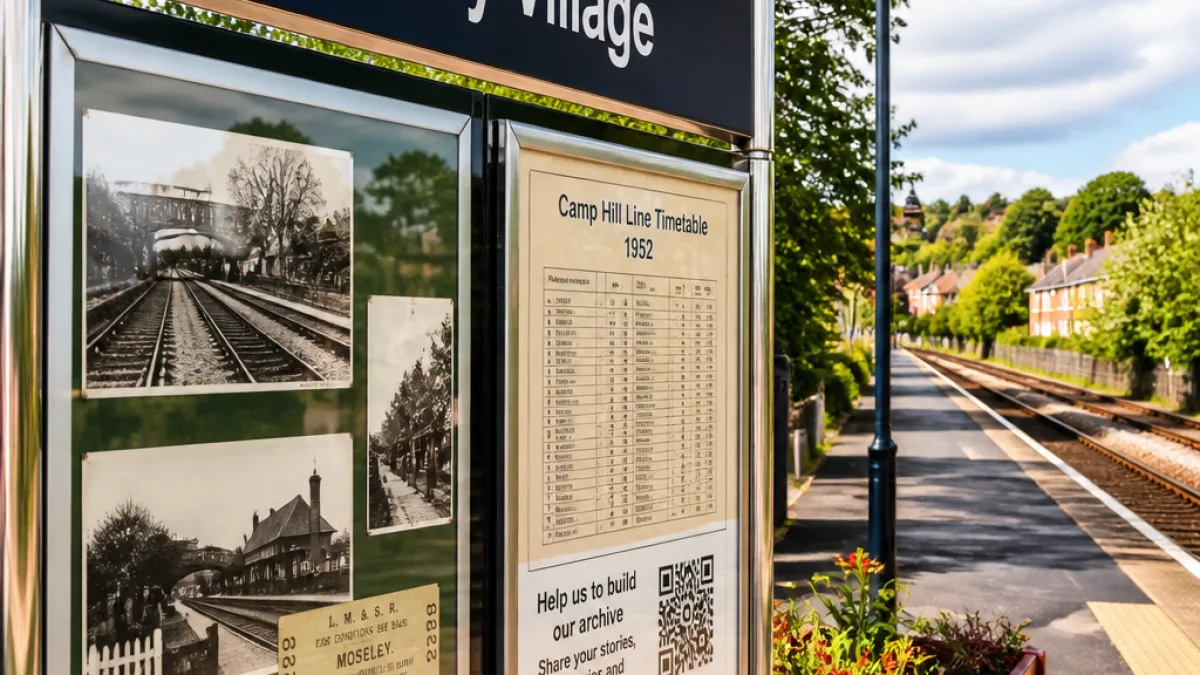
Services resumed in April at King Heath, Pineapple Road (formerly known as Hazelwell) and Moseley Village, reconnecting neighbourhoods to the city centre for the first time in 85 years. The original Camp Hill stations were closed in 1941 amid wartime coal shortages; their revival this year has prompted West Midlands Railway to invite local people to share memories and memorabilia for a community history project.
The operator is asking residents to contribute items such as photographs, tickets, timetables, newspaper cuttings or personal recollections so that the social history of the line and its role in local communities can be preserved.
“These railway lines have played an important role in their communities for generations… While the stations themselves may be new, the history behind them stretches back decades and we’re keen to ensure those memories aren’t lost.”
What the project seeks and how to get involved
West Midlands Railway has invited anyone with relevant material to make contact by email. The company emphasises a desire to capture a mixture of family connections, treasured images and personal stories that illuminate how the line has shaped daily life across south and central Birmingham.
- Types of material sought: photographs, tickets, timetables, newspaper cuttings, oral histories.
- Stations involved: King Heath, Pineapple Road (Hazelwell), Moseley Village.
- How to contribute: email [email protected].
Wider reopening programme
The Camp Hill Line work forms part of a broader investment in local rail. Earlier this spring, new rail stations reopened in Willenhall and Darlaston in March 2026 following an £85 million investment. Project partners have described the recent openings as improving connectivity and supporting sustainable travel in the region.
For residents of the Camp Hill corridor, the restoration of services not only shortens journeys into Birmingham city centre but also revives a visible piece of local heritage. Community-led archives can help place the new transport infrastructure in historical context and give residents an ongoing stake in how their neighbourhoods are remembered.
Why local memories matter
Collecting and conserving memories does more than supply nostalgic interest. It can:
- Inform local history displays and exhibitions;
- Support educational projects and walking trails;
- Preserve evidence of how transport links influenced employment, leisure and daily routines across generations.
| Station | Historic name (where applicable) | Reopened |
|---|---|---|
| King Heath | — | April 2026 |
| Pineapple Road | Hazelwell | April 2026 |
| Moseley Village | — | April 2026 |
Anyone wishing to contribute should email [email protected] with details of what they have and, where possible, a short description of the item and its provenance. Contributors may be invited to lend originals for digitisation or to provide statements for inclusion in the community record.
The appeal provides an opportunity for residents to shape how the reopened Camp Hill Line is remembered and understood by future generations, tying contemporary transport improvements to the personal histories of those who used the line before it closed during the Second World War.