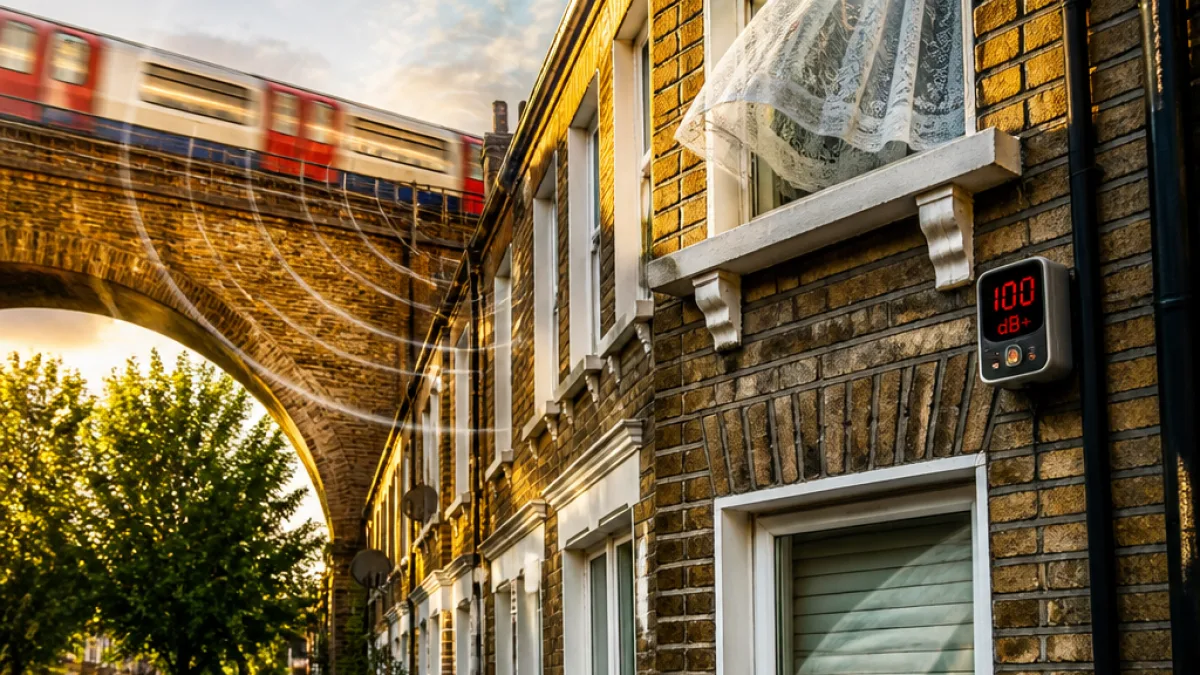
Passengers and residents demand openness on escalating tube noise
Transport for London (TfL) is under pressure to spell out a public, detailed plan to tackle rising noise on parts of the Underground network, following concerns that vibrations and screeching from trains are causing significant disturbance in north London and beyond.
Labour members of the London Assembly have highlighted hotspots on the Northern, Victoria and Central lines, where locals have reported persistent, high‑pitch rail noise. In some places the sound has been measured at more than 100 decibels — a level comparable to a nearby helicopter taking off — prompting calls for a more transparent approach to mitigation work.
“Residents are increasingly frustrated — not only because noise levels remain unaddressed, but because the information provided by TfL is becoming less, not more, detailed and less responsive to their lived experience.”
The Assembly’s transport spokesperson has asked TfL to publish consistent and specific data on interventions intended to cut tube noise, including track maintenance and other engineering measures. A previously targeted track‑grinding programme, carried out between 2020 and 2022, was aimed at reducing the problem but has since been replaced by a strategy described by TfL as more “data led”. Local representatives say that the frequency and depth of grinding works have reduced sharply since that change.
What residents want and what TfL has done
- Clear public reporting of noise measurements on affected sections.
- Transparency about the methods used to decide where and when maintenance takes place.
- Evidence of the effectiveness of measures such as “coasting” and targeted grinding.
According to the Assembly, one operative mitigation — allowing trains to coast through certain sections rather than powering through — has been credited in some internal reports with lowering noise in parts of the network. However, campaigners say TfL has not published data showing how large or sustained that benefit is, or when such measures might be widely adopted on the lines that experience the worst disruption.
For residents living close to tracks in Haringey and neighbouring boroughs, the issue is not merely an annoyance. Prolonged exposure to high noise levels is associated with negative effects on sleep, concentration and general wellbeing. Assembly members argue that the perceived reduction in publicly available information is undermining confidence that the problem is being taken seriously.
Timeline of recent approaches
| Period | Action |
|---|---|
| 2020–2022 | Targeted track‑grinding programme to reduce noise |
| Post‑2022 | Shift to a data‑led strategy; grinding interventions scaled back |
TfL has been asked to set out how its new, data‑focussed regime monitors and addresses noise, including the criteria for interventions and the outcomes achieved to date. The Assembly letter requests regular, specific updates on all works carried out with the aim of reducing tube noise.
Local commuters who feel affected by persistent rail noise should continue to report incidents to TfL through its website or contact their local councillors to ensure concerns are logged. Assembly members say that a public timetable for mitigation work and routine publication of noise monitoring results would help restore confidence among residents and passengers in the network’s management of the issue.
If TfL publishes the requested information, it would allow independent scrutiny of the link between maintenance choices, renewals, investment and the long‑term noise picture — an expectation Labour representatives argue is currently unmet.