County-wide food waste contract set to power homes and farms
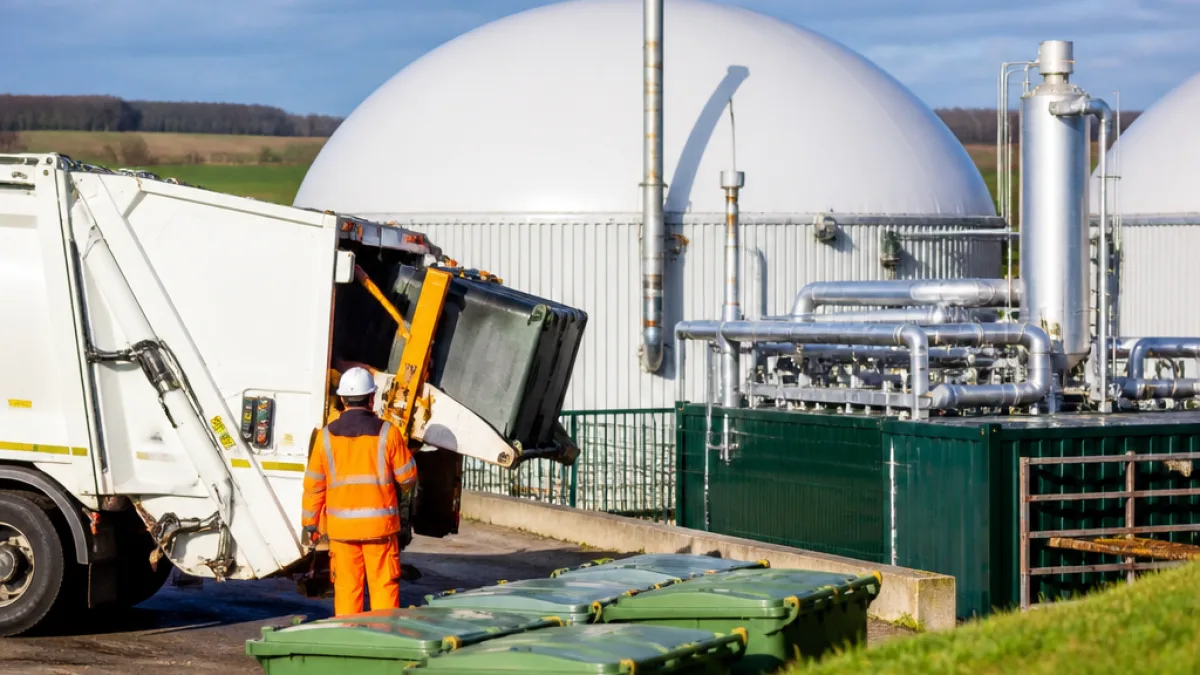
Durham County Council has appointed Bio Capital as one of two partners to treat household food waste from approximately 250,000 homes across the county, with material to be processed at the Warrens Emerald Biogas plant in Newton Aycliffe. The move comes as local authorities prepare for the Government’s Simpler Recycling rules, which require separate weekly collections of food waste from households in England.
Under the arrangement, food scraps gathered by council crews will be transported to the Newton Aycliffe site for anaerobic digestion (AD) — a process that breaks down organic material without oxygen to produce biogas. That gas can be upgraded to biomethane for the grid or used to generate renewable electricity, while a nutrient-rich digestate will be returned to farmland as biofertiliser. Treating food waste in this way is designed to cut landfill emissions and recycle nutrients back into local soils.
Building regional capacity for Simpler Recycling
The contract follows Bio Capital’s recently announced partnership with Darlington Borough Council, covering more than 54,000 households. Taken together, the two agreements consolidate new processing capacity in the North East at a time when councils are scaling up services to comply with national reforms.
“We’re proud to be working with Durham County Council on a partnership that shows what food waste collection can really achieve at county scale,” said Iain Pickles, Head of Commercial at Bio Capital. “Alongside our recently announced partnership with Darlington Borough Council, this strengthens the North East’s role in showing how local authorities can move beyond compliance and build food waste systems that deliver real value for communities, businesses and the environment.”
The council has framed the partnership as a key step in implementing kerbside food waste recycling. While specific roll-out timings and operational details are to be confirmed by the authority, the contract ensures the county’s food waste will be handled within County Durham rather than transported long distances for treatment.
How the process works and what it delivers
- Collection: Households will present food waste separately for weekly pick-up under the national policy.
- Treatment: Material is digested at the Newton Aycliffe AD facility to create biogas and biofertiliser.
- Energy and fertiliser: Biogas generates renewable electricity and biomethane, while digestate is applied to farmland to recycle nutrients.
| Location | Facility | Main Outputs |
|---|---|---|
| Newton Aycliffe, County Durham | Warrens Emerald Biogas (Bio Capital) | Renewable electricity, biomethane, biofertiliser |
According to the operator, routing food waste through AD captures energy that would otherwise be lost and reduces greenhouse gas emissions compared with landfill or incineration. Importantly for residents, processing within the county should also help keep transport miles down and retain value locally — both in energy generation and through fertiliser applied to nearby farmland.
What residents need to know
Households should look out for official updates from Durham County Council on new caddies, liners and collection arrangements as the authority readies its service for the Simpler Recycling requirements. Residents are typically advised to place cooked and raw leftovers, peelings, tea bags and coffee grounds into their food caddy, with plastic packaging kept out; however, the council will confirm accepted items and any local variations before collections commence.
While the council has not yet set out a full timetable in this announcement, the partnership confirms that the county’s treatment infrastructure is in place. Residents can expect further guidance on how the new weekly service will interact with existing refuse and recycling rounds, and on how flats and rural properties will be accommodated.
Context: aligning environmental goals with service delivery
Food waste remains a significant fraction of residual rubbish, and diverting it through AD supports carbon reduction objectives while cutting disposal costs over time. By appointing a local facility in Newton Aycliffe, the council is seeking to translate national policy into practical outcomes: lower emissions, renewable energy for homes and businesses, and a steady supply of fertiliser for regional agriculture.
Further details, including the second appointed processor and service launch information, are expected in due course as the council finalises operational plans under the Government’s reforms.