The Government has chosen Option B1 for local government reorganisation in Derbyshire, announcing that the existing county authority, Derby city council and the eight district and borough councils will be abolished and replaced by two new unitary authorities divided on a north–south basis.
Which councils form each new authority
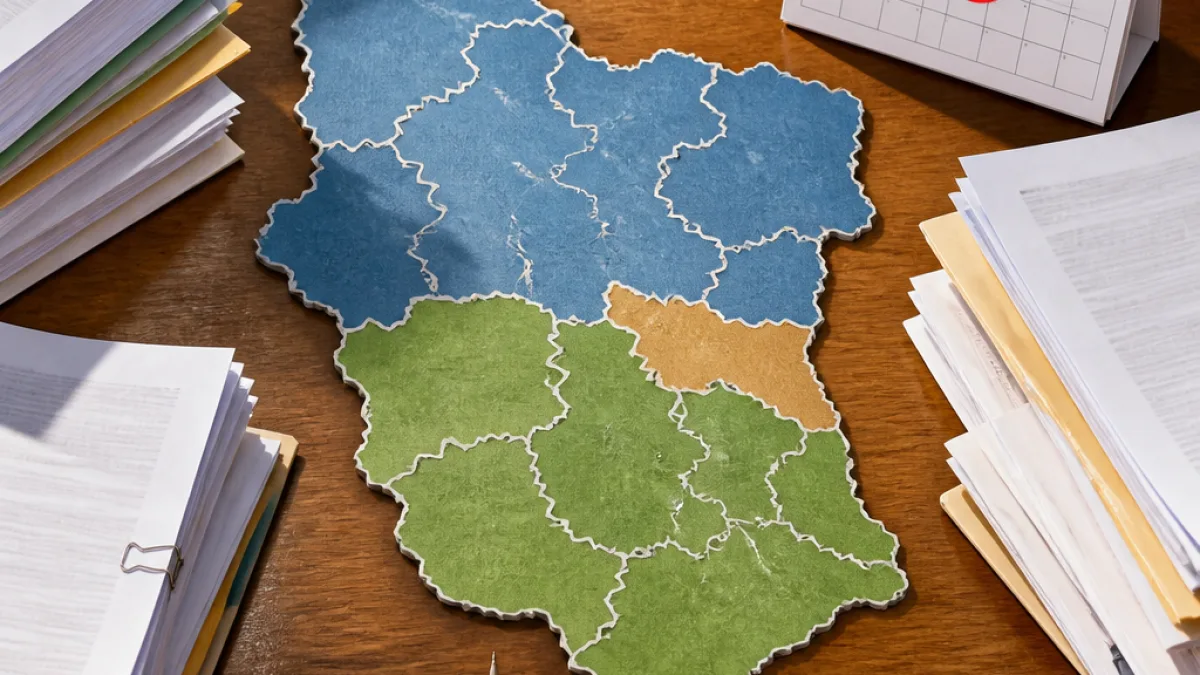
Under the plan, five whole councils together with the upper part of Amber Valley will make up the northern authority, while Derby, Erewash, South Derbyshire and the lower part of Amber Valley will form the southern authority.
| Northern authority | Southern authority |
|---|---|
| Bolsover Chesterfield Derbyshire Dales High Peak North East Derbyshire Upper Amber Valley (21 parishes) |
Derby City Erewash South Derbyshire Lower Amber Valley (14 parishes) |
The Government’s selected split for Amber Valley names parishes including Belper, Duffield, Kilburn, Quarndon and others as joining the southern authority; the rest of Amber Valley will sit with the new northern body.
Timing and transition
Work to close the existing 10 councils will begin immediately, with elections to the new "shadow" authorities scheduled for May 2027. The new unitary councils are due to take control on 1 April 2028, and the current councils will be formally abolished on 31 May 2028. Councils have said residents will see no immediate changes to day-to-day services while the reorganisation is carried out.
Reactions from local leaders
Responses from across the county were mixed. Some council leaders expressed frustration about the process and the limited choices available to local bodies during the exercise to propose options.
“This outcome is not in the best interests of the people of Derbyshire. It leaves the new northern unitary authority at risk of becoming the poor cousin to the south,”
Derby City Council welcomed the decision, saying it reflected the option they considered most appropriate and would allow work to progress on preparing the new authorities. Council leaders emphasised that ensuring continuity of public services is their priority during the transition.
What residents need to know
- No immediate change to frontline council services is expected for residents.
- Shadow council elections will take place in May 2027; the new councils take over in April 2028.
- Locally elected councillors and officers will be involved in winding down current organisations and transferring responsibilities to the new authorities.
The reorganisation is the largest restructuring of local government in the county for decades and will reshape how services are delivered and how residents are represented across Derbyshire and Derby city. Officials have said the process will focus on creating sustainable and resilient local government arrangements for the years ahead.