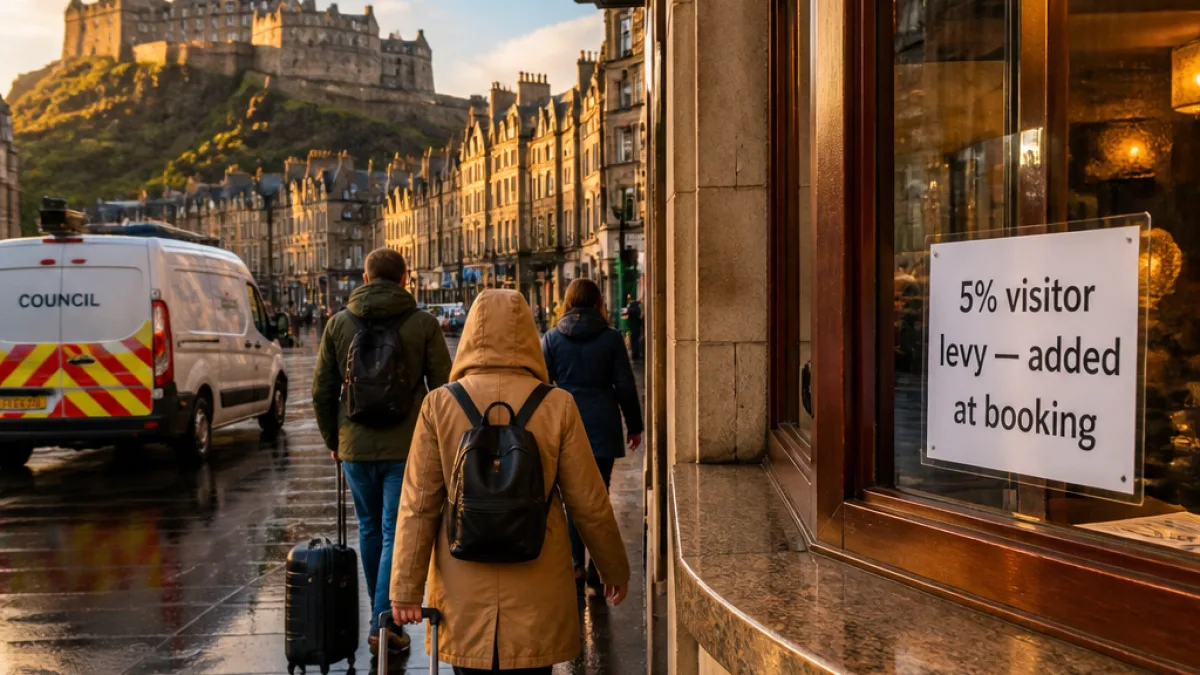
Edinburgh has become the first city in Scotland to implement a statutory tourist tax as a 5% visitor levy on overnight accommodation comes into effect on Friday. The charge, which the City of Edinburgh Council says could raise about £50 million a year, will be collected by accommodation providers and passed to the council.
How the levy will work
The levy is applied as a flat-rate 5% surcharge on the cost of a booking for hotels, bed and breakfasts, short-term lets and self-catering accommodation. The charge is capped at five nights, so longer stays will not incur the levy on every night of the booking.
| Example booking | Booking cost | Cost with 5% levy |
|---|---|---|
| Five nights at £100 per night | £500 | £525 |
| Ten nights at £100 per night | £1,000 | £1,025 |
According to the council, the levy rate does not vary by season, and is intended to mirror arrangements used in a number of popular European destinations.
Exemptions and compassionate grounds
Exemptions have been specified for several groups. Those eligible include people presenting as homeless and placed in emergency accommodation, people at risk of domestic abuse or violence, asylum seekers and refugees, and some recipients of disability benefits. The council has emphasised these measures are intended to protect vulnerable people from the additional charge.
"It’ll make the place cleaner, greener, and more sustainable, and will support the arts in the city much more," said City Council leader Jane Meagher, adding the levy would help improve lighting and police presence to enhance visitor safety.
Council case and cultural sector concerns
City of Edinburgh Council has framed the levy as a way to fund improvements across the capital, including new housing, cultural initiatives and an increased policing presence. The council estimates the extra income could be around £50m per year, which officials say will provide a steady revenue stream for city-wide projects.
Not everyone is convinced. Opponents warn the additional cost could deter some visitors. The performing arts sector has voiced practical concerns about rising accommodation bills impacting touring economics. Steven Roth, executive director of Scottish Ballet, said the cost of housing a touring company in Edinburgh has already increased substantially and asked the council to consider an exemption or relief scheme for national companies.
"The economics of touring to Edinburgh are fast becoming unsustainable," said Steven Roth, referring to significant rises in accommodation costs for touring companies.
- Rate: 5% on overnight stays
- Cap: Applied for up to five nights only
- Estimated revenue: ~£50m per year
- Exemptions: homeless in emergency accommodation, those at risk of violence, asylum seekers/refugees, some disability benefit recipients
Practical implications for visitors and businesses
Accommodation providers will add the levy to bookings and remit the sums to the council. For customers this will appear as an extra charge on top of the advertised room rate; for operators it means an administrative requirement to collect and pass the funds on. The council has previously said it studied visitor levies in other cities and does not expect a discernible drop in visitor numbers, arguing the modest rate should not deter tourism while enabling reinvestment in city services and attractions.
As the scheme begins, attention will fall on how the income is allocated and whether the council introduces any reliefs for public-interest activities such as touring by national cultural companies. The immediate weeks will also test whether the levy affects booking patterns during peak periods such as the festival season.
City of Edinburgh residents, visitors and cultural organisations will watch closely as the new charge takes effect and the council sets out how the additional funds are spent.