Parents push for accountability after damning review of maternity care
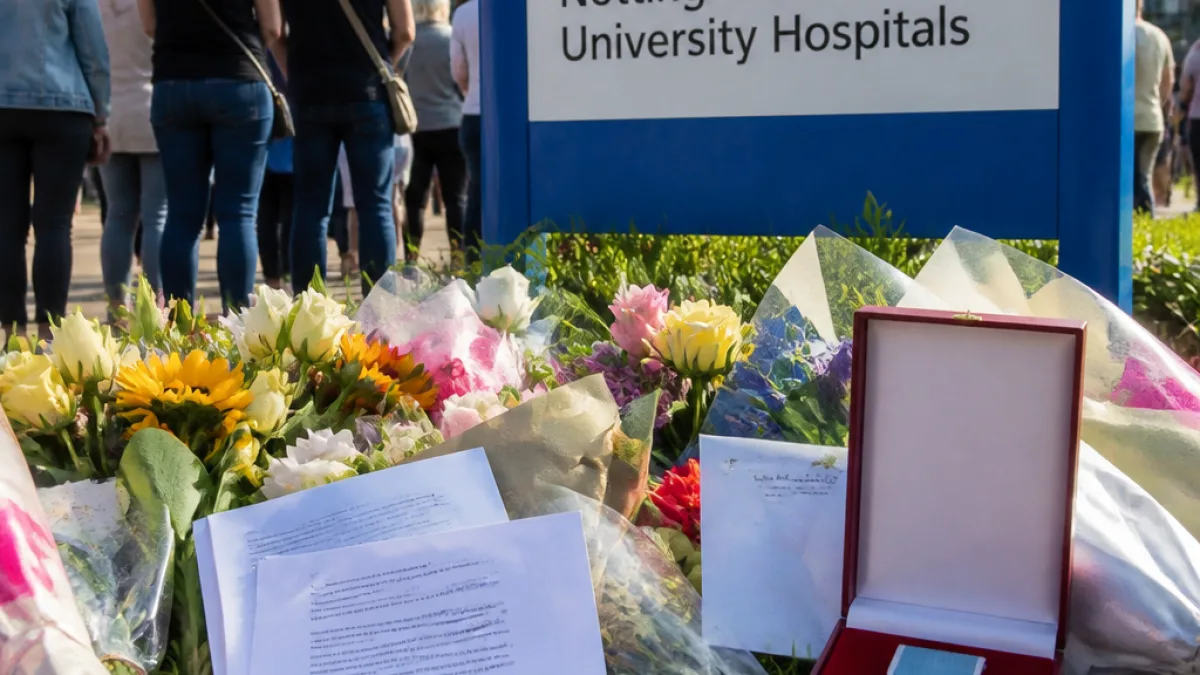
Bereaved families at the centre of the Nottingham maternity scandal are asking the Government to remove honours from three former NHS managers following a review that identified catastrophic and long-running failures in care. Their letters to the official forfeiture committee come in the wake of the independent investigation led by senior midwife Donna Ockenden, which concluded that more than 500 mothers and babies at Nottingham University Hospitals (NUH) NHS Trust suffered potentially avoidable harm or died due to what it described as deeply rooted systemic problems.
What families are seeking — and why now
The Nottingham Affected Families Group (NAFG), representing hundreds of relatives, has submitted three separate letters asking that CBEs awarded to former leaders associated with the Trust’s maternity services be reconsidered. The correspondence, reported by the Sunday Times, argues that the honours should be reviewed “in light of the findings of the independent review of maternity services”, citing collective leadership failures and governance shortcomings highlighted by the Ockenden report.
Among the individuals referenced in media coverage is Dr Peter Homa, who was chief executive at NUH from 2006 to 2017 and received a CBE in 2000 for services to the NHS. Dr Homa expressed sorrow about the report’s conclusions and offered apologies to families, while also noting that the review did not make adverse findings about his personal conduct.
“The families directly and indirectly affected by the service failings at NUH have my deepest, most sincere apologies.”
What the Ockenden review found
The Government-commissioned review paints a bleak picture of a “toxic” trust culture, where repeated warnings were missed and opportunities to learn were not taken. It documents preventable harm and deaths among mothers and babies and points to entrenched organisational failings rather than isolated mistakes. The findings sit within a wider national debate about maternity safety, clinical oversight and the duty of candour — issues that matter to families in Islington as much as in Nottingham, given that maternity services rely on consistent standards and strong leadership across the NHS.
| Key facts from the Nottingham review | Detail |
|---|---|
| Independent lead | Donna Ockenden, senior midwife |
| Trust | Nottingham University Hospitals NHS Trust |
| Harm/deaths identified | 500+ potentially avoidable cases |
| Core issues | Systemic leadership and governance failings |
Honours under scrutiny
Honours such as CBEs are awarded for significant public service, but they can be reconsidered where subsequent events raise serious questions about an individual’s record. The families’ letters focus on the principle that public recognition should reflect accountability, especially where leadership decisions and culture set the conditions for safety. While the forfeiture process is confidential and rare, families say a review would signal that the system recognises the scale of harm and the responsibilities that accompany senior roles.
In their statement, parents Sarah and Jack Hawkins — whose daughter Harriet was stillborn in 2016 under NUH’s care — argue that sanctions have been lacking:
“In our minds, there is currently a clear injustice… To our knowledge, to date, no senior managers or clinicians have been personally, professionally or criminally sanctioned.”
The couple question how official recognition can continue for those who held senior posts at a time when grievous harm occurred.
Responses from former leadership
Dr Homa told the Sunday Times of his profound sadness at reading the review and offered sincere apologies to families. He also said the report did not contain adverse findings about his personal conduct and rejected any implication that he resigned after a critical inspection, saying any such link would be inaccurate. The families’ submissions, however, emphasise that the Ockenden report’s criticisms centre on the leadership collectively and identify significant failures of governance.
Why this matters beyond Nottingham
For readers in Islington, this story speaks to confidence in maternity services and how the NHS holds itself to account when care falls short. Maternity units are complex, resource-intensive services where leadership culture, staff resourcing, and learning from incidents directly affect outcomes. The Ockenden review’s themes — adequate oversight, open reporting, and organisational learning — are relevant to any trust. Families want concrete changes and visible accountability mechanisms that restore trust for expectant parents.
- Safety culture: Reviews repeatedly emphasise the need for learning rather than defensiveness.
- Governance: Board-level scrutiny must translate into action on the ward.
- Transparency: Clear communication with families when outcomes go wrong is critical for trust.
What happens next
The Government’s forfeiture committee does not routinely comment on individual cases, and there is no statutory timeframe for decisions. If the committee agrees there is a case to answer, it may recommend that an honour be revoked. Separately, implementing the Ockenden recommendations remains the central task for NUH and for systems nationally, with families watching for demonstrable progress on safer staffing, incident review, and support for bereaved parents.
For now, the families’ intervention keeps the focus on leadership accountability. They argue that changing culture requires both system-wide reforms and a signal that recognition in public life carries obligations — particularly where the stakes are the lives and safety of mothers and babies.