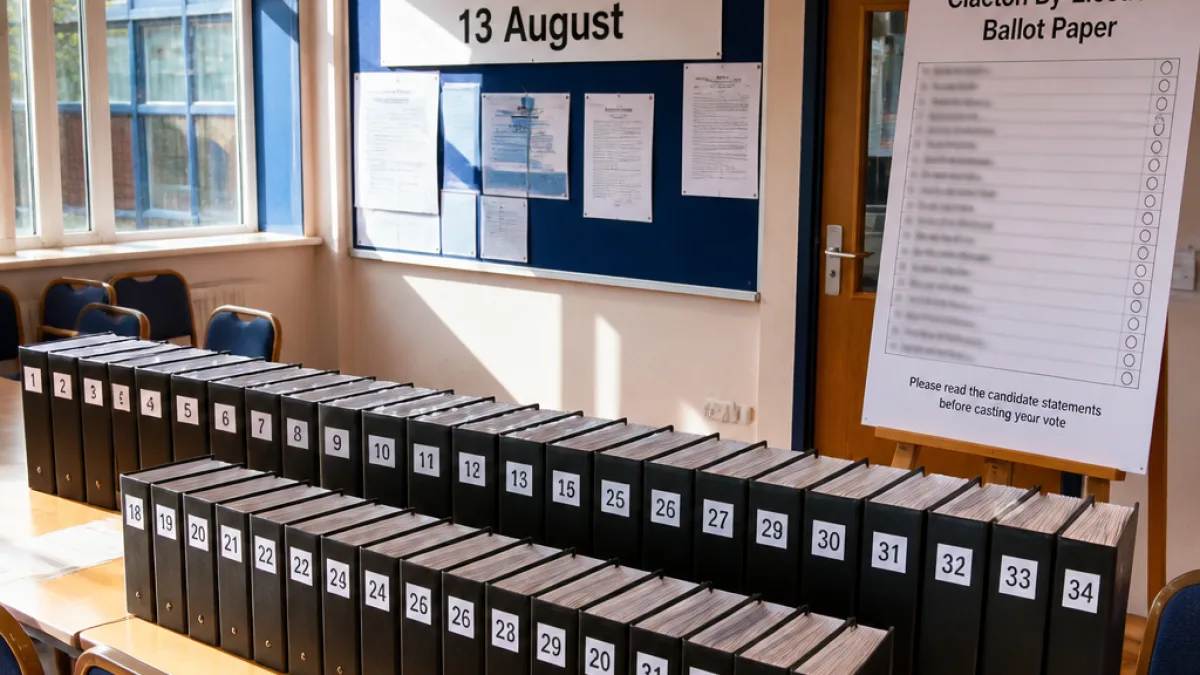
The by‑election in Clacton called by Nigel Farage will see a record 34 candidates on the ballot for 13 August, Tendring District Council has confirmed.
An unusually crowded contest
The decision by the main Westminster parties to boycott the contest has left the field dominated by independents, minor parties and high‑profile protest figures. The composition of the ballot underlines how unconventional the by‑election has become following Mr Farage’s decision to force the contest amid scrutiny of his finances and supporters.
Mr Farage wanted the contest to be a “people versus the establishment” showdown
Among the names on the list are familiar protest and fringe figures alongside several independents. The count of 34 entrants is believed to exceed the previous record of 26 candidates, set at the 2008 Haltemprice and Howden by‑election.
Who is standing
The declared candidates include a mix of party-affiliated challengers and individuals standing independently. Notable entries named by the council include:
- Nigel Farage (Reform UK)
- Laurence Fox (The Reclaim Party)
- Count Binface (Count Binface Party)
- Multiple candidates from The Official Monster Raving Loony Party
- Many local independents and smaller party representatives
Other named candidates range from constituency‑level independents to representatives of small national groups. Tendring District Council provided a fuller roster, listing individual names and their descriptions as submitted for the nomination process.
What this means politically
With the major parties standing aside, the by‑election is likely to be fought as a contest for media attention and protest votes. For Reform UK and Mr Farage, the election appears intended as a platform to showcase grievances about perceived establishment scrutiny. For other entrants, the ballot provides an unusual opportunity to gain visibility in a parliamentary contest largely unopposed by Conservatives, Labour or the Liberal Democrats.
Practically, voters in the Clacton constituency will receive a long ballot paper on polling day and may see a wide variety of campaign messages in the run‑up to 13 August. Electoral administrators will also face the logistical tasks of printing, issuing and adjudicating votes with so many candidates named.
The scale and eccentric mix of candidates make the Clacton contest an outlier in recent UK parliamentary by‑election history and a test of how well peripheral campaigns can mobilise support when the mainstream parties abstain.