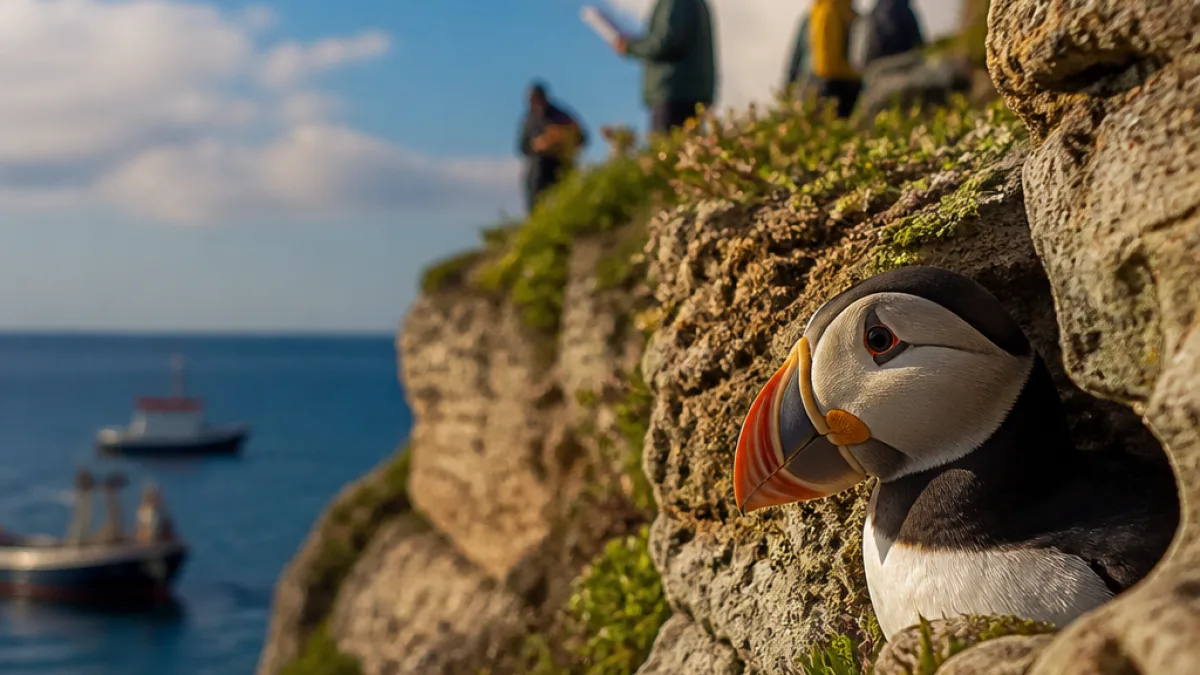
Conservation volunteers monitoring the tiny and precarious puffin colony on Purbeck’s cliffs have confirmed a fledgling — known as a puffling — at the National Trust site near Dancing Ledge. It is the first confirmed sighting of a young puffin on the Dorset mainland for 30 years, and comes after more than 15 weeks of careful observation.
What was observed
Volunteers watched adults courting, mating and carrying nesting material before recording fish being delivered into deep crevices on the cliff. The first fish deliveries were noted on 31 May, with the last on 5 July. Based on those dates the team estimated the chick to be about 38–40 days old, around the minimum age at which puffins normally fledge.
"With only three breeding pairs remaining, every chick matters. One puffling alone won’t save this colony, but one is a whole lot better news than none," said Dr Richard Caldow, who is leading the monitoring project.
Who is involved
The monitoring project is led by Dr Richard Caldow, an experienced seabird ecologist with nearly 40 years’ research and conservation work in coastal bird populations. He is supported by volunteers from the Purbeck Natural History Forum. The sighting took place on sheer cliff ledges where nests are hidden deep within crevices.
Local context and the colony’s status
Earlier in the season, volunteers recorded six adult puffins at the colony in April. Observations in June suggested fish were being carried into at least two separate nesting locations, raising hopes that more than one pair might be attempting to raise chicks. However monitoring indicates only one pair was consistently provisioning a nest site.
- Minimum fledge age: 38 days
- Estimated age of puffling: 38–40 days
- Breeding pairs remaining: three
| Key date | Observation |
|---|---|
| 31 May | First fish seen being taken into the ledge |
| Early June | Fish delivered to at least two separate nesting locations |
| 5 July | Last recorded fish delivery |
What happens next
The puffling is expected to leave the ledge under cover of darkness. Like other young puffins, it will spend the next several years at sea, alone, and typically will not return to the colony until about two years of age, with breeding usually beginning around four years.
Conservationists stress that while a single chick will not reverse long-term decline, the confirmed fledgling is a positive sign and underscores the importance of continued monitoring and protection of the remaining nesting sites on the Dorset coast.
Local residents and visitors are asked to respect protected coastal sites and avoid disturbing nesting areas so volunteers and wildlife have the best chance of safeguarding this fragile, historic colony.