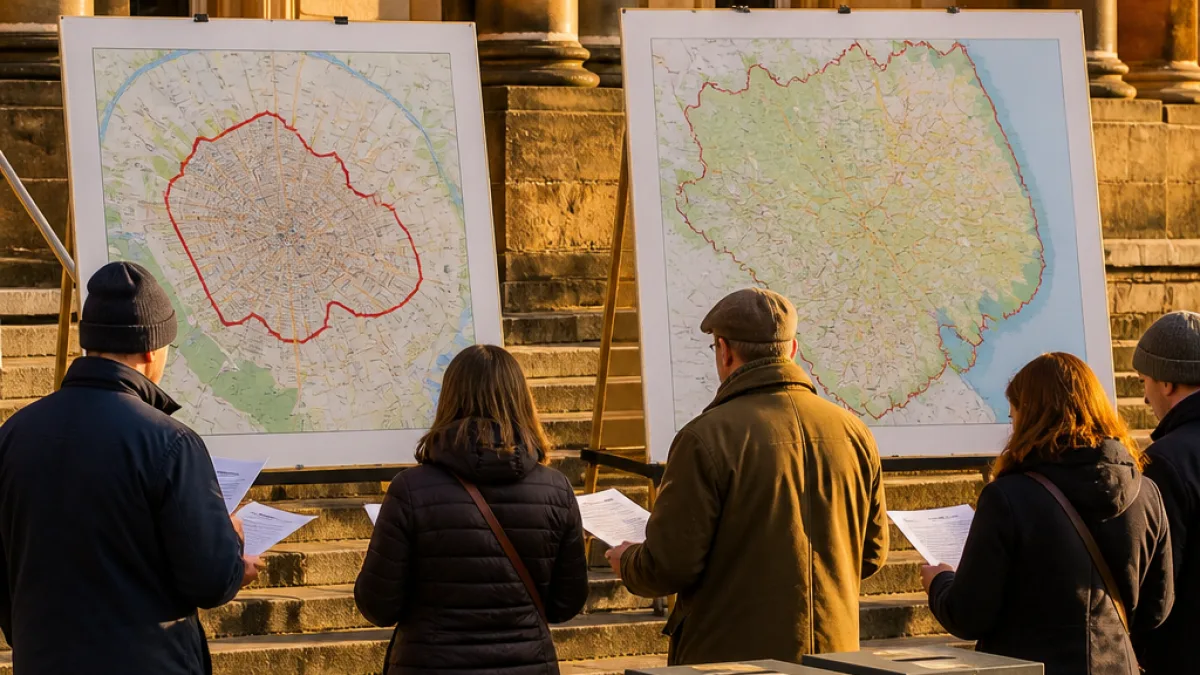
The government has formally approved the names and composition of the two new unitary authorities that will replace Lincolnshire’s existing county and district councils in 2028.
What has been decided
Under the plan put forward by the City of Lincoln Council, one of the new authorities will be called Lincoln Council. This body will cover the city itself and take in neighbouring parts of West Lindsey and North Kesteven. The remainder of the county will be governed by a second authority, to be named Lincolnshire Council.
The government letter to local leaders sets out the immediate timetable and some key figures. The new Lincoln authority will be made up of 65 councillors, while Lincolnshire Council will have 100 councillors — a substantial reduction from the current total number of county and district councillors across Lincolnshire.
Transition and elections
The letter from Beatrice Andrews, co-deputy director for Local Government Reorganisation, confirms transitional arrangements. Existing councils will continue to deliver services until they are abolished on 1 April 2028. Before that date, elections will be held for 'shadow' councils in 2027 to prepare budgets and plans so the new bodies can assume full responsibilities on day one.
“Your councils will remain responsible for services in your areas until they are abolished on 1 April 2028 and will be under a duty to co-operate with each other and with the new councils,”
Which areas will join Lincoln Council
The government letter lists specific wards that will sit within the new Lincoln authority. Those from West Lindsey include:
- Bardney
- Cherry Willingham
- Dunholme and Welton
- Nettleham
- Saxilby
- Scampton
- Sudbrooke
North Kesteven wards named to join Lincoln Council are:
- Bassingham Rural
- Bracebridge Heath
- Branston
- Heighin
| New council | Number of councillors |
|---|---|
| Lincoln Council | 65 |
| Lincolnshire Council | 100 |
Why this matters locally
The change ends the current two-tier system in which county and district councils split responsibilities. Ministers say unitary authorities should be simpler for residents to deal with and deliver savings, but the shift also means fewer elected representatives and boundaries that move some communities into a new political grouping. That will affect how local services are planned and paid for across council areas.
Local leaders now face the practical task of preparing for shadow governance in 2027, drafting budgets and service plans that will transfer to the new councils on 1 April 2028. Residents and community groups will want clarity on how services such as bin collection, planning, adult social care and housing will be managed during and after the transition.
We will continue to report on developments, including further details on ward boundaries, transitional governance arrangements and plans from the councils as they prepare for the move to unitary government.