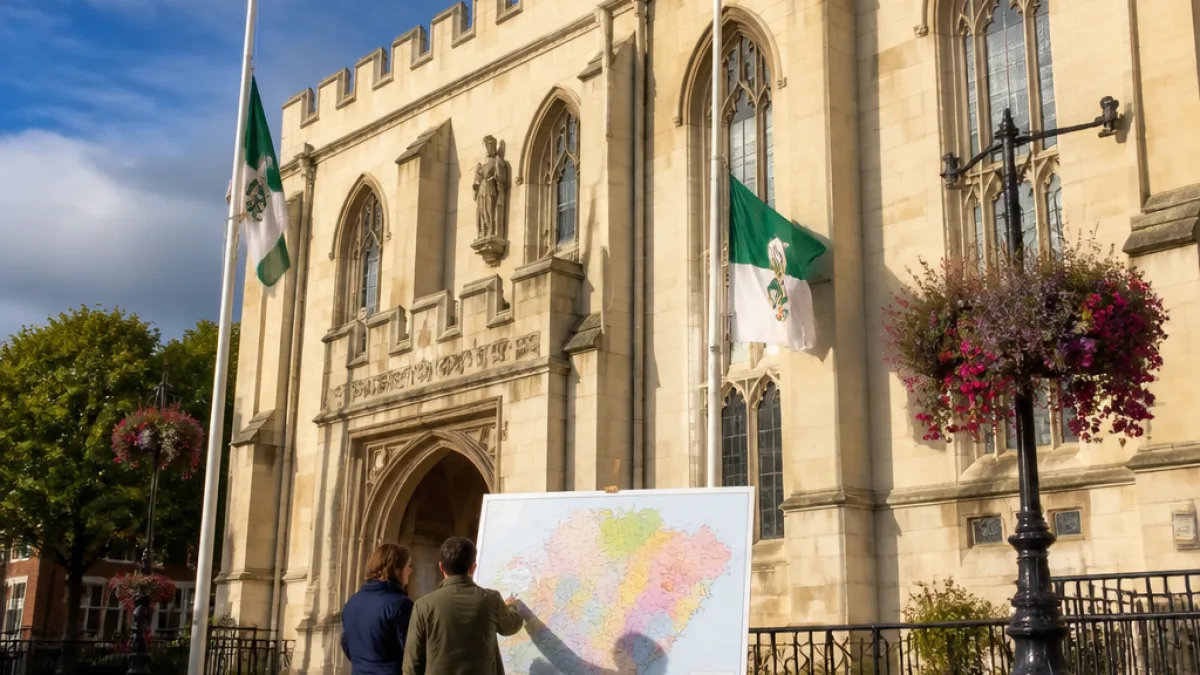
The government is poised to press ahead with what ministers describe as the most significant redraw of Devon’s political map for half a century, with plans to dismantle the existing two-tier system and create larger unitary councils centred on Plymouth, Exeter and Torbay, while forming a new authority to cover the remainder of the county.
What the changes will mean
The move will see Devon’s eight district councils – created in 1972 – abolished, and, according to local proposals chosen by ministers, the longstanding Devon County Council (first established in 1889) will also come to an end. Responsibilities currently split between districts and the county, including adult social care, children’s services, planning, highways and bin collections, will be redistributed to the new authorities.
Officials say the plans follow submissions from each of Devon’s 11 councils about how the county could be reorganised. Ministers have opted to progress an option that had the backing of Labour-controlled authorities in Exeter and Plymouth.
Boundary shifts and parish transfers
Under the proposal as reported:
- Plymouth would expand to subsume 13 parishes from South Hams.
- Exeter would expand by taking on 15 parishes from Teignbridge, 28 from East Devon and 6 from Mid Devon.
- Torbay would extend to include 22 parishes in total from Teignbridge and South Hams.
- The remainder of the county would form a new coast and country council.
| New authority | Parishes gained (reported) |
|---|---|
| Plymouth | 13 (from South Hams) |
| Exeter | 15 (Teignbridge), 28 (East Devon), 6 (Mid Devon) |
| Torbay | 22 (Teignbridge & South Hams) |
Timetable and immediate consequences
A formal announcement is expected imminently. Reported timelines indicate elections for the new councils will take place next year, with the new authorities taking formal control in 2028. That timetable will require swift transitional arrangements for service delivery, staff transfers and budgets.
For residents, the changes could alter who organises everyday services such as bin collections and pothole repairs, as well as where decisions on planning and housing are taken. The transfer of social care responsibilities in particular means some authorities will inherit much larger client bases and more complex operational demands.
Local councils have put forward different visions for restructuring, and ministers’ selection of the option favoured by some urban councils is likely to provoke debate across rural communities about representation and local accountability as boundaries shift.
The coming weeks will be key: councils, parish councils and community groups should look out for the formal announcement and subsequent consultations that will set the detailed boundaries and the arrangements for the transition to the new authorities.