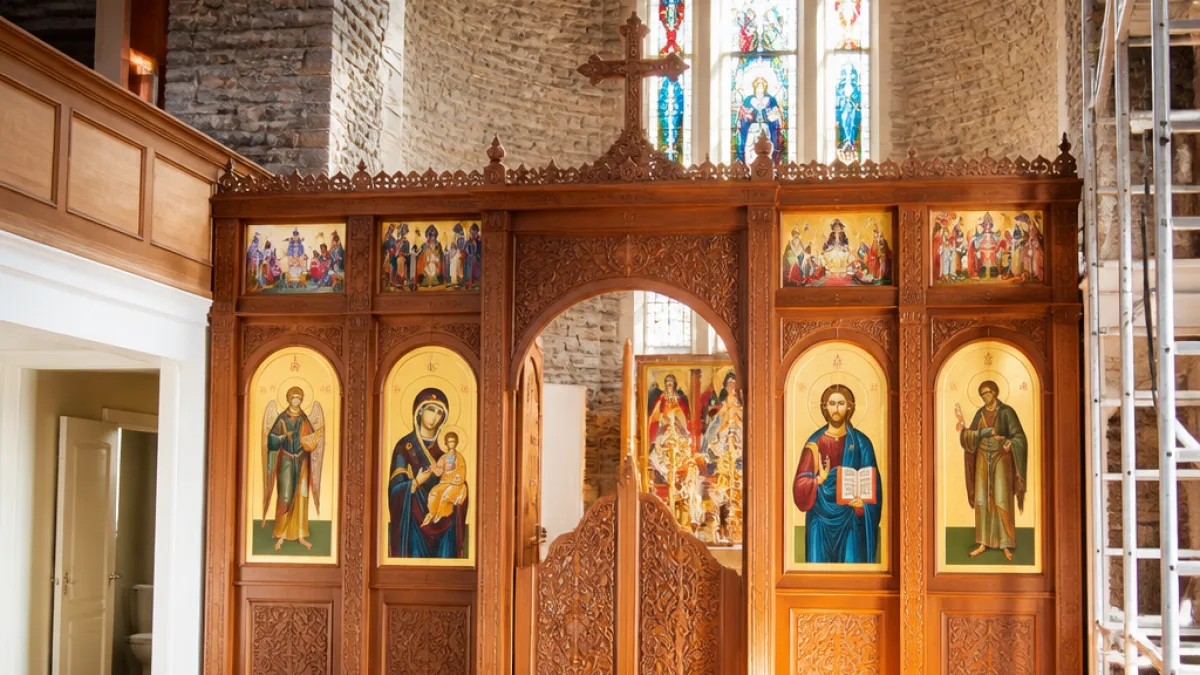
The former Ely Methodist Church has been given the go-ahead for internal alterations intended to make the building suitable for worship by a Romanian Orthodox community, a council planning report shows. The works include the construction of an iconostasis – a large, ornate screen central to Eastern Orthodox liturgy – together with basic modern facilities such as a toilet and baby-changing provision.
What is proposed
Council papers say the iconostasis will be built from hardwood for durability and visual presence, and that the religious icons fixed to it would be finished with gold leaf and painted using traditional techniques to maintain vibrancy and longevity. The screen is intended to mark the sanctuary and separate it from the main body of the church, reflecting Eastern Orthodox ceremonial practice.
“Reoccupation of this disused Methodist Church by a Romanian Orthodox congregation is welcome in principle – as it maintains religious use and keeps the interior open at its present volume. The creation of an iconostasis, a vast highly decorated backcloth to serve as a focus for worship, will introduce a visually stunning feature and will make the building more not less interesting.”
The comment above is taken from a response by Historic Buildings and Places published in the council report. The body also noted regret at the implied loss of the Methodist pulpit.
Local and heritage implications
Located in Ely, the former Methodist church is recorded as a grade-II listed building. The decision to permit a significant internal feature such as an iconostasis raises familiar questions for conservation-minded residents: to what extent can liturgical adaptation coexist with preserving historic fabric and fixtures? In this case, the heritage organisation's response welcomed the reoccupation and suggested the change could make the interior more interesting, while registering concern about loss of elements associated with the building's Methodist history.
Practical, relatively minor interventions are planned alongside the icon screen, reflecting the congregation’s need to provide basic amenities for worshippers using a building that has been disused in recent years.
- Construction of an iconostasis inside the listed building
- Use of hardwood and gold leaf for icons
- Installation of a toilet and baby-changing facilities
| Feature | Purpose |
|---|---|
| Iconostasis | Mark sanctuary; visual focus for worship |
| Hardwood construction & gold leaf | Durability and enhanced visual/spiritual significance |
| Toilet / baby changing | Modern convenience for congregation |
What this means for the community
The approved scheme preserves the building’s religious use, which may be welcomed by local residents concerned about empty historic structures falling into decay. At the same time, the introduction of a very strong visual and liturgical element associated with Orthodox worship will alter the character of the church’s interior. The council report and the heritage response suggest a balance has been struck: reoccupation that keeps the interior volume intact, while introducing a new focal feature.
For residents and those with an interest in Cardiff’s historic places, the case underscores the practical tensions that arise when listed places of worship change denomination or liturgical practice. The planning documents show that relatively modest modern conveniences will be added, but the most transformative element will be the iconostasis itself.
Further details are recorded in the council planning file for the site, where consultees’ responses and the applicant’s specification of materials and techniques are available for public inspection.