Scottish heritage celebrated well beyond the Highlands
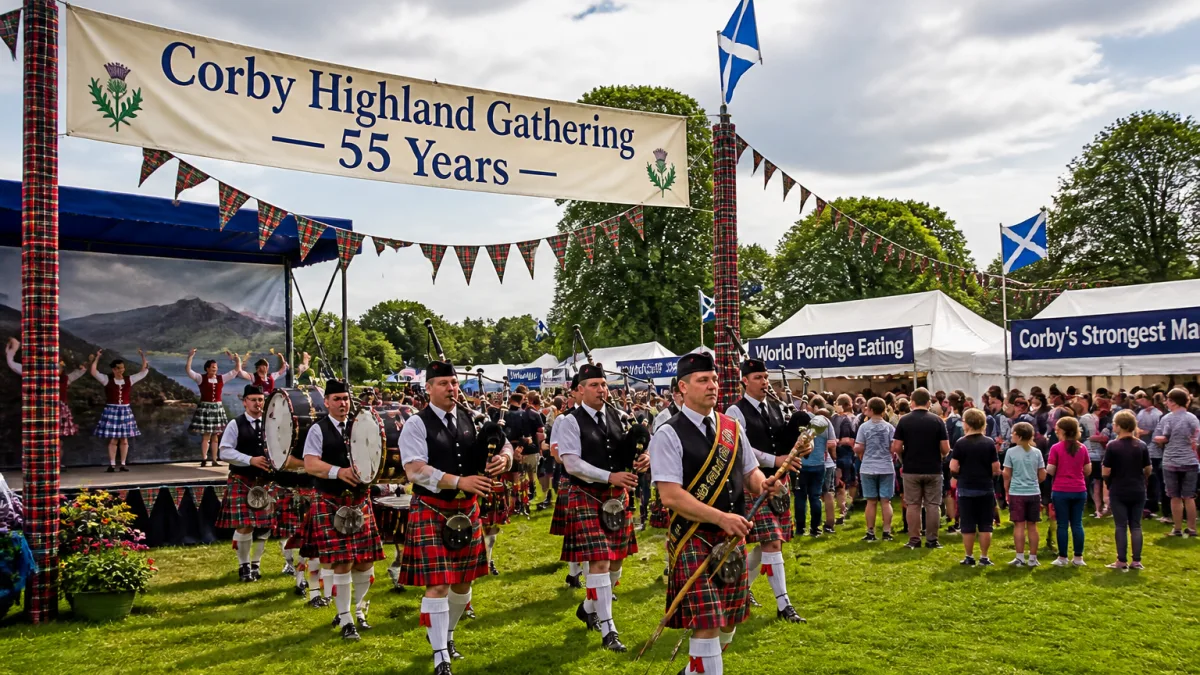
A town in the English Midlands with deep Scottish roots has staged its 55th Highland Gathering, a milestone that underscores the reach of Scottish culture far beyond the Highlands. Corby, in Northamptonshire, hosted a volunteer-run event that brought together twelve pipe bands, Highland dancers and a slate of crowd-pleasing competitions, reflecting a community identity forged by decades of Scottish migration.
Corby’s Scottish character dates to the 1930s, when large numbers of workers and their families left Scotland to take up jobs in the town’s steel industry. Although the steel site’s closure was announced in 1979, that early movement left a lasting imprint. Generations on, organisers say the town remains closely tied to Scottish customs, with familiar sounds of pipes, displays of dance and friendly contest providing a focus for residents and visitors alike.
This year’s programme mixed tradition and novelty. Alongside well-established fixtures such as massed pipes and Highland dancing, organisers introduced Corby’s Strongest Man for the first time. The World Porridge Eating Championship returned, with competitors racing to finish their bowls in a light-hearted test of speed and stamina.
“Corby is known as mini Scotland in England, and we should never forget our heritage – and this is our heritage,” said chieftain Gary Buchan, who described being selected as figurehead as a great honour.
Buchan, originally from Peterhead, has spent all his adult life in Corby. He noted that the town is now home to second, third and even fourth-generation Scottish families, testament to the enduring connections established during the steel era.
Dance draws competitors from near and far
Highland dancing remains a cornerstone of the event. Co-organiser Amanda Gibson, whose father moved from Glasgow for steelwork, highlighted the strength of the local scene, saying Corby supports seven dance schools. The competition drew interest beyond Scotland’s borders, including entrants from Ireland and even one competitor from Canada, with dancers vying for the title of All England Champion.
For those with ties to the Highlands, the Corby gathering offers a reminder that traditions travel well. Music, dance and friendly contests provide a bridge between communities separated by distance but connected through shared heritage. Organisers stressed that the day is sustained by volunteers and functions as a meeting point for people who value the customs they grew up with, as well as those discovering them anew.
Community spirit at the heart of the day
Beyond the formal competitions, the event’s purpose is social as much as ceremonial. Crowds assembled to watch bands and dancers, cheer on strongman challenges and witness the brisk spectacle of the porridge contest. That mix of entertainment and identity continues to be central to Corby’s civic life, long after the forces that shaped the town’s demographics first took hold.
While the origins of the gathering lie outside the Highlands, the programme and its appeal are instantly recognisable to those across the north: bringing people together around pipes, steps, and stories. In a year marking more than half a century since the event began, Corby’s celebration serves as a case study in how traditions endure, adapt and invite new generations to take part.
At a glance
| Detail | Highlight |
|---|---|
| Edition | 55th Highland Gathering |
| Pipe bands | 12 in attendance |
| New feature | Corby’s Strongest Man debut |
| Porridge contest | World Porridge Eating Championship held |
| Local dance scene | Seven Highland dance schools in town |
| Origins of migration | Scottish workers arrived from the 1930s |
| Steel site | Closure announced in 1979 |
| Competitor reach | Dancers from Ireland and Canada |
Why it matters for Highland readers
- Shows how Scottish traditions remain active in communities formed by earlier migration.
- Highlights enduring appeal of pipe bands and Highland dance for younger generations.
- Demonstrates volunteer-led cultural events sustaining identity across the UK.
As the season of gatherings and games continues, Corby’s experience offers a window into how cultural practices associated with Scotland – and the Highlands in particular – continue to resonate well beyond their places of origin, drawing people together through music, movement and a shared sense of belonging.