Scottish heritage in the Midlands spotlight
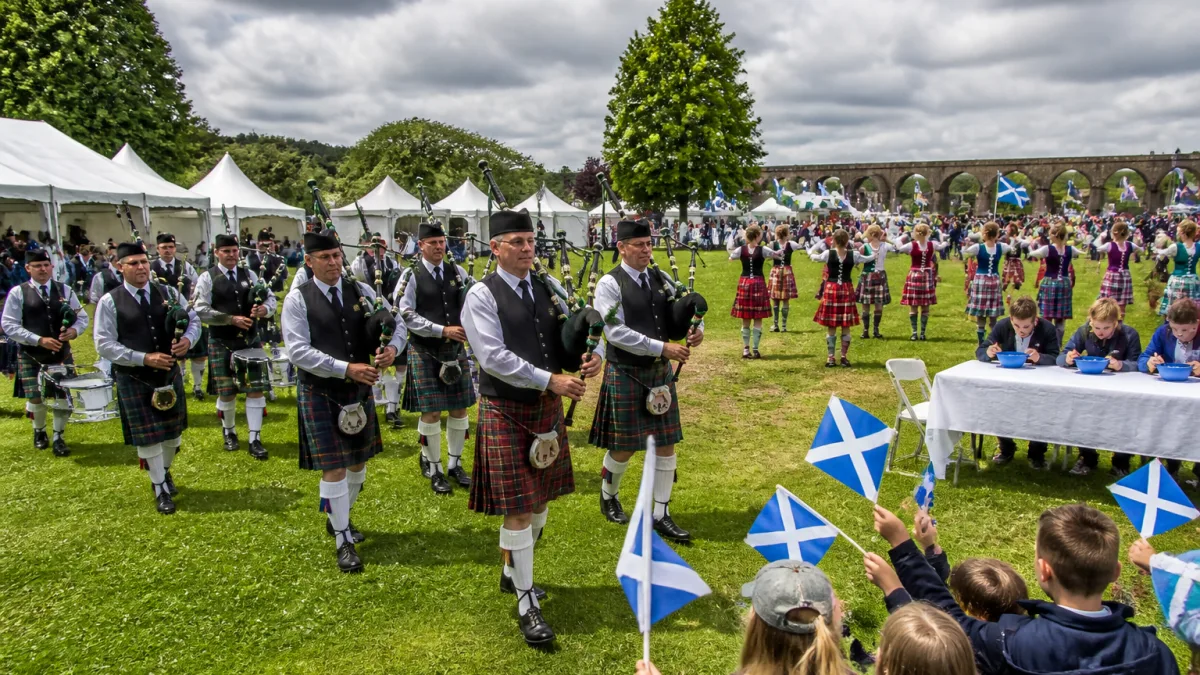
A town in the English Midlands with a long-standing Scottish community has marked its 55th Highland Gathering, showcasing the resilience of tradition far from its origins. Corby, built up by generations who moved south for work from the 1930s onwards, staged a volunteer-run celebration that brought together twelve pipe bands, Highland dancers and a crowd of families invested in keeping Scottish customs alive.
The event reflected the town’s intergenerational ties to Scotland, shaped by migration linked to the steel industry. Although the steelworks’ closure was announced in 1979, the cultural imprint remains visible today through competitive dance, piping and distinctively Scottish competitions.
Pipe bands, porridge and a new strength contest
This year’s programme combined established staples with something new. Alongside Highland dancing and piping, the bill included the World Porridge Eating Championship and, for the first time, a contest billed as Corby’s Strongest Man. One participant known as “Big Gaz” claimed victory in the porridge challenge, which was described on the day as successful despite a less-than-perfect consistency.
The gathering’s figurehead – the chieftain – was Gary Buchan, originally from Peterhead, who has made his life in the town. He spoke for many when he set out why the event still matters to residents with Scottish roots.
“Corby is known as mini Scotland in England, and we should never forget our heritage – and this is our heritage.”
Dancers travel to compete for an English title
Highland dancing remains one of Corby’s strongest ties to Scotland. The dance section, co-organised by Amanda Gibson – whose father moved from Glasgow to work in the steelworks – drew entrants from within Scotland, across Ireland and even from Canada, all keen to vie for the title of the All England Champion. Gibson noted the popularity of the discipline locally, with seven dance schools operating in the town.
That breadth of participation underscores the gathering’s reach. While the competitions take place in England, the techniques, music and customs come directly from Scottish tradition, forming a thread that connects families across borders and generations.
A town shaped by migration keeps its cultural promise
Corby’s identity as a “very Scottish town” was forged by the movement of workers and their families, who sustained their culture through community organisations, pipe bands and dance schools. Organisers say many residents now trace ancestry over second, third and even fourth generations, maintaining customs that have outlasted the industry that drew their forebears south.
For readers familiar with Highland gatherings, the resonance is clear: the town’s story shows how traditions endure when communities invest time and voluntary effort year after year. It also highlights how events beyond the border can help nourish Scotland’s cultural life more broadly, by providing stages for performers to train, compete and share skills.
What stood out at the 55th gathering
- Scale: Twelve pipe bands performed, underlining strong musical participation.
- Competitions: A mix of Highland dancing, the World Porridge Eating Championship and an inaugural strongman contest.
- Reach: Dancers travelled from Scotland, Ireland and Canada to contest the All England title.
| Aspect | Detail |
|---|---|
| Edition | 55th Highland Gathering |
| Pipe bands | 12 |
| Notable additions | First year of Corby’s Strongest Man |
| Signature contest | World Porridge Eating Championship |
| Local dance provision | Seven Highland dance schools |
| Community roots | Migration from the 1930s; steel closure announced 1979 |
The Corby gathering’s combination of music, dance and family-friendly competition offers a reminder that Scottish culture is maintained as much by practice as by place. For those who recognise these traditions, its latest edition demonstrates how community-led events can sustain and refresh heritage, even far from the Highlands.