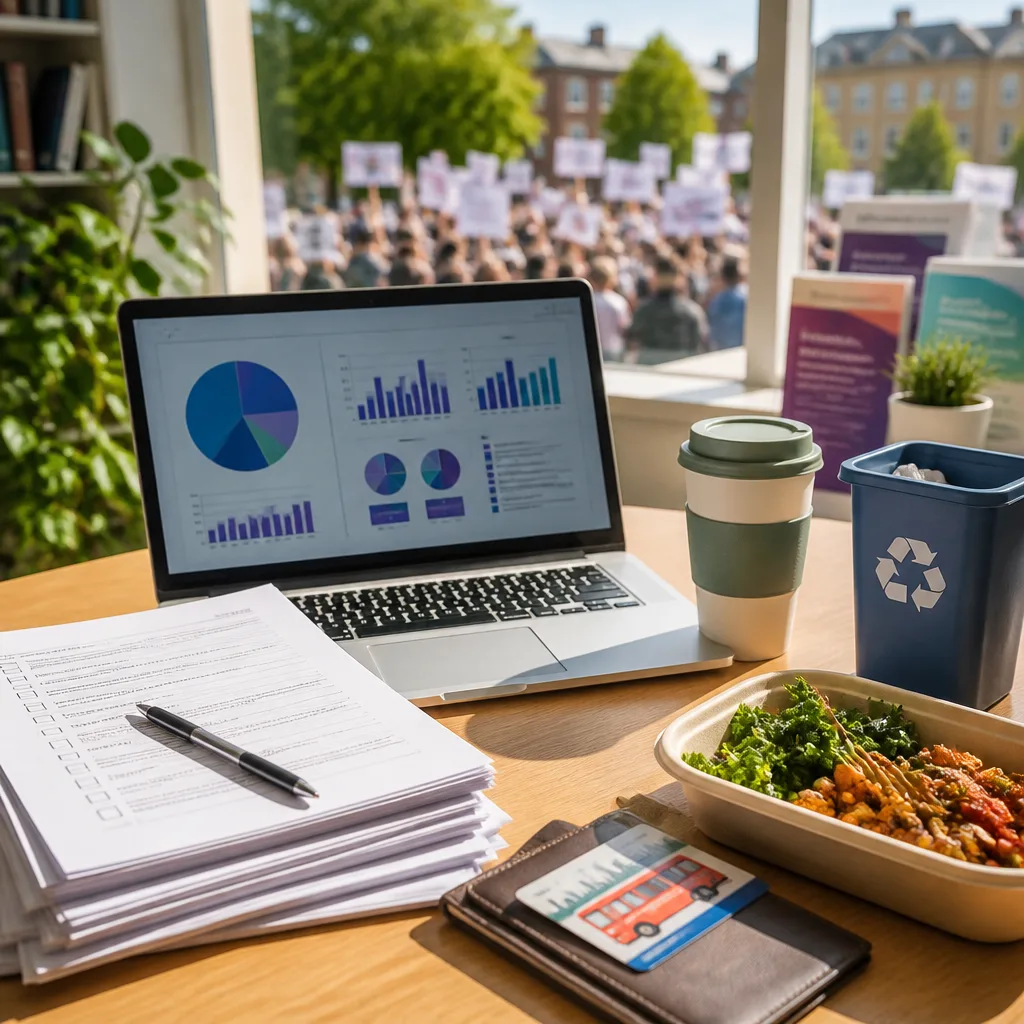
Everyday climate-friendly actions such as recycling, using reusable cups, taking public transport or eating a greener diet do not appear to divert people from backing major environmental reforms, according to a new longitudinal study from Australian researchers.
What the researchers did
Behavioural scientists at UNSW Sydney and Griffith University followed nearly 2,800 participants over four years as part of the National Climate Action Survey. Respondents reported their personal environmental practices and measures of political engagement — for example, signing petitions, attending demonstrations and supporting climate policies — across the study period.
Key findings
- No evidence that adopting personal green behaviours reduces later interest in collective or policy-oriented climate action.
- People who reported more individual environmental practices were generally also more likely to be politically engaged, but increases in personal actions did not predict increased political activity the following year.
- The results counter the claim that small, personal changes distract from or replace support for systemic reforms.
The authors frame the results as a rebuttal to a widely cited concern: that promoting lifestyle adjustments is a tactic by governments and corporations to shift attention away from harder, structural changes such as transforming energy systems or regulating emissions-intensive industries. Instead, the data suggest that personal habits and political attitudes about climate are better understood as reflecting existing values rather than as strong causal drivers of each other.
"Individual climate actions neither facilitate nor undermine broader climate engagement," the study's lead author said.
Implications and caveats
For policy-makers and campaigners, the study indicates that encouraging recycling and other everyday practices is unlikely to undermine public appetite for systemic reform — but nor should such measures be relied upon as a route to mobilise mass political action. The authors caution against assuming a simple causal chain from personal behaviour to activism: while green habits and political engagement are correlated cross-sectionally, changes in one do not necessarily produce changes in the other across years.
Methodologically, the strength of the research lies in its panel design and multi-year follow-up, which allow the team to distinguish between correlation and potential lagged effects. Nonetheless, the study is situated in Australia and within the period covered by the survey; applying results to other national contexts may require caution given different political cultures and policy environments.
| Measure | Value |
|---|---|
| Participants | ~2,800 |
| Study length | 4 years |
| Behaviours tracked | Recycling, reusable containers, public transport, greener diets, cycling |
Taken together, the findings temper two extreme claims: they do not support the notion that personal green actions are inherently distractions from structural change, nor do they endorse the idea that encouraging such habits will automatically catalyse broader political mobilisation. For those involved in climate communications and policy design, the message is pragmatic: promote household-level measures for their direct environmental and social benefits, and pursue separate, explicit strategies to build support for systemic reforms.