Worcester — A motion of no confidence in Worcestershire County Council’s leader Matt Jenkins will be debated this week, escalating the unsettled politics at County Hall since May’s shake-up. The bid, brought by Reform UK, challenges the legitimacy of the multi-party administration formed after the local elections and comes in the wake of Conservative Party intervention that forced changes to the cabinet line-up.
What Reform UK is demanding
Reform, the largest group on the authority, is seeking to unseat the Green councillor who leads the current coalition of Conservatives, Greens, Liberal Democrats and independents. Group leader Alan Amos has condemned the arrangement and the decision to leave Reform outside the administration.
Alan Amos said there was a “coalition of chaos” in Worcestershire and called it “outrageous” that the largest party had been excluded. He added that residents “did not vote for a far-left coalition run by Greens and Lib Dems”.
The full council is scheduled to consider the motion on Thursday. If carried, it would force a reconfiguration of the county’s political leadership almost as soon as it has settled.
How we got here
A cross-party deal saw a Conservative/Green/Lib Dem/independents coalition take control in May, defeating an initial move by Reform to retain leadership following the elections. The cabinet named under the agreement had to be reworked after national Conservative leader Kemi Badenoch stepped in.
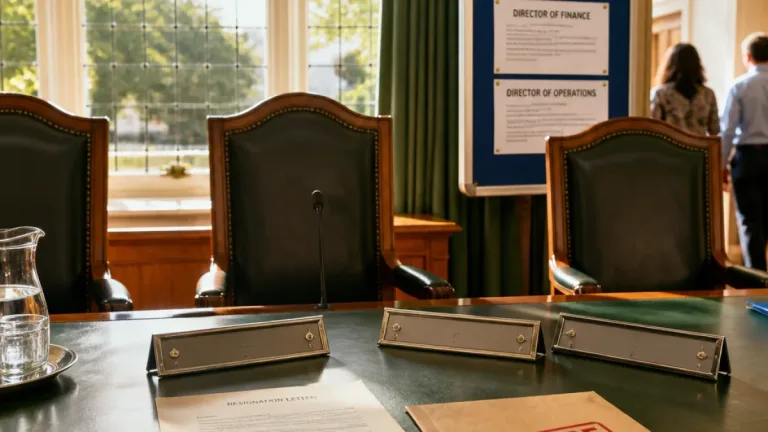
Deputy council leader Adam Kent, who negotiated the cross-party arrangement, was suspended by Conservative Campaign Headquarters (CCHQ) in his role as Tory group leader. He has said he cannot comment on the matter; it is understood he contests the version of events that led to his suspension. Following the intervention from CCHQ, three Conservative councillors — Adrian Hardman, Marcus Hart and Karen May — resigned from the power-sharing cabinet.
For his part, Matt Jenkins has questioned the basis for the challenge, suggesting the move is being driven by disappointment rather than policy differences.
Jenkins said Reform’s action looked “like sour grapes” because the party “didn’t get the leadership” and described the vote as “a little bit premature”.
Who holds the numbers at County Hall
The arithmetic at County Hall underpins the current uncertainty. While Reform has the biggest single group, other parties combined have the capacity to dictate control. The composition is as follows:
| Group | Seats |
|---|---|
| Reform UK | 22 |
| Conservative | 12 |
| Green | 8 |
| Liberal Democrat | 7 |
| Independent | 6 |
| Labour | 2 |
That distribution explains why a cross-party agreement was necessary to form an administration and why any loss of support from participating groups — or pressure from national party leaderships — can quickly unsettle the coalition’s balance.
What councillors will decide on Thursday
The no-confidence debate hinges on whether enough councillors, beyond Reform’s 22, are willing to back a reset. If the motion passes, the authority would move immediately to choose a new leader and, by extension, a new cabinet. If it fails, the existing coalition under Jenkins continues — but with questions lingering after the national Conservative intervention.
- A successful motion triggers a leadership election at the council.
- A failed motion leaves the coalition in place but under ongoing political pressure.
- Either outcome will influence how quickly cabinet portfolios and priorities can be settled.
Why it matters for residents
Leadership uncertainty affects the council’s ability to set and deliver its programme, from highways maintenance and children’s services to adult social care and climate commitments. While Thursday’s vote is about who leads, the deeper issue is how a stable working majority is maintained to pass budgets and take decisions at pace. With national party dynamics already shaping events locally, Worcestershire’s governing arrangements remain fluid.
For now, all eyes are on County Hall for Thursday’s chamber debate. The outcome will determine whether the coalition consolidates after a bumpy start or the county faces another reshuffle of its leadership team before the summer is out.