Major transport cash injection heads to Executive Board
Nottingham City Council is poised to accept more than £15 million from the East Midlands Combined County Authority (EMCCA) to accelerate schemes in its Local Transport Programme. The proposal, to be discussed at an Executive Board meeting on Tuesday 21 July, draws on the Mayoral Transport Fund, backed by central government, and would be spread over three years.
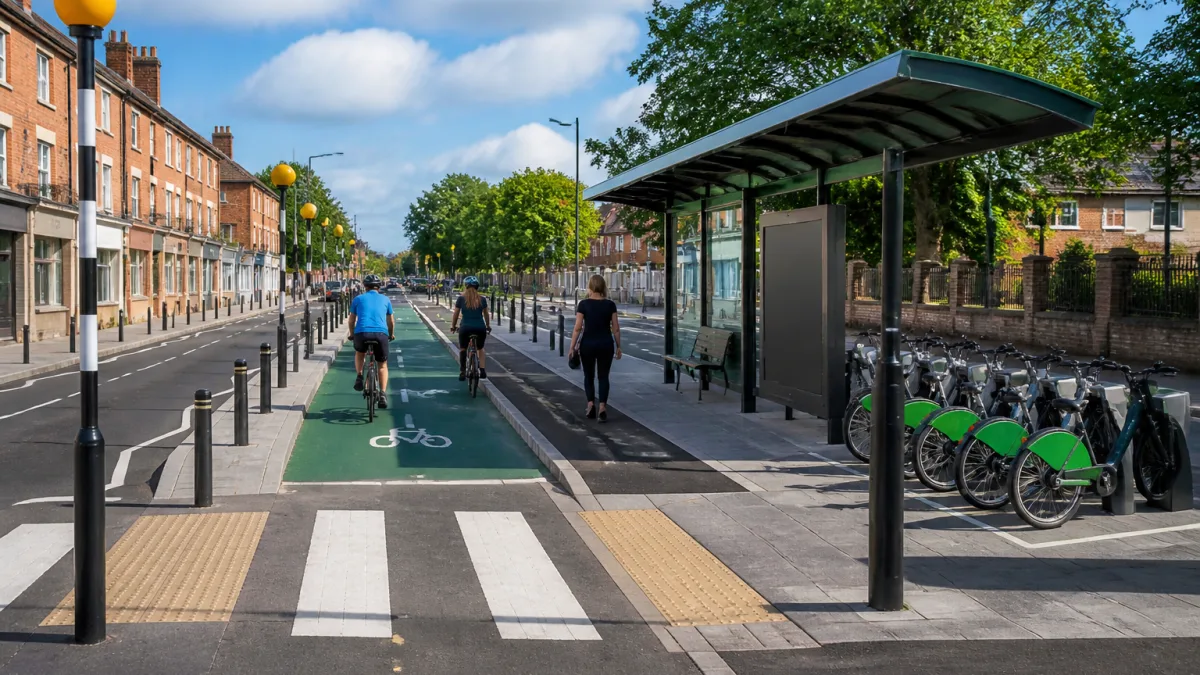
Council papers indicate the funding will support a package of projects designed to link neighbourhoods more safely and sustainably with jobs, education and leisure. The emphasis is on integrated travel, with improvements expected to benefit people walking, cycling and using public transport, alongside measures that also consider general traffic through a whole-route approach.
Where the money would go
The council plans to channel the funding into two headline areas at this stage: a further phase of the Wigman Road active travel corridor and the expansion of mobility hubs in communities across the city.
| Project | Allocation | Purpose |
|---|---|---|
| Wigman Road – Harvey Hadden phase | £4.5 million | Extend active travel corridor, improve crossings and pedestrian safety |
| Mobility hubs (citywide) | £3 million | Install additional neighbourhood hubs integrating shared and public transport |
Active travel corridor to Harvey Hadden
The next stage of the Wigman Road scheme would push the existing corridor on towards Harvey Hadden Sports Village—a venue attracting around 60,000 users each month—and link into routes via National Cycle Route 6. The council describes a ‘whole street’ approach, meaning works will not be limited to cycle facilities but will encompass footway upgrades and features to improve safety for all users.
- New pedestrian crossing near Oakfield School
- Upgraded crossings at key junctions along the corridor
- Renewal of road safety features and better sightlines
- Improved priority and visibility at side-road junctions
Officials say these interventions are intended to reduce conflict points, create clearer priority at side roads and make everyday journeys on foot or by cycle more direct and dependable, while also smoothing traffic flows where possible.
More mobility hubs in neighbourhoods
A separate £3 million tranche would expand Nottingham’s network of mobility hubs, which bring together shared and public transport options close to bus or tram stops. The hubs aim to make it simpler to switch between modes—such as bike share, e-mobility, and mass transit—helping residents complete short trips without a private car and improving access to services and employment.
Six hubs are already operating at:
- Percy Street (Old Basford)
- Lambourne Drive (Wollaton)
- Dales Centre Library (Sneinton)
- Bulwell Station (Bulwell)
- Winchester Street (Sherwood)
- Bridgeway Centre (The Meadows)
The fresh funding would enable the roll-out of additional sites over the next three years, with exact locations to be confirmed through the council’s programme development. By clustering options in one place and near rapid transit, the hubs are intended to increase the reach of buses and trams, cut waiting and walking times between services, and offer practical alternatives for short urban journeys.
What happens next
Councillors will consider formally accepting the money at next week’s Executive Board. If approved, the council would then move to deliver the outlined schemes within the three-year funding window. The authority emphasises that the transport investment is aimed at boosting productivity and inclusive growth by better connecting people to workplaces, training and amenities in a way that is safer, lower-carbon and more convenient.
While the programme details will be refined as individual projects advance through design and delivery, the direction is clear: a stepped-up focus on safer junctions and crossings, upgraded pavements, and cycling corridors that join up into the wider network—backed by neighbourhood hubs that tie local streets into the city’s tram and bus backbone.