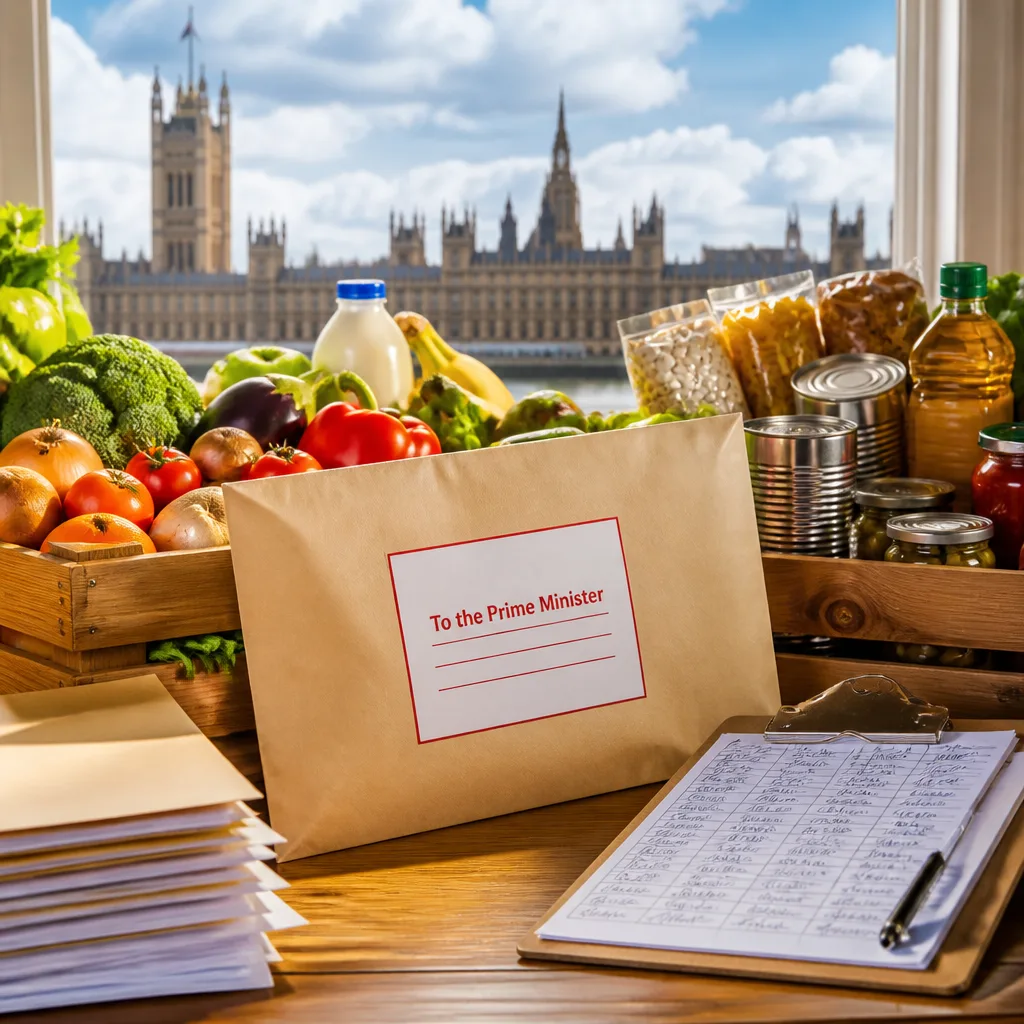
A coalition of over 100 organisations from industry, civil society, health and farming sectors has sent a letter to the Prime Minister urging immediate action to create a legally binding Good Food Bill aimed at bolstering the UK's food security, nutrition and system resilience.
Who is backing the call
The letter brings together major grocery retailers, manufacturers, charities and health groups. Signatories include leading supermarket chains and suppliers and a range of non-governmental organisations and investors. The campaign is coordinated by three organisations: The Food Foundation, Green Alliance and Sustain.
- Retail backers: Tesco, Sainsbury's, Aldi, Co-op, Waitrose and Booths
- Manufacturers and suppliers: Danone, Greencore, Samworth Brothers and Bidfood
- Charities and health organisations: Barnardo's, Amnesty International UK, WWF-UK, Action on Salt and Sugar and World Cancer Research Fund International
- Farming and investment groups: Soil Association, Nature Friendly Farming Network, Rathbones and The First Thirty Ventures
Reasons for the demand
Signatories argue the UK food system has shown repeated vulnerability to recent shocks. They point to rising input costs for farmers, pressures from climate change and nature loss, and international instability that has driven up fertiliser costs by around 40% in the past year. The groups say these combined pressures, alongside record levels of diet-related disease, make food a national security priority equivalent to energy and defence.
| Indicator | Details |
|---|---|
| Retail market share represented | more than 64% of the grocery market (by the listed major retailers) |
Proposed approach and intended outcomes
Proponents describe the Good Food Bill as a framework that would be legally enforceable and designed to advance several aims simultaneously: improving nutritional outcomes for the population, increasing the resilience of supply chains to external shocks and supporting farmers and food producers facing cost and environmental pressures. The campaign frames the measure as a cross-cutting national priority rather than a single-sector intervention.
The letter underscores recent environmental events, including widespread wildfires in Europe this summer, as evidence of heightened climatic risk to harvests. It also cites upward movements in key input costs as a factor worsening the position of growers and producers.
Implications for policy and public health
If taken forward, a statutory Good Food Bill would commit government to specific objectives and potentially require new regulations or investment to meet them. Support from large retail chains and prominent charities signals broad stakeholder engagement, which campaigners say is necessary to deliver both improved population nutrition and stronger domestic food system resilience.
The coalition's approach links agricultural policy, business practice and public health outcomes in a single legislative ambition. Its advocates argue that such an integrated, legally backed strategy is needed to reduce the UK’s exposure to future supply disruption and to address growing levels of diet-related ill health.
How the government responds — and whether it translates the letter into concrete policy proposals or legislation — will be closely watched by industry, health professionals and campaign groups.