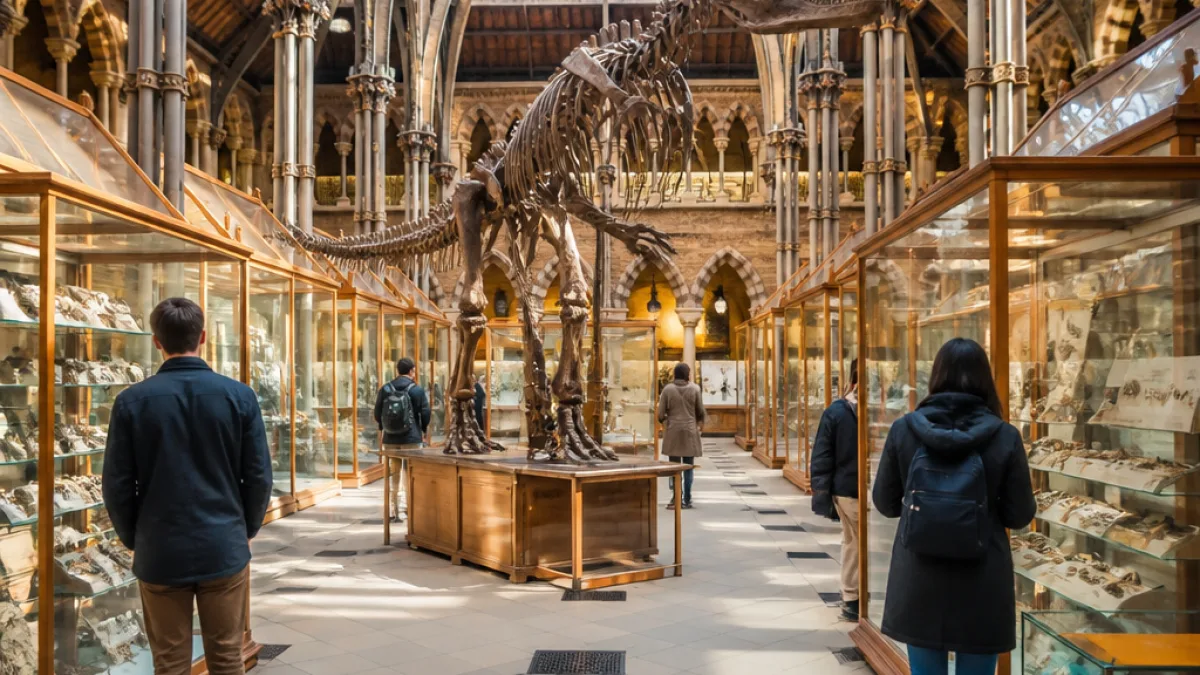
The Oxford University Museum of Natural History has completed the final phase of a long-running redisplay project, unveiling a comprehensive re-presentation of its collections in the historic Park Road building. The initiative, titled "Life, as we know it", has seen more than 3,000 objects installed across the museum's central court and galleries.
What has changed
The project has delivered 48 new displays presented within 24 state-of-the-art showcases, grouped around themes such as biodiversity, ecosystems, evolution and Earth. The refreshed layout aims to connect specimens to wider scientific narratives rather than showing them as isolated curiosities.
- Megalosaurus — the fossil long recognised as the first scientifically named dinosaur — is at the heart of the prehistoric ecosystem displays.
- Eustreptospondylus, a predatory dinosaur discovered in Summertown in 1870, features among other local finds.
- Thousands of specimens have been staged in a redesigned presentation intended to reflect modern scientific understanding.
"[The new displays] bring together thousands of specimens to tell some of the most important stories in science," said the museum's director, Dr Gavin Svenson.
Local and historical significance
The museum, which has welcomed the public since 1860, houses material of particular significance to the county. The Megalosaurus, parts of which were presented by Professor William Buckland to the Geological Society of London in 1824, is central to the narrative of how early scientific study of prehistoric life developed in Britain.
Also included are specimens linked to finds made in Oxfordshire, such as the Summertown discovery of Eustreptospondylus in 1870. The redisplay therefore not only updates the way collections are interpreted but also foregrounds the city's contribution to the history of palaeontology.
What visitors can expect
The redesigned displays occupy the museum's distinctive Victorian court and make use of contemporary casework and interpretation to frame collections for a general audience and specialist visitors alike. The museum describes the project as presenting the "intricate relationships between our planet and life" and positioning specimens within broader ecological and evolutionary contexts.
| Item | Figure |
|---|---|
| Objects newly installed | 3,000+ |
| New displays | 48 |
| Showcases | 24 |
| Museum opened to public | 1860 |
The completion of the redisplay marks the end of a long-term programme of conservation and reinterpretation. For Oxford residents, the refreshed museum offers a renewed public resource for learning about the region's geological past and the wider stories of life on Earth.