County leads UK for share of cyclist casualties despite debate over what figures mean
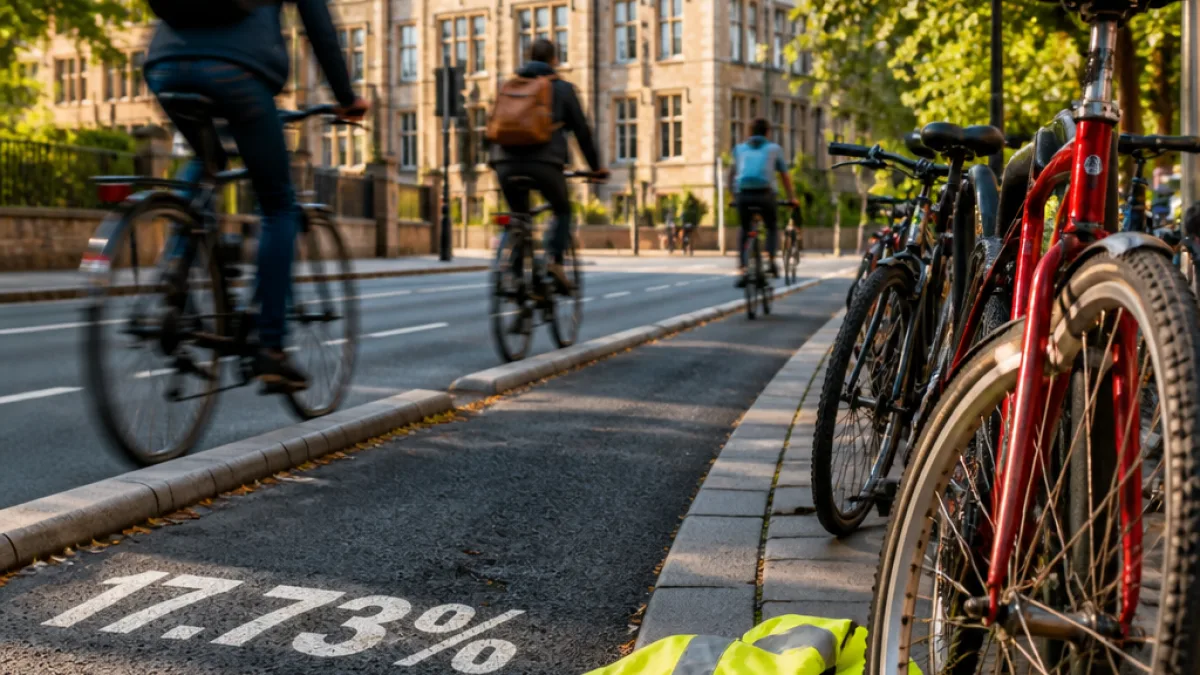
A recent study drawing on Department for Transport (DfT) statistics found that in 2024 17.73% of recorded road casualties in Oxfordshire were cyclists, a higher share than any other county in the United Kingdom. The finding has prompted debate between cycling advocates, campaigners and the county council over how the data should be interpreted and what action should follow.
The DfT totals show there were 1,066 total road casualties in Oxfordshire last year, of which 189 were cyclists. That proportion placed the county ahead of Cambridgeshire, reported at 15.11%, with Gloucestershire at 11.49%.
Cycling campaigners welcomed scrutiny but cautioned that casualty counts alone do not capture the full picture. Thalia Carr, a spokeswoman for the local group Cyclox, argued that cycling delivers significant public-health benefits and that fear of traffic deters many would-be cyclists.
"A cycling commute to work will reduce your risk of death from cardiovascular disease and cancer as well as contributing to your general health and wellbeing,"
Cyclox referenced wider research to highlight health gains and urged changes to make cycling safer, including fewer cars on the roads, lower speed limits and segregated cycle lanes. Representatives from the Coalition for Healthy Streets and Active Travel pointed out that a large number of cyclists in the county will naturally increase the number of cycling casualties even as overall safety per journey may be improving.
- Total road casualties (Oxfordshire, 2024): 1,066
- Cyclist casualties (Oxfordshire, 2024): 189
- Share of casualties who were cyclists: 17.73%
What campaigners and officials say
Robin Tucker of CoHSAT highlighted that most road injuries and deaths involve collisions with cars or vans and pointed to speed and driver behaviour as leading contributory factors. He described the figures as "sobering" but also as reflecting the popularity of cycling in the county, noting that many adults cycle in Oxfordshire.
By contrast, Oxfordshire County Council told reporters that the study's conclusions were "misleading". The council emphasised the need to understand casualty statistics in context — for example, by considering exposure (how many people cycle and how often) and the exact nature of incidents — and pointed to ongoing work to improve road safety.
Local implications and next steps
The debate over the figures comes as councils and transport planners nationwide balance promoting active travel with reducing road casualties. For Oxfordshire, the immediate policy questions include whether to accelerate investment in segregated cycle infrastructure, review local speed limits, and intensify driver awareness campaigns.
Campaign groups argue that practical measures could include:
- Creation of more segregated and continuous cycle lanes to separate vulnerable road users from motor traffic;
- Lowering speed limits on routes with high pedestrian and cycling use;
- Targeted enforcement and education focused on driver behaviour that endangers cyclists.
| Metric | Oxfordshire (2024) |
|---|---|
| Total road casualties | 1,066 |
| Cyclist casualties | 189 |
| Share who were cyclists | 17.73% |
Officials and campaigners both say better data and analysis are essential. Understanding casualty rates relative to cycling journeys (exposure) and mapping hotspots for collisions will determine the most effective interventions. Until that work is complete, residents and visitors are being urged to take sensible precautions: wear visible clothing, use lights after dark, and observe the Highway Code; drivers are reminded to give cyclists space and to watch for vulnerable road users when turning or passing.
The study has reopened public discussion in Oxfordshire about how to make roads safer while encouraging the health and environmental advantages of cycling — a debate likely to shape local transport policy in the months ahead.