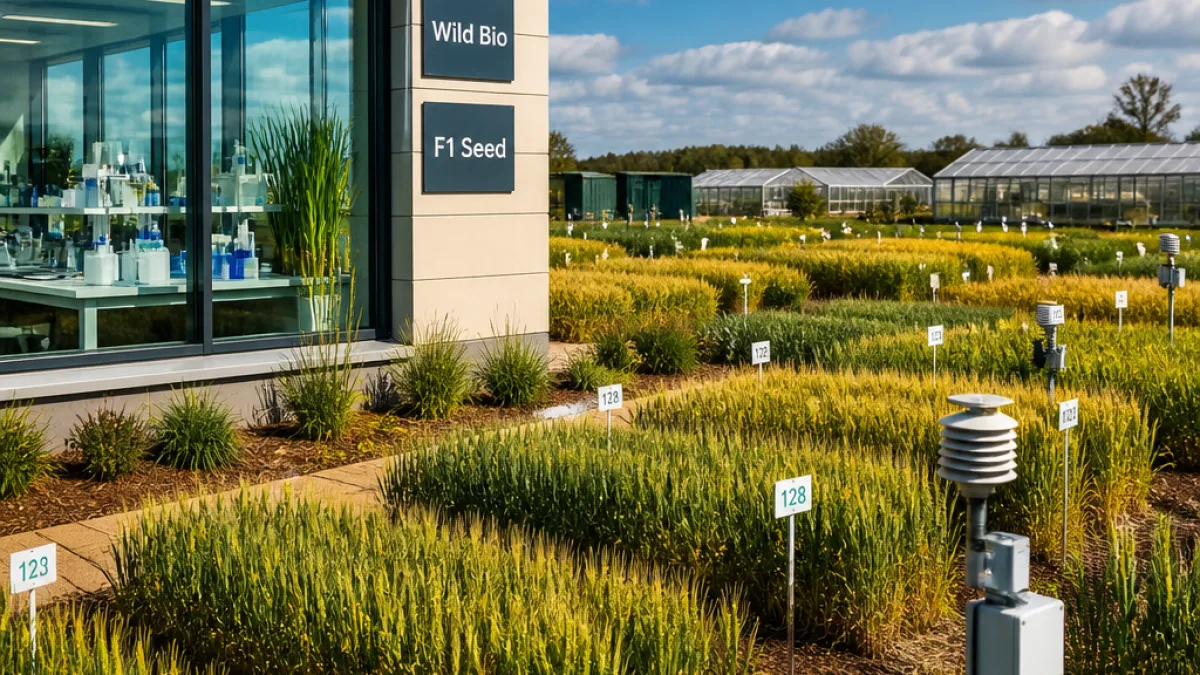
Wild Bioscience, a plant‑science company spun out of the University of Oxford, has acquired independent wheat breeder F1 Seed, creating an integrated seed business aimed at developing precision‑bred varieties tailored to UK conditions. The move brings together laboratory gene‑editing capabilities and field breeding expertise under one roof, with the aim of translating scientific advances into seeds that British growers can use.
Local science meets practical breeding
The deal positions Wild Bio as an end‑to‑end seed company operating from a base tied to Oxford’s research community. By combining gene‑editing tools with an existing breeding pipeline, the company says it can pursue traits such as yield, stability and disease resistance more efficiently than either operation could alone. That model intends to produce varieties specifically designed for UK farms rather than relying on broadly modified products from multinational agrochemical groups.
Why this matters for UK agriculture
Wheat is Britain’s largest crop and a staple of the national food system. Yet, as Wild Bio highlights, UK wheat yields have broadly flat‑lined for three decades while input costs have risen and weather volatility has increased. The last two springs have been particularly challenging: 2025 was recorded as the driest in over 100 years, and 2026 saw the warmest spring on record, contributing to a 13% fall in wheat yield in 2025 compared with the ten‑year average.
“Wheat is Britain’s biggest crop and feeds a fifth of humanity but, on a changing planet, growing it is only getting harder. That’s the challenge we exist to meet,” said Dr Ross Hendron, co‑founder and CEO of Wild Bio.
The acquisition reflects a broader response within UK agri‑tech to climate pressures and economic strain on farmers. By developing varieties optimised for local environments, Wild Bio intends to give growers tools aimed at stabilising production and reducing reliance on imported or one‑size‑fits‑all seed offerings.
- Integration: Science and breeding combined to accelerate trait development.
- Local focus: Varieties developed specifically for UK conditions.
- Policy context: The deal comes amid mounting concern over stagnant yields and climate impacts on crops.
Numbers and recent climate context
| Year | Notable point |
|---|---|
| Past 30 years | UK wheat yields broadly flat |
| 2025 | Driest spring in over 100 years; yields down 13% vs ten‑year average |
| 2026 | Warmest spring on record |
For Oxford, the transaction underlines the city’s role in translating university research into commercial ventures with national reach. It may also influence local employment and collaboration opportunities: integrated seed companies commonly require teams spanning molecular science, field testing, regulatory affairs and grower engagement. While the announcement focuses on strategic intent and scientific capacity, practical rollout of new varieties will depend on regulatory processes and the timescales of breeding and field trials.
As Wild Bio integrates F1 Seed, local stakeholders including university departments, investors and farm networks will be watching to see how quickly the combined business can move from laboratory traits to seed in the hands of British growers.