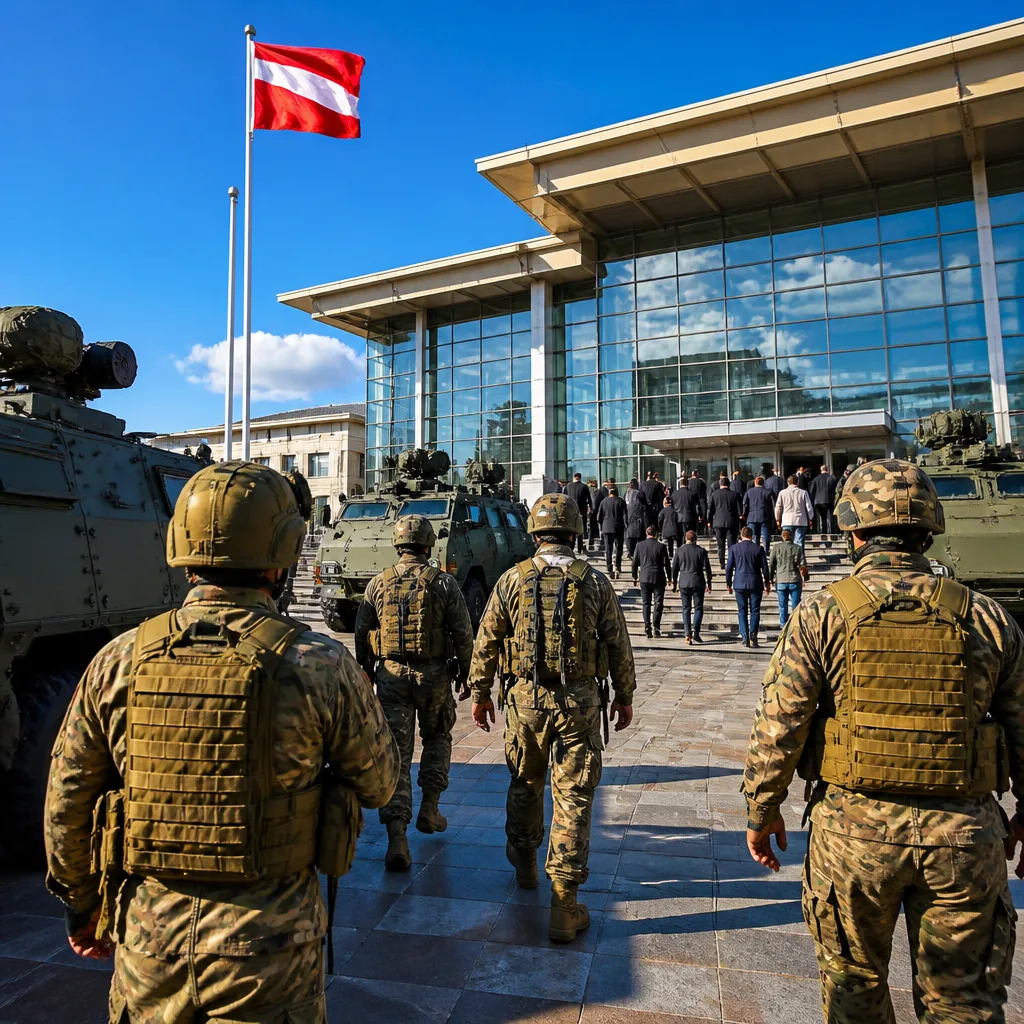
President Keiko Fujimori has pledged a forceful response to what she described as a national surge in criminality, announcing the deployment of the armed forces to areas affected by organised crime, drug trafficking and illegal mining following her inauguration.
New security measures and political context
Addressing Congress after taking office, the leader who secured victory in June's runoff by fewer than 50,000 votes told legislators the military would take temporary charge of security operations in declared states of emergency until civilian control could be re-established.
"During states of emergency, the armed forces will temporarily take the lead in security operations"
The inauguration, which made Fujimori Peru's ninth president in a decade, prompted a walkout by a group of leftist lawmakers who protested her return to power. Several Latin American leaders attended the ceremony, including the presidents of Argentina, Chile, Bolivia, Ecuador and Uruguay.
Policy proposals and public reaction
The new president proposed a suite of hardline measures that mirror themes from her campaign: expulsion of undocumented migrants, establishment of courts with anonymous judges and requiring prisoners to work for their food. Supporters say the approach responds to an unprecedented security crisis; critics warn the measures risk human rights abuses and recall the polarising legacy of her father, Alberto Fujimori, who was later jailed on charges including corruption and crimes against humanity.
- Military deployment to crime-ridden territories during states of emergency
- Judicial changes including anonymous judges for certain cases
- Immigration enforcement targeting undocumented people
- Prison labour proposals requiring inmates to work for food
Voters remain divided. Some residents expressed hope that a tougher stance will improve public safety; others said they feared it would replicate past abuses. The administration faces the practical challenge of implementing its agenda without an outright congressional majority, although Fujimori's Fuerza Popular remains the largest party in the legislature.
| Measure announced | Purpose |
|---|---|
| Military-led operations during emergencies | Restore control in areas dominated by gangs and illegal mining |
| Courts with anonymous judges | Presumably to protect judicial actors and expedite cases |
| Expulsion of undocumented people | Limit perceived criminal networks bolstered by irregular migration |
| Prisoners working for their food | Sanction and contain prison populations while reducing costs |
Beyond immediate security operations, Fujimori also signalled attention to environmental and climate issues, noting plans to confront the El Niño phenomenon, which forecasters predict could be the most severe since 1998. How her administration balances emergency security measures with civil liberties and judicial safeguards will be closely watched at home and abroad as Peru confronts one of the most acute waves of organised violence in recent memory.