An industry leader has told senior ministers the United Kingdom must treat the risk of foreign attack with far less complacency. Speaking in an extensive BBC interview, the head of BAE Systems said the security environment had altered “quite profoundly” and warned that Britain needs to accelerate both spending and technological adaptation to keep pace.
Defence spending and the 3.5% target
The executive welcomed the recent rise in defence funding but said it falls short of the sustained investment required to reach the government's stated aim of spending 3.5% of GDP on defence by 2035. He said that achieving that commitment would demand far greater effort than is currently underway.
| Government commitment | Target year |
|---|---|
| 3.5% of GDP on defence | 2035 |
Autonomy, drones and modern warfare
Warning that modern conflict has changed, the BAE Systems chief highlighted the growing role of autonomous systems and drones in recent wars. He pointed to Russia and Ukraine as examples of actors who have become "incredibly adept" at deploying autonomy — using unmanned systems and counter-drone capabilities to shape the battlefield.
"The reality of modern warfare had 'changed quite profoundly',"
That shift, he said, requires the UK to both understand and provide the capabilities needed to deter and, if necessary, counter aggression from states and non-state actors that may not follow the UK's restraint on autonomous lethal weapons.
Capability mix: large platforms and unmanned systems
While underlining the importance of new technologies, he also defended a continuing role for large platforms. Ships, submarines and crewed aircraft — the traditional products long associated with BAE — remain integral to the mix, he argued, but will increasingly operate alongside unmanned systems.
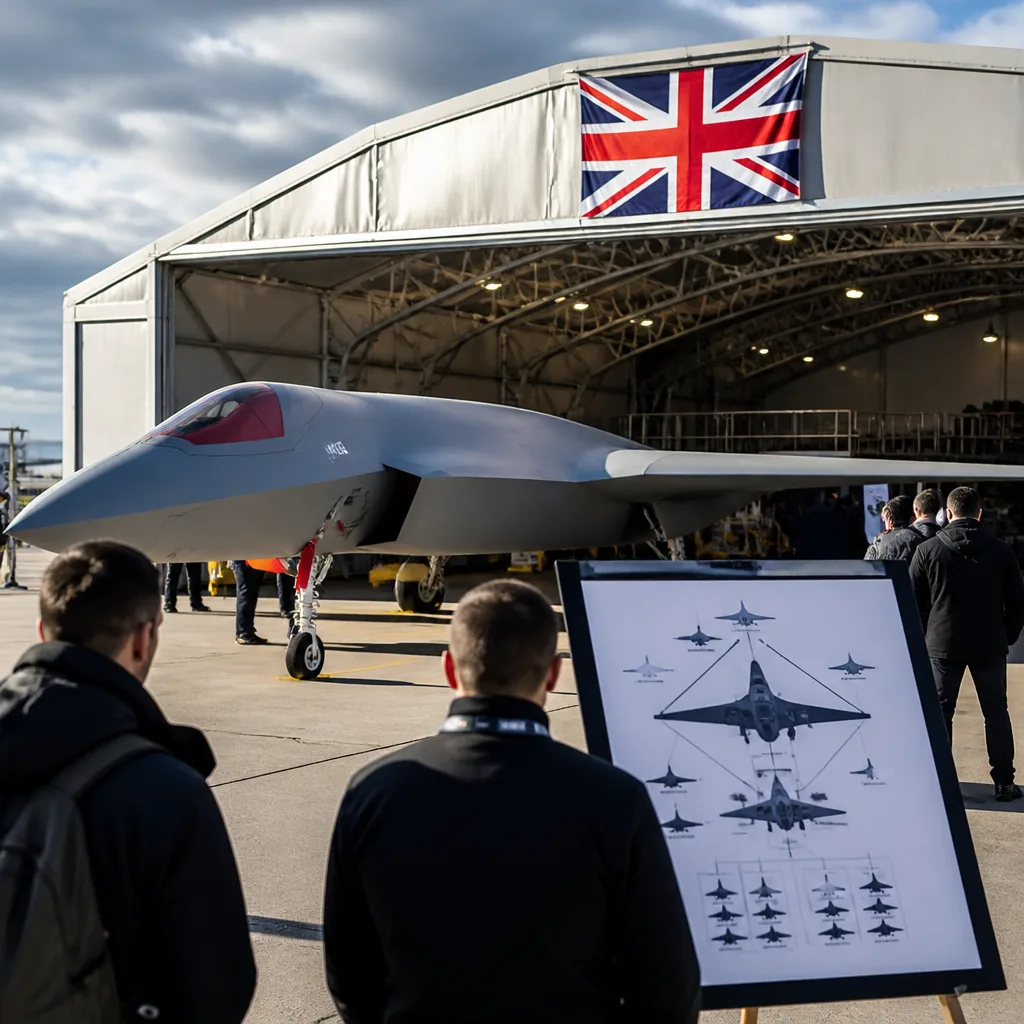
As an illustration, BAE unveiled a life-size model of an uncrewed Collaborative Combat Aircraft, referred to in coverage as Brontanax, at the Farnborough International Airshow. The design concept shows four uncrewed aircraft working in concert with a manned fighter to boost firepower while reducing cost, the company said.
- Threat assessment: Highest level of risk the executive has seen in his lifetime.
- Technology: Greater use of autonomy, drones and counter-drone systems is changing tactics.
- Spending: Current increases welcomed but judged insufficient to meet the 3.5% GDP goal by 2035 without further measures.
The intervention comes as ministers balance competing demands across public services and the economy while attempting to reassure voters that the UK can defend itself in an era of rapid technological change. The company's public exhibition of unmanned combat concepts at a high-profile airshow underlines how industry expects investment and doctrine to shift in parallel.
For policymakers, the choice will be whether to accept incremental change or to commit now to the deeper investment and doctrinal adjustments the defence chief says are required. For the public, the debate is increasingly about what kind of defence posture the country needs and how it will be paid for.