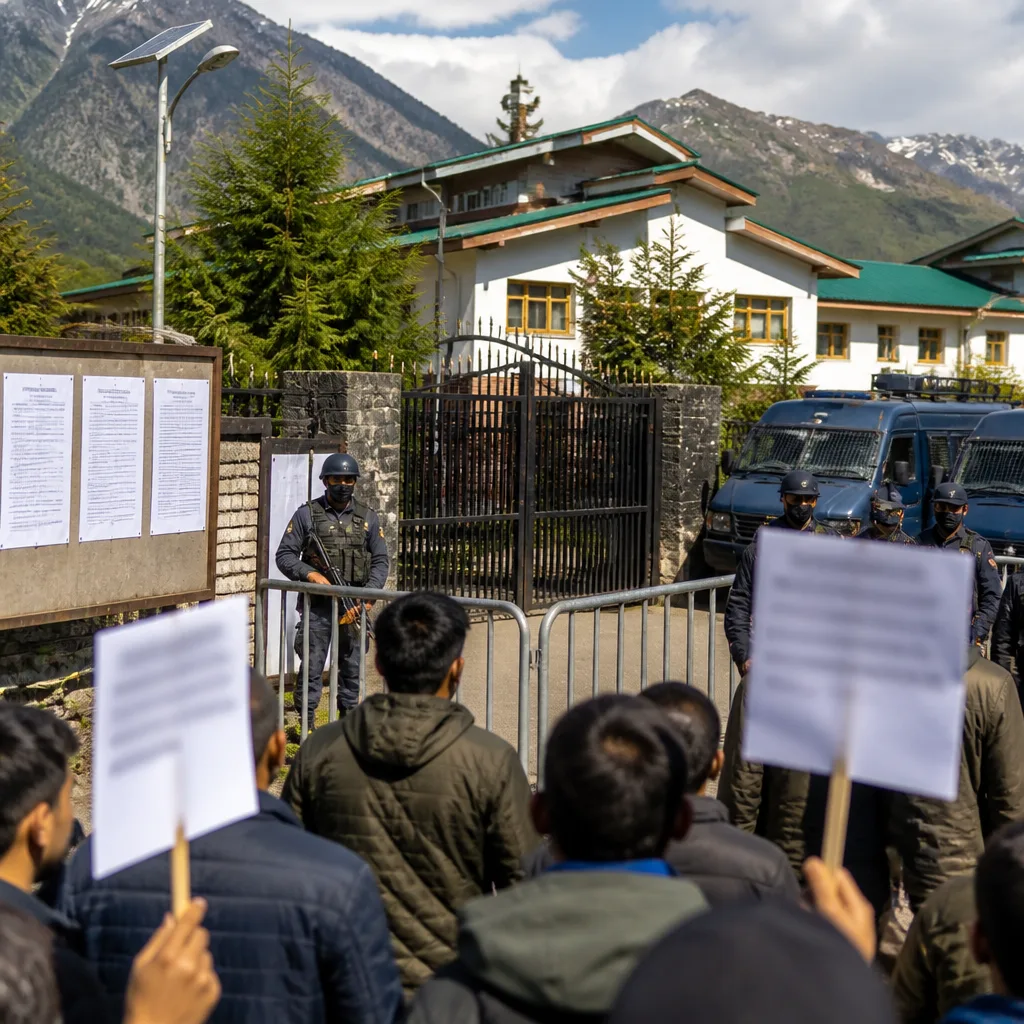
Voting in Pakistan‑administered Kashmir will now be held on three separate dates after weeks of demonstrations and deadly clashes linked to disputes over seats reserved for refugees from Indian‑administered Kashmir.
Election schedule altered amid continuing tensions
The region’s chief electoral official, Justice (retired) Ghulam Mustafa Mughal, announced a revised timetable, saying security concerns arising from sustained unrest made the changes necessary. Under the new arrangement:
| Division / constituency | Voting date |
|---|---|
| Mirpur division | 27 July (unchanged) |
| Muzaffarabad and 12 refugee seats | 2 August |
| Poonch division | 10 August |
The decision was taken against a backdrop of sustained protests since early June, which have at times turned violent. The demonstrations have focussed on the status of seats reserved for refugees from Indian‑administered Kashmir who are now resident elsewhere in Pakistan. Protesters argue that only those physically living in Pakistan‑administered Kashmir should be eligible to stand for the regional legislature, and some have demanded that the reserved refugee seats be abolished.
Political and security implications
The postponement underscores the challenge of holding competitive elections in a territory marked by both internal political dispute and the broader India‑Pakistan contest over Kashmir. Authorities have presented the rescheduling as a pragmatic response to security pressures; for opponents and many demonstrators the row over electoral eligibility strikes at the legitimacy of representation in the region’s assembly.
Observers should note two immediate consequences:
- Delaying polls in the hardest‑hit areas may calm hostilities in the short term but risks prolonging political uncertainty.
- The central issue — reserved seats for refugees — goes beyond administrative detail and feeds a wider debate about who has a voice in the territory’s governance.
Muzaffarabad’s streets, festooned with party colours from the Pakistan Muslim League‑Nawaz and the Pakistan Peoples Party, gave the outward impression of a city preparing for a normal vote. Yet the altered timetable and recent fatalities during unrest make clear that normality remains elusive.
What happens next
Authorities will be expected to publish security plans for each phase of voting and to explain how they will protect candidates, polling staff and voters. Political parties and civil society groups may press for guarantees that the refugee seats and the terms on which those seats are filled will be examined through debate and lawful processes rather than street confrontation.
The coming weeks will test whether the staggered schedule can deliver credible elections in an environment strained by competing claims to representation and by the broader, unresolved disputes that touch on Kashmir.