Reform UK has accused the government of a “dereliction of duty” over the official security provided to Nigel Farage, intensifying pressure on ministers and parliamentary authorities as police investigate the alleged murder of a senior party figure.
Robert Jenrick, the party’s Treasury spokesman, said the Reform leader had not been offered an adequate protection package and claimed his publicly funded security had previously been “massively downgraded”. His intervention follows the revelation that Reform UK declined an offer of government-funded security last year and comes amid a wider reassessment of risks to politicians.
Accusations after alleged attack and a rejected offer
Speaking on BBC Radio 4’s Today programme, Mr Jenrick confirmed that Mr Farage had turned down a package comparable to that offered to other senior politicians. Asked whether Mr Farage rejected a deal akin to the one made available to Conservative leader Kemi Badenoch, he replied:
“That’s right. Yes that’s right.”
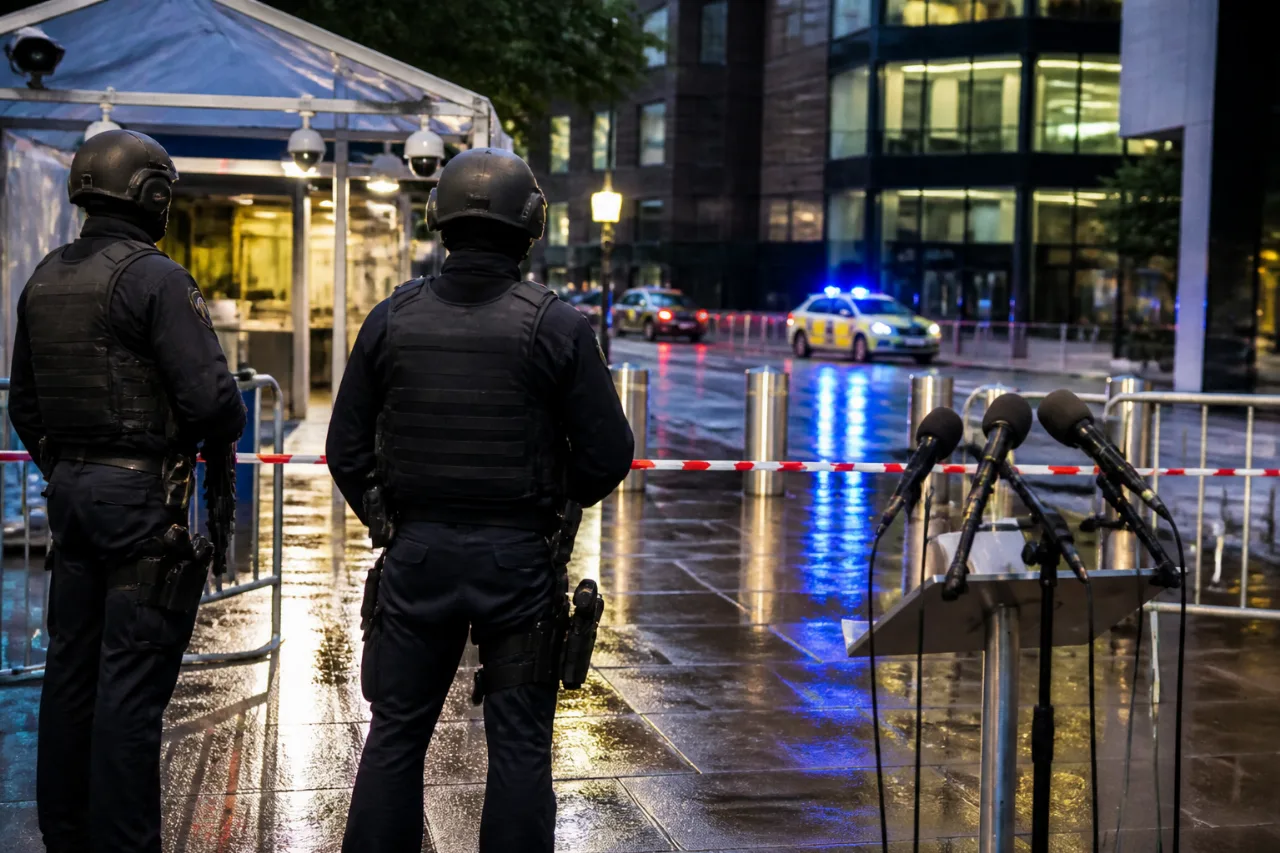
His criticism is framed by a fast-moving investigation. The reported killing of Reform’s Ann Widdecombe is being handled by counter-terrorism officers, focusing attention on the adequacy and timing of security decisions for individuals who are prominent and frequently targeted. Mr Farage has agreed to meet the Home Office to discuss his current arrangements, after Home Secretary Shabana Mahmood offered talks.
Jenrick argued that the state’s approach to Mr Farage’s safety fell short in the immediate period after his election to Parliament. In a pointed assessment of ministerial responsibility, he said:
“Frankly I find it astonishing that, just a short period after he was elected to Parliament, the authorities, the government, chose to massively downgrade his security.”
He added that a meeting should have occurred much sooner:
“It shouldn’t have taken the death of Ann Widdecombe for Nigel Farage to be given a meeting with the relevant Home Office committee - that really is a dereliction of duty, and it’s ultimately the home secretary who makes that decision.”
Reform UK’s Zia Yusuf has previously claimed that in September last year parliamentary officials decided to reduce Mr Farage’s taxpayer-funded security by 75%, prompting donors to step in to cover costs. That claim has fed a broader argument advanced by Mr Jenrick, who suggested Mr Farage may have been treated differently due to his political stance:
“I do question whether this would have happened to someone with different political views.”
Who decides protection for high-profile politicians?
Security for parliamentarians and candidates is determined through overlapping institutional processes:
| Body | Remit |
|---|---|
| Parliamentary Security Team | Decisions on protections for current MPs and members of the House of Lords. |
| RAVEC (Royal and VIP Executive Committee) | Independent panel for high-profile political candidates, staffed by officials from the Home Office, Cabinet Office and the Foreign, Commonwealth and Development Office. |
The division of responsibility is intended to ensure that risk assessments are evidence-led and insulated from day-to-day politics. However, it can also generate disputes over thresholds, timeliness and the balance between public funding and private support, especially when individuals cross institutional boundaries – for example, moving from candidate to MP.
Institutional scrutiny and political ramifications
Mr Jenrick’s allegation of a “downgrade” brings into focus how quickly protections are recalibrated following electoral outcomes and changes in threat profiles. The assertion that donor funds filled gaps after a claimed 75% cut raises practical questions about coordination between public authorities and private backers when official provision is deemed insufficient by those affected.
The Home Secretary has offered to review Mr Farage’s circumstances directly by meeting him, a step that acknowledges the sensitivity of individual cases while leaving the formal assessment structure intact. On Monday, Ms Mahmood also indicated she would examine what security guidance could be provided, signalling an openness to clarify expectations for political figures and their staff. Any change to guidance or practice would likely need to reconcile three competing imperatives: threat-led prioritisation, consistency across political parties, and stewardship of public resources.
A debate shaped by risk, resources and trust
In the present climate, the bar for intervention has tightened. The involvement of counter-terrorism police in the alleged murder investigation places political violence at the forefront of Whitehall’s concerns and will intensify calls for a coherent, transparent framework that elected representatives consider credible. Mr Jenrick’s contention that political leanings may have influenced decision-making underscores the fragility of confidence in the system; even the perception of bias can corrode trust and may, in itself, justify a formal review.
While the government-funded offer to Mr Farage was refused last year, today’s dispute revolves less around that single decision and more around whether the overall regime is suitably responsive to evolving risks. The coming meeting between Mr Farage and the Home Office will test whether the existing machinery – the parliamentary security team and RAVEC – can adjust swiftly and communicate decisions in a way that commands legitimacy across the political spectrum.
- Key contention: Reform UK says official protection for Mr Farage was cut too sharply and too soon.
- Process under scrutiny: The roles of parliamentary security and RAVEC in calibrating risk and funding.
- Next step: A Home Office meeting with Mr Farage to review arrangements amid a counter-terror police probe.
The immediate priority is operational – ensuring that current threats are met with appropriate, proportionate security. But the broader test is institutional: whether the United Kingdom’s mechanisms for protecting democratic life remain robust under strain, and whether they can do so in a manner accepted as fair, consistent and apolitical.